
Translated material
Obama explained the essence of the new US military strategy and vowed not to repeat Vietnam's mistakes
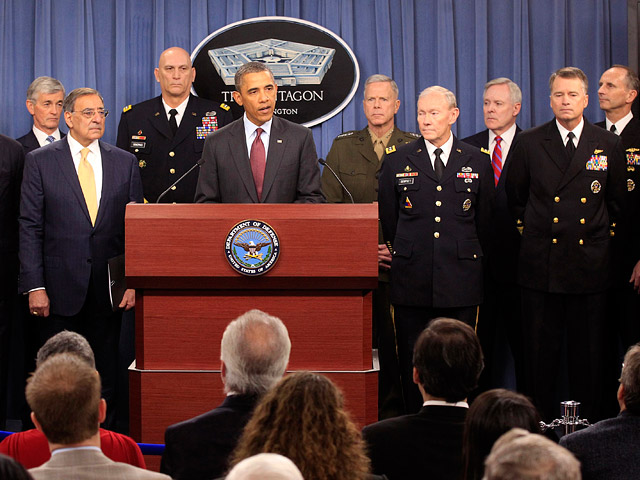
The United States will reform the number of armed forces in order to make them more mobile and effective, said the American President Barack Obama, explaining the essence of the new military strategy that its administration has previously passed on Thursday.
"I asked (the Pentagon’s leadership) to carry out a complete revision of the defense strategy in order to update our strategic interests in the current rapidly changing world, as well as develop a list of priorities, including in the field of defense costs for the next ten years," Obama said, speaking on Thursday in the Pentagon.
“The number and structure of our armed forces should depend on the strategy and on anything else. Moreover, we must remember the lessons of history: the Second World War, Vietnam, when our armed forces were poorly prepared for future conflicts. As a commander in chief, I will not allow this to repeat it,” the American leader quotes the American leader.
- The network fell into the network a list of non -terrible weapons of the Pentagon
Speaking about the essence of the new military strategy, Obama noted that the United States will expand the military presence in the Asia-Pacific region, and all the reduction of the military budget planned in the future will not affect this direction.
Last year, Obama announced that for 10 years, starting in the 2013 of the financial year, the expenses of the defense department should be cut by almost $ 500 billion. Since 2009, the annual US budget deficit did not fall below 1.3 trillion dollars, and the public debt exceeded $ 15 trillion.
“We will continue to invest in partnerships and alliances critical for us, including NATO. This form of cooperation has been tested by time and proved its effectiveness, in particular, in operation in Libya. We will also maintain vigilance in the Middle East,” Obama said, speaking in the Pentagon on January 5.
In Iraq and Afghanistan, according to him, the United States is going to "continue control of safety", but already with the help of "ordinary armed forces of a smaller number."
"We will also continue to get rid of the outdated systems of the Cold War and we will begin to invest in what will come in handy in the future, including reconnaissance, observation and recruiting systems, we will invest in conrterrorism, control over weapons of mass destruction and the ability to carry out operations where the enemy prevents this," Obama said.
"Yes, our armed forces will become smaller in number, but the world must know that the United States is going to build up military superiority and create a mobile and flexible army that can reflect all existing threats," the president emphasized.
Earlier on Thursday, official representatives of the Obama administration reported that over the past eight months in the Pentagon, under the personal control of the head of state, a new military strategy was carried out. The project is aimed at developing a "more realistic plan" of the development of the country's armed forces in the light of the need to reduce giant budget deficits and US public debt, the White House noted.
The largest, perhaps, the difference from previous strategies will be the recognition of the fact that the United States for financial reasons can no longer afford to contain such a number of ground forces that would simultaneously wage and win two wars.
In the new strategy, it will be recommended to move on to another concept: the armed forces should be able to wage and win in one major war, while successfully restraining the aggressive aspirations of another enemy, noted in Washington.
The number of the army, as the USA is called in the United States, where 570 thousand people are now serving, it is proposed to reduce at least 10%. The Marine Corps, with 202 thousand people, is planned to be reduced by 25 thousand military personnel.
It is expected that the US Minister of Defense will also announce the need to delay for a couple of years to implement a number of large weapons programs, including the construction of the second aircraft carrier of the new class and the next generation strategic submarines. The purchases of an expensive fifth generation fighter F-35 will also slow down.