
Translated material
The EU, after the United States, is preparing to impose sanctions against Iran - begins with an oil embargo
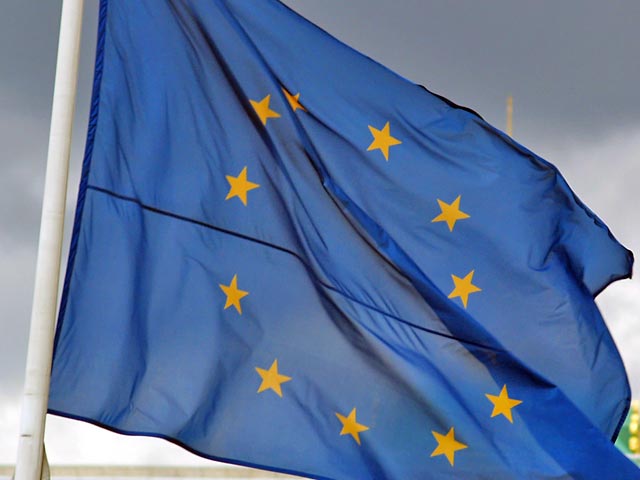
The European Union countries are preparing to introduce economic sanctions against Iran. The EU stated that they had come to an agreement to introduce an embargo on the import of raw oil from Iran if Tehran did not begin to cooperate with the international community on the issue of his nuclear program. Other sanctions are considered. All this happens against the background of the strongest exacerbation of relations between the United States and Iran.
As the European diplomatic source told reporters in Brussels on the condition of anonymity, the “fundamental consent” between the 27 EU countries has been achieved about the embargo for oil imports, but there is still a lot of work to do. ”
The theme of the embargo on Iranian oil is included in the agenda of the EU, appointed on January 30, the EU Council of Ministers. The decision can be made according to the results of the discussion on the same day, Interfax reports.
So far, the discussion goes around the terms of the possible introduction of the embargo and its modalities. According to diplomats, there are significant disagreements between the EU countries in terms of terms.
The fundamental consent achieved by the countries of the European Union to ban the import of oil from Iran - "very good news", commented in the United States.
“It was precisely such steps that we would like to see not only from our closest allies and partners in Europe, but also other countries around the world,” said the press department of the US State Department Victoria Nuland. “We believe that this is fully consistent with our approach to tightening economic sanctions against Iran.” The representative of the State Department quotes ITAR-TASS.
Recall that in early December, the EU announced his intention to impose sanctions against Iran. This happened after the publication of a fresh report of the Iran of Iran in the nuclear region. Then 180 Iranian officials and enterprises were included in the "black list" of the EU . They will be prohibited from access to the EU territory and to the European banking system. Iranian enterprises fall under a complete ban on business management in Europe or with European companies, in addition, their European assets will be frozen
Earlier, in November, the need for sanctions against Iran was announced in the USA, Canada and Great Britain. On December 31, US President Barack Obama signed a law directed against the Central Bank of Iran, which will enter into force six months later. Against this background, Iran’s national currency - Iranian Rial - lost about 12% of its value.
Tehran warned that if the United States begins to implement these sanctions, then Iran would be forced to go to retaliatory steps, up to the blocking of the Ormuz Strait , through which up to 40% of the global export of Black Gold.
Earlier, Foreign Ministry also proposed not only to impose an embargo for the export of Iranian oil, but also to freeze the assets of the Iranian Central Bank.
Iran currently exports 2.6 billion barrels of oil per day and about 20% of them purchases China. Iranian oil is also imported by the EU countries - 0.45 million barrels per day, including Greece, Italy and the Netherlands. And besides, Türkiye, India, South Korea and Japan. Ankara, for example, satisfies about 30% of her oil need, importing it from Iran.
According to BBC , oil exports to the EU provide up to 17% of Iran GDP. In total, according to some reports, Iran receives up to half the income from the sale of oil, and after imposing sanctions he will have to look for new buyers in Asia.
How to replace Iranian oil
In addition to the embargo for the purchase of oil in the Islamic Republic, European countries are discussing the opportunity to ban the supply of technologies to Iran for oil and oil refining industry, and also consider possible measures against the transportation of “black gold”.
In addition, European countries must find an alternative to Iranian oil. Earlier it was reported that Russia and Saudi Arabia, the main oil exporters, can take on the role of the main suppliers of energy carriers for the EU.
The main importers of Iranian oil in Europe are a Spain that consumes 14.6%of the total number of energy supplies from Iran to the EU, Greece (14%) and Italy (13.1%).
One of the leaders of the Iranian National Oil Company said on this reason that Tehran will find ways to overcome the European embargo and maintain oil exports at 2.3 million barrels per day. Today, Iran supplies about 450,000 barrels to Europe daily.
The news of the EU’s intention to abandon Iranian oil immediately inflated the prices of black gold. The cost of a barrel of oil of the brand "Brent" in the February futures jumped to the mark of $ 113.97, after which it began to decline.
The strongest exacerbation between the United States and Iran in 20 years
The day before, the Pentagon answered the harsh statements of Iran, who threatened the Americans with troubles, if the John C. Stennis aircraft carrier, who had left the Persian Gulf, decides to return to the Persian Gulf.
The Pentagon will continue to send an aircraft carrier to the Strait of Ormuz. "The placement of US military forces and funds in the Persian Gulf region will continue as it happened for decades," said the representative of the Ministry of Defense George Little.
In turn, the head of the US State Department of the State Department, Victoria Nuland, said the new threats from Iran speak of the effectiveness of sanctions against this country, Echo of Moscow reports.
According to The National Post , US-Iranian tension these days reached a peak of 20 years ago.
On the eve of the Iranian chief of Ataolla Salehi, "advised" the American aircraft carrier not to return to the Persian Gulf, threatening the United States with some response measures. He stated that Iran is ready to "reflect any threats and has everything necessary for this."
On Wednesday, January 4, Iran just graduated from large-scale naval exercises "Vela-90", which took place from December 24 in the area of the Ormuzian Strait and led to an increase in tension in the Middle East. This happened after that its sailors are ready to block this strategically important strait - the only exit to the open ocean from the Persian Gulf. 40% of the sea export of oil, including in Europe and in the USA, go through the Strait of the Strait.
Iran threatened this measure in case of introducing new restrictions on the export of oil from the Islamic Republic for a nuclear program. Prices for Black Gold immediately rushed up , approaching the line of $ 100 per barrel.
New sanctions against Iran come into force after 60 days, which gives Tehran for some time to accept international requirements and abandon his program for the development of nuclear weapons. However, Iranian sources report that on the face all the signs that instead of using the opportunity to retreat Tehran seems to be ready to exacerbate with the United States and their other opponents in the Persian Gulf zone and in the Middle East as a whole.
The head of the US Treasury is going to China and Japan to discuss oil sanctions against Iran
Barack Obama President instructed the Minister of Finance Timothy Gaytner to go to Beijing next week to clarify the US position on the introduction of sanctions against the Iran’s oil sector. It is reported by ITAR-TASS.
On January 10 and 11, Gaitner's meetings will take place with the Prime Minister of the State Council of China Wen Jezybao and Deputy Chairman of the PRC Xi Jinping.
"Gaitner will discuss with them the continued coordination of the United States with international partners in the region to strengthen the pressure on the Iranian government, including financial measures aimed at the Iranian Central Bank," the Ministry of Finance said.
Meanwhile, the PRC Foreign Ministry said on the eve that tightening sanctions against Tehran would not help solve his nuclear problem. “China and Iran support normal and transparent trade and economic ties that do not violate the UN resolutions, and the contacts of the two countries should not experience any influence from the outside,” said the official representative of the Chinese foreign ministry, Hong Lay.
According to the US Department of Finance, the Hagitner will discuss the same issues in Tokyo with the Japanese Prime Minister Yosihiko Noda on January 12.