
Translated material
Mathematical abyss
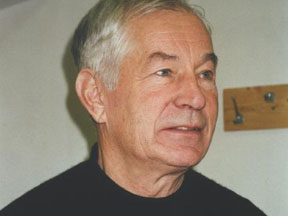
Another interview from the cycle "Book. Knowledge" is devoted to the popularization of mathematics. Kand tells about the past, present and future of the Quantum magazine and much more. physical. Sciences, author of popular science books, vice-rector for international relations of independent Moscow University Alexei Bronislavovich Sosinsky . Talked by Natalia Demina.
Please tell me what books in your childhood, youth, left you the greatest impression, had the greatest impact as a person?
I lived in childhood in France and the USA, and was deprived of that wonderful tradition of reading popular science books on physics and mathematics, which at that time existed in the Soviet Union and still exists in Russia. Therefore, my interest in science arose more from fiction than from popular science books.
In early childhood, I read Jules Verne with great pleasure, but just the scientific side of his works did not make much impression on me. For the first time, I saw a popular science book at 11-12 years. My father bought me in America a very sweet book, which described paradoxical physical experiments that could be performed with the help of home -made home remedies, without any physical devices. The book interested me, I repeated the experiments and this, perhaps, had some kind of influence, but I did not particularly inspire.
Naturally, I was brought up on Russian classics, my favorite writers in childhood, as well as now, were Dostoevsky, Gogol and Leskov, but they did not have any influence on the choice of life. There was a strong cult of Russian poetry in my family, but even here there was no influence on future mathematical life. I treated the "Algebra of Harmony" by Pushkinsky "Mozart and Salieri". In fact, I read the first popular science book in mathematics when I was already a third-year student of New York University. It was a wonderful book of Karant and Robbins "What is Mathematics?", Which everyone knows. But on my first classes, mathematics, oddly enough, was the most strong influence by the book of Antoine de Saint-Exupery The Little Prince.
How?
It was like that. About 13-14 years old, I was seriously interested in mathematics, when instead of boring arithmetic in the course of the French lyceum a real algebra and geometry appeared. Regarding the geometry, I immediately went crazy, and immediately realized that this is what I would do, and I do not need anything else.
I immediately began to reflect on the grounds for geometry, and came up with, as I understand now, something like Riman's elliptical geometry. I decided for myself that Euclidean geometry is no good, moreover, that it is contradictory. At the age of 14, I wrote an opus in which I “proved”, the inconsistency of Euclidean geometry, and explained that the correct geometry is a geometry such as the elliptical geometry of Riman. In essence, there was some porridge in my head from the provisions of projective and elliptical geometry, and the “proof” consisted in the consideration of the Y = 1/X hyperbola schedule: I explained that the curve with such a good algebraic task could not have such a bad schedule that the branches go into infinity unknown, in fact, the branches should become closed, and the oval should turn out. That is, in the modern mathematical language, I tried to prove that the projective classification of second -order curves is the only correct one.
When I wrote my opus, I believed that in mathematics I understand more than my teacher. I had a normal teacher, but with a character that is characteristic of youth, I believed that I understood mathematics much better than her. And then Saint-Exupery played his role: as his little prince, I was convinced that in the main things adults did not understand anything. The episode about the Turkish astronomer, who opened his native asteroid of the little prince was very significant for me: when the Astrona made a report about this, he was not recognized as a strange hat on him, he was not so dressed. And only when he put on a European suit, everyone recognized his discovery. I realized that the adults will not listen to me, the 14-year-old, but after hearing anyway they will not understand anything.
I did not know any mathematicians then except my teacher. What to do? I recorded the calligraphic handwriting that I possessed in childhood, the results of my “research” on several sheets of paper, and sealed it in an envelope. On the envelope he wrote a date and believed that when I grow up, then I would tell everyone about my “discovery”. The envelope was needed just in case-suddenly someone else would come up with the same before my performance-my priority will not dispute. And I kept this envelope for about a year.
When I was 15 years old, I visited Paris away with Alexei Mikhailovich Remizov , a wonderful Russian writer and an amazing person. When I listened to my parents' conversations with Remizov, whom they knew well and loved very much, I was engaged in what I painted. As a child, I acquired a very good drawing technique, and knew how to quite cleverly grasp the resemblance with a pen. My parents, of course, were delighted and believed that I was insanely talented. And Remizov saw that this boy had no talent, except for some drawing equipment, he did not need to do this. In one of his visits to his house, he gave me a wonderful book by Benjamin Fedorovich Kagan “Lobachevsky” (1948). It contained the biography of Lobachevsky, which I read with interest, and the elementary presentation of his science. Then I understood everything about Euclidov and Nevvlidov geometry, tore the envelope with his first opus and washed it to the toilet. This is how the tragicomic story of my first mathematical study ended: one writer (St. Exupery) taught me not to trust adults (I still do not trust), and the other (Remizov) made it clear that before working in some area, it was good to find out at first what has already been done there.
Of course, I read a lot both in French and English, but I could not say that some book acted very much on me from the point of view of my further mathematics. True, in the graduation class of the French lyceum, I was fond of philosophy and read with great interest those philosophers who were professional mathematicians, i.e. Pascal, Descartes, Leibniz, Poincare. And this, indeed, had a certain impact on my worldview, especially Poincare.
“Science and hypothesis” is a wonderful book that I still remember well and often re -read.
Thus, if we talk about the influence of literature on my formation, it was insignificant from the point of view of my future profession. I have a more attitude to the popular science literature not so much as the Consumer as the Creator, because after I was forced to leave Moscow State University in 1974, I worked for 13 years in the journal Quantum-I did not read so much as I wrote popular articles in mathematics.
Can you draw some kind of comparison, at least short, between popular science literature in English, French and Russian? Is there any difference?
If we talk about the period of my childhood, the difference is huge, namely: no comparison can be carried out. Neither in French nor English then there was such a number of high-quality popular science literature in mathematics as in Russia. And now in France and in America there are many translated books from Russian. But in the 1960s, a great popularizer of science appeared in America, in particular mathematics who recently died, Martin Gardner.
Now on the shelves of stores we have a lot of translated ones. It is believed that the best popular science bestsellers are just translated books ...
Those books that are now translated in Russia were not in my childhood, I am incompetent here, I do not know these books. Recently, for my grandson, I bought a simple popular science book in mathematics translated from English. It differs from the Russians in that the author is not ashamed to repeat the beaten and well -known tasks, such as a goat, a wolf and cabbage. And any Russian author will consider it ashamed to repeat such hidden things, and just this American author calmly outlined all this classics, so I bought this book and gave it to my grandson.
Now the Museum of Science has appeared in Moscow, there is such a game where there are cabbage, boat, wolf and goat made of wood on the table, and children are invited to solve the task of transporting all this through a wooden river. So this task is even in the Museum of Science.
In your opinion, what role did Kwant play in the popularization of physics and mathematics in our country?
The magazine "Quantum", of course, is wonderful, what to say there. His heyday began before I came there (in 1974), the circulation reached 350 thousand copies. When I worked there, stably for 10 years the number of subscribers was about 200 thousand. These, of course, are amazing numbers, especially since the “quantum” was distributed only by subscription, i.e. It was impossible to go and buy in a book or kiosk. We, the “Quantovites,” believed that each magazine reads a lot of people, because schools received one instance on entire classes, and if some boy signed on him, he probably solved tasks with his friends, etc.
Of course, Quantum was not without flaws. The main drawback was that painfully smart and good authors wrote to him, so they wrote too difficult. Andrey Nikolaevich Kolmogorov fought very much with this. His own articles, I must say, were written quite accessible. At first, Andrei Nikolaevich was very fond of “Quantum”, then he forgot about “Quantum”, but at the very end of his life he was again engaged in the magazine with great enthusiasm.
What is the future of "quantum", what do you think?
Now, as you know, there are great legal difficulties related to the behavior of the former editor -in -chief Sergei Krotov. Nevertheless, I hope that a selflessly working edition of the magazine and those people from the Russian Academy of Sciences and MCNMO, who are now engaged in Kwant, are able to return the magazine to the high level that he had before. About 10 years ago it was impossible to ensure that the good Russian authors living here or abroad write articles for Kwant. Now the situation has changed, today it is not so difficult to catch a well -writing mathematician and force to write an article; Some people even, on their own initiative, write for Kvant.
The level of “quantum” can be revived, but there will never be such a circulation as before, and never such an “quantum”, like 20 years ago, can be returned. Because the Internet has appeared. But I would very much like, and I think it is quite possible to expect that the “quant” will again reach a fairly high level and at least some influence will have some influence on a mathematical education, in particular at school. For example, I would very much like all matcclasses and all mathematical schools to regularly sign on the “quantum” and use the “quantum” materials for their classes. Unfortunately, the wonderful column “Quantum Tsor”, which Nikolai Borisovich Vasiliev was led at one time, now does not reach the level that was under him, and in addition, in the presence of Internet, television, video games, all sorts of Gemboyev, not only to captivate the children with a solution to (difficult) tasks from the “quantum problem”.
I remember such an interesting episode. In 1988, I still worked in Kwant when the borders opened, I turned out to be away, and Kwant organized a large trip to the winners of the Quantum Task contest in the United States. I was assigned the winners to be lucky abroad. At first, in a luxurious, on Soviet scale, a house for Komsomol chiefs, a two -week gathering was organized, where we tried to explain to these children that in America a different culture, other rules, other behaviors, etc. Then I tried to explain to them that everything was wrong in the USA - they did not believe, they were terribly surprised. Subsequently, 6 of these children became large and famous scientists. For example, Kievan Vanya Arzhantsev became Dr. Fiz.-Mat. Sciences, he is now an assistant professor, and maybe a professor, at Moscow State University. Malokavnikov - professor in MIT. Almost everyone else, like Roma, work in the USA, and not in Russia.
Are there any mechanisms that can encourage scientists to write more popular science books? Are there enough popular science books in mathematics, or it seems to you that their number is already large?
I think there is no crisis in this regard. The MCNMO Publishing House is a very good work on the release of popular science books. In recent years, the books of this publishing house have received several awards. Recently, with the editor-in-chief of the MNCMO Publishing House Yuri Torgov, we prepared the presentation of the popular science book of Moscow Mathematics Ijad Sabitov for the award of the Russian Academy of Sciences for the best mathematical scientific and popular book. Professor Sabitov wrote his book on his own initiative, no one forced it, did not pull it. I do not think that now there is a need to invent some special mechanisms for the publication of such books, everything is already necessary.
Any additional grants, scholarships-this is not necessary? Scientists who want, do they write?
Well, someone writes, someone does not write.
Have you tried to write a popular science book at least once?
More than once. I even have a bestseller, translated into 7 languages, is called "nodes". This is a book in my scientific specialty, but a popular science book. In essence, this is the history of the creation of the theory of nodes. I first wrote it in French, and it was published in France in the mid-nineties, and then they began to translate it into different languages, the last-Slovenian. She came out in the Russian publication, but much later. The Russian edition is a translation from English.
Do you feel that there is a big gap between the fact that scientists are developing now, and the knowledge that the mass public possesses? Do you think this gap can be reduced?
This gap is an absolutely impenetrable abyss, especially in mathematics. Such a paradox takes place: the most useful of all sciences, mathematics, is absolutely unknown to the general public. The general public knows something about the achievements of modern biology, theoretical physics, computer technology, and in the field of mathematics-there is a public ignoring the existence of mathematics, as a living, developing science. Medium, normally educated people do not know at all that there are mathematicians-researchers who prove theorems that develop science. Most people believe that mathematics is a long-created and, of course, the necessary science, which is used somewhere, but they think to themselves: oh, it’s good that the terrible torment that was at school has ended, and now I don’t need to do this, and you don’t need to know anything about it.
The general audience does not understand that mathematics is a science that constantly creates and relaxes itself, starting from the very basics. I can boast that the international mathematical public knows me, first of all, as a specialist in advertising mathematics among the general public. In 1992, at the First European Congress of Mathematics, I was chairman of the section to popularize mathematics and held a round table on this topic. In Madrid in 2006, I was invited as one of the speakers on a round table on the same topic. Why am I? The fact is that both of these forums were mainly a statement of our powerlessness in this regard, although some ideas and hopes were still outlined.
Returning to what I said at the beginning, I should emphasize that the situation with popular science books in America, France and other countries has improved markedly since my youth. Indeed, various efforts are made to popularize sciences. For example, in France, an exhibition with an enthusiastic name “Mathematics is a journey into other worlds”, which is sponsored by the Cartier Foundation (Cartier), has recently opened. This is an exhibition about art and mathematics. Made very exquisite and, apparently, interestingly. I had some relation to her preparation, but so far I have not watched it. It is also worth mentioning the remarkable mathematical cartoons of Nikolai Andreev and the stunning success of popularizing television programs in mathematics of Japanese mathematician Gin Akiyama; These programs have been going on the prime time on Saturday for several years on the first national channel. So attempts are made, but, in my opinion, the global of the crisis situation does not change. The average French and average Russian, as before, do not suspect that mathematics is a living and developing science.
In your answers, I see a contradiction. On the one hand, you say that popular science books in mathematics are full, and on the other hand, that the general public knows nothing about modern mathematics. Is it the fault of scientists or the fault of the public?
Is there a contradiction here? After all, popular science literature in physics and mathematics is read by people who are interested in physics and mathematics, i.e. Absolute minority of the population. And the rest are watching television, there your brother journalist tells them a bunch of things about biology, about physics, about computer technology, and most importantly about a different pseudoscience. And yet I hope that you are right - if not today, then in the near future our common efforts to popularize mathematics will lead to a more correct understanding of what this science is today.