
Translated material
Games "Liberals"
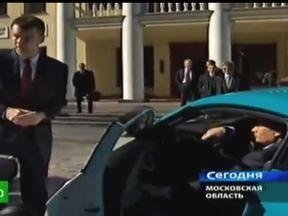
Politics who claim to be presidential post are increasingly bringing into the field of “democratic” rhetoric. However, the presidential candidates (from Zyuganov through Putin to Prokhorov) do not fall into the target audience engaged in a target audience who are engaged in liberal flirting with the public - they say not what the public could wait for.
On the eve of the presidential election, candidates do everything to please certain target groups, which are guided by in their election struggle-a well-known thing. The fact that in Russia at the same time all candidates seek to appeal immediately to everyone is also not news.
Mikhail Prokhorov (who has already collected signatures and seems to take part in the presidential race) promises to let go of Khodorkovsky, Gennady Zyuganov states that “Khodorkovsky served his own” and he is ready to let him go (if, of course, he will win in the presidential election). Then it will not be so surprising if Vladimir Putin suddenly replaces the eternal anger against the leaders of the Yukos and declares something like that no one takes the right to Udorkovsky. In fact, he will not say anything, but it will be "liberal."
In the end, Putin already admired the courage of the defender of the Khimki forest and the editor of the Khimkinskaya Pravda Mikhail Beketov, who was brutally beaten in 2008, Putin promised to talk to the head of the Investigative Committee to accelerate the investigation of the beating of the journalist, hugged Beketov, applauded him standing and wished him a journalist of early recovery. This happened during the presentation of government awards to representatives of print media, which are awarded on the day of the press employee.
There is some flirting of the prime minister with the "liberal public."The prizes who chose the winners were unlikely to not know (Putin himself could well have no suspects about Beketov’s existence until today) that the journalist was brutally affected by all likelihood due to criticism of local authorities and cutting the Khimkinsky forest. However, they still decided to give him the prize. As a result, Putin, contrary to his own image of the “persecutor of freedom”, acted as if in the form of a defender of freedom of the press, at least regional.
The only question is whether such statements (that Prokhorova, that Zyuganova, that Putin) on the electoral prospects of politicians will be said.And here the answer, rather, should be given negative. Khodorkovsky, as an electoral factor, is unlikely to be present. And if suddenly there is a return of the topic of the sitting oligarch to the political agenda, then rather in the form of "to plant everyone else." Supporters of Khodorkovsky are difficult to find in a suitable number of votes for a set of worthy interest of votes, but it is quite possible to lose points on the topic.
The same is approximately with the problems of independent journalists. The topic did not cause special enthusiasm in the population, turning into the election period into the electorate, even after the beating of journalist Oleg Kashin, about which all the central television channels spoke about. Many of those who heard about the beating admitted that the profession of a journalist is one of the most dangerous (that in some way a myth), but a picket in support of Kashin at the capital's Central Internal Affairs Directorate gathered mainly friends and colleagues of a journalist.
Applications do not fall into a potential, relatively small TU - the metropolitan middle class, and even more so in a politicized party.The first, by and large, the bakers are unimportant and even all the chemicals combined, the latter see this manipulation and refuse to play according to the rules of the authorities. The writer Grigory Chkhartishvili, TV presenter Vladimir Pozner, publicist Dmitry Bykov, editor -in -chief of Novaya Gazeta Dmitry Muratov and journalist Sergei Parkhomenko, refused to give prizes, say. All of the listed - active participants in the December metropolitan rallies, Chkhartishvili and Bykov were among the few speakers, whom the protesters accepted unequivocally well.
It turns out that when addressing the city layers, power cannot decide either with the agenda, or even just with the language in which communication is possible.“Pleasant active young people” immediately turn - without any transition - first in the paid agitators, and then even in “Banderalogs”. The promised political freedoms are not only late and few can already satisfy, but in fact they are not freedoms. And fatigue from power in general and from general dissatisfaction with life has not gone anywhere. The conversation does not glue, the dialogue does not arise, and time is leaving.