
Translated material
"Fobos-Gront"-death of a dream
On the night of November 8 to 9, 2011 (at 00:16:02 Moscow time), one of the most anticipated starts of the “space” year took place. From the launcher No. 1 of the site No. 45 of the Baikonur Cosmodrome, the Zenit-2 launch vehicle with the Russian automatic interplanetary station Fobos-Gront was launched and the Inho-1 Chinese micros-1 was integrated into it.
The excretion was regularly, the first in 15 years (!) The Russian AMS was delivered to low near -Earth orbit (periga - 206.5 km, apogee - 345.2 km). The telemetry data confirmed the disclosure of the solar panels of the device and the construction of solar orientation (while the axis of the probe is directed in the sun, the solar batteries are lit and give current).
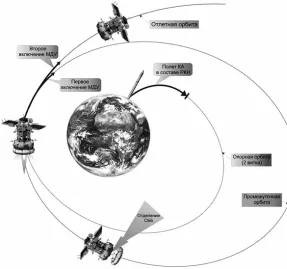
At 02:56:43, the first inclusion of the marching plant (MDU) “phobos group” was planned over Brazil, which would allow to form an intermediate elliptical orbit with a climax of 4162 km. Before turning on the MDU, the device had to determine its position in space and, using low traction engines, build the so -called three -axle orientation.
The second inclusion of MDU was planned at 05:03:44 (over the Pacific Ocean). As a result, on the morning of November 9, Fobos-Gront was supposed to reach the hyperbolic trajectory of departure from the Earth.
Unfortunately, everything went wrong as planned ... Already at the third round from the expected intermediate orbit, no signals were received.
Adventures begin ... and end
At a press conference on the eve of the launch, the head of the NGO named after S.A. Lavochkina Vladimir Khartov said that in the preparation of the Fobos-Grunct mission, a lot was done for the first time-both on board the station and on Earth. He recalled that in world practice, not a single interplanetary mission was complete without any failures, and predicted: “We can also have a lot of adventures.” These words turned out to be prophetic ...
On the morning of November 9, at Baikonur, the head of Roscosmos Vladimir Popovkin informed the reporters that Fobos Gront was unable to leave the supporting orbit. “The motor installation did not work - there was neither the first nor the second inclusion. This suggests that, apparently, he could not reorient from the sun to star sensors, and the smart car did not give the command to include ... "
“Based on the results of processing and analysis of data, the necessary programs and settings will be prepared and laid on board for re-inclusion of marching engines,” said the press secretary of Roscosmos, published in the middle of this day. “An updated analysis of the parameters of the orbit and the supply of energy on board showed that such commands should be issued within two weeks.”
Despite the initial hope and optimism, on November 9 it was not possible to obtain telemetry from the apparatus. The connection problem arose due to the fact that the main on-board radio complex of the X-band and the ground items working with it were not planned to be used when the KA in a low near-Earth orbit. According to the plan, the first communication session with its help was to take place already at the departure trajectory, after the station entering the radio visibility zone of Russian funds on the morning of November 9.
In the support orbit, it was simply nothing to transfer the command on board in the X-band. The angular velocity of the target, especially near the periger, was so large that not only the 70-meter antennas of long space communications could not be found on it, but also the 12-meter spectr-x antennas on Baikonur and in bear lakes, which were supposed to be used at a distance of up to several million kilometers from the ground. To contact the emergency AMS, it was necessary to modernize ground points, in particular, defocus antennas in order to get a wide range of orientation from a narrow ray and “catch” the device.
Only after receiving information about the actual state of the system of the apparatus from the side, it was possible to prepare a re -attempt to start from a low orbit.
On the 9th and on the night of November 10, attempts were made to “hear” the board and transfer to him command and program information. On the afternoon of November 10, the station of the European Space Agency in Peret (Australia) was attracted to the reception - it was successfully located from the point of view of the overlap of “deaf” turns, and Ka passed above it near the apogei and in the light. Alas, Fobos Gront was silent and did not respond to the commands, although shooting from domestic optical observation points showed a solar orientation expected in this situation.
On the evening of November 10, an attempt was made from Baikonur to give the team direct execution. “Phobos-Gront” was supposed to turn on the system of external radio measurements-as a kind of autonomous “squeak”, an indicator of what it is able to accept and execute commands. And again failure ...
In the early days of the flight, based on the analysis of the orbital elements for Fobos Grunct, published by the American United Center for Space Operations (JSPOC), it seemed to many experts that the perijeta of the orbit was slowly rising. Since I couldn’t talk about deliberate maneuvering, it seemed that the “phobos group” was trying to maintain solar orientation, and the work of low traction engines so “successfully” outrages the orbit.
The subsequent analysis showed that from November 9 to 18, the orbits determined by JSPOC went with a noticeable scatter of the parameters, while the height of the periguya remained almost unchanged, while the apogee expectedly decreased. The site from November 18 to 21 turned out to be even more incomprehensible, when, according to American data, the confident growth of Periga was read by almost 3 km (if you count it from the spherical land, i.e. to get rid of the latitudinal dependence!). And on November 21, all these mysterious evolutions suddenly ceased, and the change in the orbit of the “phobos-group” began to correspond to the movement of a passive body with an almost unchanged ballistic coefficient.
Meanwhile, on November 14, Vladimir Popovkin for the first time after Star, commented on the situation with the “phobos -group”: “It is still very difficult to understand the reason [the situation], because we cannot get telemetry from it. Now experts are conducting a number of attempts to lay programs ... ".
On November 22, Deputy Head of Roscosmos Vitaly Davydov announced that telemetry from the side is still not there, and therefore “... you need to be realistic. Since we have not been able to establish a connection with him for so long, then there is very little chance of the fact that we will carry out this expedition now. ”
On the same day, Eka announced the last series of attempts to hear “Phobos-Gront” through the Perth station on the night of November 22 to 23. Five communication sessions were planned, the duration of each did not exceed 6-7 minutes. And then, as if in a movie - at the very last moment a miracle happened! The Australian station, which was assumed by a special transmitting antenna with a 3-watt transmitter, was able to “reach out” to the silent Russian probe for the first time. From the Perth at a speed of 7 bit/s, the command sequence was sent for turning on the transmitter - and the device that had just left the shadows responded: the reciprocal signal of the bearing frequency was immediately received!
On the night of November 23 to 24, it was possible to give out commands from Perth and get an “emergency” frame of telemetry from the X-band radio complex. It became clear that the transmitter was powered and efficient, but it was not possible to “pull out” the details-perhaps due to the fact that when passing through the decoder of the European station, the data “spoiled”.
On November 24 at 16:05, when passing Ka, the full “emergency” frame using the Baikonur station was low over the horizon in the light. It reflected the condition of the individual blocks of the radio complex of the migratory module, the operating stresses on the tires of the radio complex, the temperature on its individual elements - everything was normal. It was also possible to find out that the data exchange tire with the on -board control complex is in a working state. In addition, the frame contained the history of switching between the main and backup transmitter.
All this, however, did not give new significant information to analyze an emergency and finding out of it. And all further attempts to communicate with the apparatus with Baikonur and from Australia and to receive telemetry already in full from the on -board complex of management of success ...
On the night of November 29, experts made an attempt to issue a team from the European station in Peret to include the Fobos Grunont orientation engines in order to raise it orbit and make more convenient work with the apparatus of regular tools. But these attempts were not successful either.
As it became known later, on November 29, a fragment of a fragment of about 15 cm from the “phobos-group” was made. It is not known whether this happened due to attempts to turn on the engines, but, according to one version, the fragment could separate from the apparatus after a chemical source of current on a marching motor installation.
On December 2, Eka announced the cessation of support for the Fobos-Gront mission using its ground stations, recognizing further attempts to be hopeless. On the same day, Russian experts decided on the last remedy - to try to give a series of commands to include the marching motor installation of the device in the hope that as a result it would be possible to raise its orbit!
On December 8, Vladimir Khartov, for the first time after the start, spoke about the technical problems that arose when trying to communicate with the apparatus in a low orbit, and also voiced the possible causes of an abnormal situation: “It could be a difficult software error that happened in those modes that could not be modeled on Earth. The difference between real life and modeling could affect in such a way that an unforeseen situation arose that put the car into a dead end. There could be a purely hardware reason: at the time of loss of communication with the station, we turned on the power of several units, and this is theoretically, if there was damage in the process of excretion, it could cause temporary power disturbances. But these are all versions, the official reasons should be established by a specially created commission. ”
It should be clarified that, according to sources in NGOs. S.A. Lavochkina, on ground stands, it was not possible to reproduce the situation with the “phobos-group”.
On December 10, the Roscosmos press service published the following message: “The federal space agency created an interagency commission to analyze the causes of an emergency that arose on November 9. In the process of withdrawal of KA "phobos-group" on a departure trajectory to Mars. Yu.N. Koptev, Chairman of the Scientific and Technical Council of the State Corporation Rostekhnology.
In addition, a decision was made to create a jointly with the Ministry of Defense of Russia for the operational group for the control of the Fobos-Gront spacecraft from the orbit of the spacecraft. ”
An uncontrollable gathering of the KA from the orbit occurred during the layout of the article - January 15.
At the moment, official information: the wreckage of the device fell in the Pacific Ocean - 1250 km west of the island of Wellington. NASA and ECA have not yet confirmed or denied these messages.
"Forward, to Mars!"
The Red Planet was the main goal of automatic stations still at the dawn of the space era. Before the Mariner-4 flight in 1965, scientists were practically sure of the presence of plant life on Mars, and some even hoped to find the ruins of ancient civilizations.
Unfortunately, the missions to the Red Planet and Soviet researchers were not lucky. Of all the probes sent to Mars, only four partially coped with the task. The first of them was Mars-2 (1971), which entered the orbit around Mars and took a shooting of the surface, but the pictures turned out to be unsuccessful due to dust storm. In addition, on November 27, 1971, the first descent apparatus in history was landed on Mars, which, alas, crashed during landing.
Marsa-3 was more lucky: its descent apparatus on December 2, 1971. For the first time in the world he made a soft landing on the surface of the Red Planet. But shortly after landing, the connection with the apparatus was lost, and people saw the panorama of Mars only in 1976 (American probes Vi-King-1 and Viking-2).
At once, four Soviet stations went to Mars in 1973. Mars-4, due to a malfunction in the work of the onboard, flew by, but managed to take good pictures. “Mars-5” entered orbit around the planet and basically completed the research task. The signal of the descent device “Mars-6” disappeared before landing, and “Mars-7”, like “Mars-4”, missed the planet due to the on-board b “on-board”.
It was possible to answer the success of the Vikings only with a supembical project, for example, the delivery of soil from Mars. In the 1970s, such a mission was developed, first, in the calculation of the use of a super-heavy N-1 missile (which was never taught to fly), and then on a two-way scheme using two proton missiles. Alas, the soil delivery project was closed, and a break came in the Soviet Martian program - the forces were abandoned to study Venus.
Only in the mid-1980s, Soviet scientists again returned to the research of Mars. This time his companion was chosen - Fobos. Unfortunately, the two Fobos stations launched in 1988 could not execute the program. The first apparatus was lost at the flight trajectory to Mars due to the incorrectly submitted command, and “Fobos-2”, Released to Mars, conducted a successful series of observations from orbit, but lost its connection with the land before the landing on phobos.
On November 16, 1996, Mars-96 was launched to Mars, made on the basis of the “phobos” on top of the top, in the context of an acute lack of funds and time for working out. Alas, the second inclusion of the accelerate block engine - to reach the departure trajectory - was not completed, and a few hours after the start the device entered the atmosphere of the Earth and collapsed.
Foreign partners-participants in the Mars-96 project insisted on repetition of launch in 1998. Many of them remained duplicates of the dead together with the apparatus of devices. Unfortunately, due to the difficult economic situation in Russia, funds for the manufacture of another heavy interplanetary station were not found and expensive. Some devices were sent to Mars in 2003 at the European AMS Mars Express.
In 1997, two leading Russian Space Institutes of the Russian Academy of Sciences - the Institute of Geochemistry and Analytical Chemistry named after V.I. Vernadsky (Geokhi) and the Institute of Cosmic Research (Iki)-agreed on the "Scientific and Technical Forecast of the Development of Research of Planets, the Moon and Small bodies of the solar system ...". In 1999, they proposed to launch the Luna-Glob Lunar station with a landing apparatus and penetrators, in 2001 as part of the Russian-American program “Together to Mars”-“Mars-Aster” (Mars-Road and Penetrators), and in 2003-“Phobos-Gront” with the aim of delivering a phobos substance. In order to save AMS, they should have been created under the launch of middle -class missiles. They should have at the basis of one universal platform, and as a marching engine - electreactive engines (ERD) of low thrust. In the first, lunar project, this platform was supposed to undergo comprehensive tests.
The planetary section of the Council of Cosmos of the Russian Academy of Sciences approved the program and on October 24, 1997 sent a request to the Council on the Cosmos to include two projects-the Luna-Glob and the Mars-Fobos-Gront mission with the possibility of launch in 1999 and 2001 for the 1998 Council for 1998. Accordingly, with the allocation of 20% of the financing of the scientific section of the federal space program on them. In subsequent years, it was planned to deliver the soil from the moon and send a lunar rover there (in 2004 and 2006,
However, the situation with the financing of the “scientific” space in those years was extremely difficult. After the death of Mars-96, it was decided to send almost all the allocated funds to the Spectrum space telescope program, since foreign partners-project participants insisted on their speedy launch. Defend a planetary program, find only 600 million rubles. (in the then prices - about $ 100 million), it was impossible for two of its priority projects.
In April 1998, the Cosmos Council decided to leave in the program until 2005. Only one interplanetary project, leaving his choice for scientists. On June 2, the planetary section, headed by the director of Geokhi Academician Eric Mikhailovich Galimov, chose the most complex, interesting and multi-rising mission-Fobos Grunct-with a start to the 2003 astronomical window on the Soyuz-2 missile.
In order to simplify and save funds, the landing apparatus with a ross car was excluded from the united project “Mars-Fobos Gront” in order to simplify and save funds. This reduced the cost of the project from 370 to 300 million rubles. (excluding the pH; about $ 50 million at the "pre -crisis" rate). But even in a cut video project of the delivery of samples from phobos was to become a significant contribution of Russian science to the world research program of Mars.
5 ноября 1998 г. Научно-технический совет Российского космического агентства рекомендовал перевести проект в стадию ОКР с 4-го квартала 1998 г. с переходом к эскизному проектированию с 1999 г. В реальности научно-исследовательские работы были завершены в 1999 г., а эскизное проектирование начато с 2000 г.
В первоначальном варианте «Фобос-Грунт» имел стартовую массу 7250 кг и состоял из трех модулей: орбитально-перелетного, модуля ЭРДУ и блока сбрасываемых баков. С опорной орбиты ИСЗ на начальную гелиоцентрическую орбиту он переводился тремя импульсами бортового ЖРД (жидкостный реактивный двигатель), после чего блок баков сбрасывался. Раскрывались гигантские панели солнечных батарей площадью 60 м2 — и АМС (автоматическая межпланетная станция) массой уже лишь 2370 кг продолжала полет к Марсу, используя для формирования траектории электрореактивные двигатели малой тяги. На подлете к Красной планете модуль ЭРДУ отделялся, ЖРД выдавал тормозной импульс — и аппарат выходил на орбиту вокруг Марса. Далее следовали этапы сближения, посадки на Фобос и забора грунта с помещением образца во взлетную ракету. Через 1-3 суток после посадки взлетная ракета стартовала к Земле.
Экспедиция должна была начаться в декабре 2004 — июне 2005 г., времени на создание нового аппарата было немного. Между тем львиную долю научного бюджета забирали астрофизические проекты «Спектр» и «Интеграл», а финансирование миссии к Фобосу оставалось в несколько раз ниже необходимого: по 10 млн резко «похудевших» рублей в 2000 и 2001 гг., 14 млн — в 2002 г., 15 млн — в 2003 г. О запуске не только в 2004-2005 гг., но и в 2007 г. уже не могло быть и речи.
К началу 2004 г. проект претерпел кардинальные изменения. «Фобос-Грунт» лишился модуля с электроракетными двигателями: с целью сокращения продолжительности перелета было решено использовать для выхода на межпланетную траекторию маршевую двигательную установку (МДУ), создаваемую на базе РБ «Фрегат», но без собственных систем управления и энергопитания, а также без радиокомплекса. После отделения МДУ доразгон станции, коррекции и торможение у Марса должна была обеспечить собственная двигательная установка КА.
Стартовая масса аппарата выросла до 8120 кг, из которых на перелетный модуль приходилось 590 кг, а масса возвращаемого аппарата составляла 110 кг. Для исследований по трассе перелета и на поверхности Фобоса АМС могла нести комплект научной аппаратуры (до 50 кг) и дополнительную полезную нагрузку (120 кг). В качестве последней рассматривались четыре малые марсианские метеостанции массой 15-20 кг.
Научным руководителем проекта был назначен директор ИКИ Лев Матвеевич Зеленый. Стоимость миссии оценивалась в 1,5 млрд руб., что по-прежнему соответствовало 50 млн долл. Старт должен был состояться в октябре 2009 г., возвращение — в июле 2012 г. Реализация проекта «Фобос-Грунт» в этом варианте фактически началась с 2005 г. В 2006 г. в НПО им. S.A. Лавочкина (генеральный конструктор и генеральный директор — Георгий Максимович Полищук, главный конструктор проекта — Максим Борисович Мартынов) было закончено макетирование основных узлов и приборов АМС,проведены первые вибрационные испытания космического аппарата в сборе. Изготовление серии из десяти технологических макетов началось в 2007 г.
Однако весной 2007 г. проект снова был изменен. 26 марта было подписано Соглашение о сотрудничестве в области совместных российско-китайских исследований Марса, которое предусматривало запуск на российской АМС попутного китайского зонда. В связи с этим потребовалось ввести дополнительный элемент конструкции — разделяемую ферму между МДУ и перелетным модулем, внутри которой и разместили китайский микроспутник. Как следствие, потребовалась доработка маршевой ДУ, дополненной сбрасываемым блоком баков, бортового комплекса управления, элементов системы электроснабжения и др. Последнее принципиальное изменение в проект внесли в апреле 2009 г., когда была прекращена разработка малой метеорологической станции для посадки на Марс.
Запуск аппарата по-прежнему планировался на осень 2009 г., но буквально за два месяца до расчетной даты Федеральное космическое агентство приняло решение перенести его на астрономическое окно 2011 г. Официальной причиной была неготовность манипуляторного комплекса производства ИКИ. Неофициальной — общая неготовность аппарата и, в частности, его бортового комплекса управления.
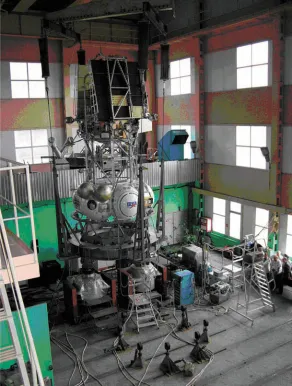
Вскоре после этого, в январе 2010 г., сменилось руководство НПО им. S.A. Лавочкина. Виктор Владимирович Хартов и его команда предприняли деятельные усилия для доработки проекта. В январе 2011 г. была завершена сборка «Фобос-Грунта» и начались его электрические испытания, а в феврале-марте состоялись термовакуумные. Заключительные испытания и операции с космическим аппаратом в Химках проходили с мая по август. 29 сентября на Байконур была доставлена его маршевая двигательная установка, а 17 октября самолетом Ан-124-100 привезли и собственно «Фобос-Грунт».
Конструкция АМС «Фобос-Грунт»
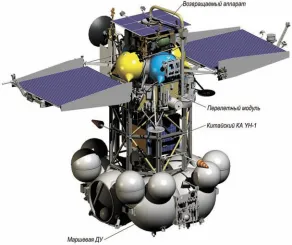
«Фобос-Грунт» создавался на базе нового унифицированного многоцелевого модуля «Флагман». АМС выполнена по сложной многоступенчатой схеме с последовательным отделением отработавших блоков и состоит из следующих компонентов:
— маршевая двигательная установка (МДУ) выведения со сбрасываемым блоком баков (СББ), предназначенная для формирования отлетной траектории, ее коррекций и выхода на начальную орбиту искусственного спутника Марса (ИСМ);
— переходная ферма (ПФ), внутри которой закреплен адаптер с китайским спутником «Инхо-1»;
— перелетный модуль (ПМ), который является основным структурным и рабочим элементом АМС до момента старта с Фобоса;
— возвращаемый аппарат (ВА) для взлета с поверхности Фобоса, старта и перелета к Земле и формирования траектории входа спускаемого аппарата в атмосферу Земли;
— спускаемый аппарат (СА) для торможения в атмосфере и доставки на Землю герметичного контейнера с образцами грунта Фобоса.
«Кто виноват и что делать?»
Главной задачей миссии было установить механизм возникновения Фобоса: образовался ли он вместе с Марсом или был захвачен позже
из пояса астероидов. Это позволило бы обосновать модель формирования Солнечной системы. Из двух марсианских лун Фобос был выбран еще и потому, что он ближе к Марсу, чем Деймос, и на нем может находиться марсианский грунт, выбиваемый с поверхности планеты при падении метеоритов.
Сейчас, после более чем 20-летнего перерыва в отечественных межпланетных исследованиях, проект «Фобос-Грунт» кажется слишком амбициозным. Аппарат должен был не только долететь до спутника и сесть на его поверхность, но и вернуться. Подобный полет к Луне длится две недели; многолетнюю экспедицию с возвратом никто еще не делал, и даже в США они только задумывались.
Необходимо учитывать, однако, что в те годы, когда «закладывался» проект «Фобос-Грунт», еще были свежи воспоминания об исключительно успешных миссиях к Венере и комете Галлея (проект «Вега»), и экспедиция за грунтом спутника Марса выглядела вполне решаемой, хотя и сложной задачей. Глядя же из дня сегодняшнего, мы должны признать, что запущенные в 1984 г. «Веги» стали последними вполне успешными отечественными межпланетными миссиями. То есть к моменту реального развертывания работы над «Фобос-Грунтом» из российской космонавтики ушло целое поколение специалистов, которые имели опыт создания автоматических станций и их управления на межпланетных траекториях. Передать свой опыт им было некому — молодые ученые и инженеры в начале и в середине 1990-х в космическую отрасль почти не приходили.
Многому в проекте «Фобос-Грунт» приходилось учиться с нуля — и сразу же на очень сложной миссии. Плюс к этому то и дело менялась конструкция аппарата. После появления китайского «попутчика» пришлось почти полностью перекраивать проект и переходить с «Союза» на «Зенит». Возможно, в ходе этих многочисленных изменений и возникли предпосылки той ошибки, которая не позволила аппарату улететь от Земли.
В качестве основной причины неудачи можно назвать недофинансирование именно научной составляющей космической отрасли. Финансирование космической науки составляет всего 7% от бюджета Ро-скосмоса, причем эти средства распределяются между всеми научными разработками. К примеру, стоимость всех работ по проекту «Фобос-Грунт» за все 15 лет составила примерно 170 млн долл., да и те в основном были выделены лишь в последние пять лет. Для сравнения: стоимость американских научных разработок по марсоходу Curiosity (проект Mars Science Laboratory), который 26 ноября 2011 г. успешно стартовал к Красной планете, составила 2 млрд долл.
Одного лишь энтузиазма и целеустремленности для современной космонавтики недостаточно. Чтобы станции не застревали на околоземных орбитах, а спутники не падали в оке-
ан, нужны испытательные стенды, тщательная многократная отработка всех систем, и главное — грамотная организация работ и опытные специалисты. Нужна школа, где осуществляется связь поколений и передается наработанный на ряде последовательных проектов опыт. Из-за тотального недофинансирования 1990-х последовательность нарушилась, а талантливые и энергичные специалисты, которые сейчас могли быть руководителями среднего звена, покинули отрасль, не подготовив себе смену.
Логичней, с точки зрения наработки опыта, было бы начать с подготовки лунных миссий, создав в первую очередь относительно недорогой зонд, на котором можно было бы отработать и новую платформу, и технологию связи и управления, и способы взаимодействия специалистов. В реальности получилось всё наоборот — сперва, чуть ли не с нуля создавали сложнейшую межпланетную станцию, а лунный проект на ее базе отнесли на 2015 год… В итоге молодые специалисты, конечно же, получили опыт, но слишком дорогой ценой.
Гибель «Фобос-Грунта» заставляет вновь и вновь задавать одни и те же вопросы:
Не станет ли пятилетний перерыв до следующего старта таким же фатальным, какими стали промежутки перед «Марсом-96» и особенно «Фобос-Грунтом»?
Как изменятся сроки осуществления новых проектов, которые предполагалось реализовать на отработанной в полете платформе «Фобос-Грунта»?
Будет ли предпринята попытка осуществить проект «Фобос-Грунт» (пусть и в урезанном варианте) через четыре года (надеяться на повторение попытки в следующее астрономическое окно можно было бы только во времена С.П. Королева и Г.Н. Бабакина)?
Захотят ли иностранные партнеры еще раз рискнуть разместить свою научную аппаратуру на российских аппаратах?
Может ли Россия вообще претендовать на статус ведущей космической державы, не запустив ни одной межпланетной станции?
И, как всегда, ясно лишь одно: если кто-то и осилит эту дорогу, то только идущий. Если строить много межпланетных станций и запускать их как можно чаще (начав, например, с лунных аппаратов) — успех придет.
Александр Ильин ,
«Новости космонавтики»,
Especially for a three-hobby
ОТ РЕДАКЦИИ
В начале января нового года глава Роскосмоса Владимир Поповкин в интервью газете «Известия» сказал, в частности, следующее:
— То есть степень риска миссии «Фобоса» была понятна, но деваться было некуда?
— Иного пути просто не было. Сегодня нет ясности, почему не запустилась двигательная установка «Фобос-Грунта». Непонятны также частые сбои с нашими аппаратами в тот период, когда они летят над теневой для России стороной Земли — там, где мы не видим аппарат и не принимаем с него телеметрию. Не хочется никого обвинять, но сегодня есть очень мощные средства воздействия на космические аппараты, возможности применения которых нельзя исключать.» [1]
Зарубежные СМИ оперативно отреагировали на эти слова, посчитав их — с достаточным на то основанием — намеком на Соединенные Штаты Америки. Газета New York Times связала это заявление с «растущим антиамериканизмом российской политики», однако отметила, что «замечание г-на Поповкина резко контрастирует с духом сотрудничества, отличающим современную гражданскую космическую деятельность России, которая ведется в сотрудничестве с НАСА, Европейским космическим агентством и другими зарубежными партнерами» [2].
Еще более ироничен журнал Time, который в довольно язвительной статье [3] отмечает, что «США ничего бы не выиграли, а потеряли бы очень много, если бы начали выкидывать фокусы с российским марсианским зондом — особенно сейчас, когда мы зависим от ракет Роскосмоса, чтобы перевозить нас на построенную НАСА Международную космическую станцию».
Русскоязычный Интернет также откликнулся на слова руководителя Роскосмоса, однако реакция была двоякой: нашлись и сторонники теории «заговора» и те, кто видит в сказанной фразе угрозу дальнейшему развитию космических исследований. Ведь именно благодаря помощи НАСА и ЕКА (не говоря уже о множестве любителей астрономии по всему миру) удалось найти «Фобос-Грунт» и попытаться провести с ним сеанс связи. На борту станции, кроме российских, были установлены и зарубежные приборы, в том числе — эксперимент БИОФОБОС, начатый по инициативе Американского планетного общества. Да и не секрет, что научный космос в последние годы во многом выживал за счёт международной кооперации, основанной на многолетнем опыте работы. Но если вместо благодарности услышать плохо скрытое обвинение в злом умысле — какие связи смогут это выдержать?
Могут возразить, что НАСА — агентство гражданское, тогда как Владимир Поповкин наверняка имел в виду другие ведомства и, возможно, говорил даже не о «Фобос-Грунте». Undoubtedly. Но, к сожалению, в мире броских новостей и глобальных информационных сетей уже не до тонких различий в смыслах.
1. «Нам предстоит определиться с целесообразностью пилотируемых миссий» 09.01.2012 http://www.izvestia.ru/news/511258
2. Russian Official Suggests Weapon Caused Exploration Spacecraft's Failure, by Andrew E. Kramer, 10.01.2012 http:// www.nytimes.com/2012/01/11/science/space/russian-official-suggests-weapon-caused-spacecraft-failure.html?_r=1
3. Silly Season: Russia Accuses the US of a Secret Mars Plot, by Jeffrey Kluger, 11.01.2012 http://www.time.com/time/health/article/0,8599,2104251,00. html#ixzz1jXEvbvCy