
Translated material
How the Universe expanded in 2011
The past year, perhaps, did not bring revolutionary unexpected breakthroughs in astrophysics. Nevertheless, the companions flew, the telescopes observed, theorists thought, and therefore many interesting results were obtained. We highlight the traditional twenty of the most interesting, in our opinion, plots. The study of planets and small bodies of the solar system is excluded from this list. Work was taken only from the archive of preprints arxiv.org. Some plots are about the results published in several articles, sometimes even different groups of researchers.
Before moving on to the “twenty”, it is necessary to highlight the most important event in domestic astrophysics. It is the launch of the spectr-r satellite, which became the basis for the radio-Austron spacecraft. I would like to believe that, summing up the scientific results of 2012, we will be able to name several important results obtained with its help.
It was difficult to single out one or two of the most important scientific result. Therefore, the plots are streamlined in the reverse chronological order (from December to January). But the main theme of the year was the study of exoplanets. Our list begins with them.
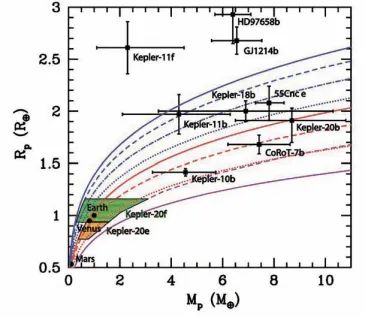
1. Right before the Christmas holidays, an article appeared (1112.4550) with one of the most interesting discoveries of the year. The study of the Kepler-20 planetary system showed that two of the five planets have dimensions of about 1 and 0.9 radius of the Earth. These are the most compact of the famous exoplanets. True, they are close to their star, so we are not talking about earth -like conditions on their surface.
2. Another important exoplanetary result, published in December, is associated with the opening of a small planet in the habitat of a star like the Sun (1112.1640). The object received the name Kepler-22J. The radius of the planet is estimated at 2.4 earthly. There is little to know about the mass, so it is too early to say that this is a stone planet. Nevertheless, this is the first reliable planet in the habitat of the sun -like star, and this is clearly not Jupiter.
In the same plot, we include the opening of a small planet on the border of the habitat (1108.3447). This result is obtained using ground observations using the Harps tool. The technique is different from the observations of the satellites Kepler and Corot. At Harps, just mass is measured. And in this case, the lower limit for the mass is 3.6 earthly. Thus, it can be the so -called super -ground.
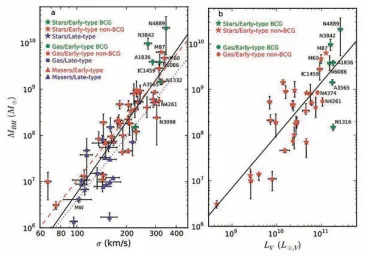
3. The detection of objects with extreme parameters is often interesting in itself. But sometimes this is also important because it poses new questions before the theories of the formation and evolution of such bodies. This type of discoveries includes the detection of two record -massive black holes with masses of about 10 billion masses of the Sun (1112.1078). These black holes are noticeably more massive than predicts a well -known correlation between the parameters of the galaxy and the mass of the central compact object.
4. Studying the spectra of distant quasars, the authors of work 1111.2334 found two intergalactic clouds with a very low content of elements heavier hydrogen at a red displacement Z> 3. The so -called metallicity turned out to be at least 10 thousand times less than sunny. Analysis of the deater lines showed excellent consent with the standard model of a large explosion. The opening of such clouds with age, corresponding to 2 billion years after the start of expansion, suggests that stars like the very first (the so -called population of III) could form not only in a very young universe, but later in such clouds, where part of the substance was poorly mixed, starship was not going on, and therefore the primary chemical composition of the interstellar medium was preserved.
5. In August 2011, Supernova was opened in the close famous Galaxy M101. Moreover, it turned out that it belongs to the type IA. Moreover, in addition, it was able to see it at an early stage of development of the flash and endure in all ranges. There were several works devoted to observations and the nature of an exploding object, for example 1110.6201. Apparently, a carbon-acid white dwarf exploded, the company of which was in the double system was a star of the main sequence. This will allow you to better understand the nature of supernova IA, important and in terms of cosmological research.
6. Usually the data of observations fall into the lists of the most interesting fresh astrophysical results. Occasionally - large computer simulations. This time we decided to include one purely theoretical work in the list: 1110.3701. The authors built a new theory of spherical accretion of a substance on neutron stars in close double systems. The proposed model allows you to resolve several contradictions at once that torment astrophysicists studying such systems.
7. The flow of the so-called PEP neutrino (arising in the chain of the proton-proton cycle of thermonuclear reactions in the sun) is calculated most accurately. Therefore, it is extremely important to measure it. This was done only in 2011 at the installation of Borexino (1110.3230). Given the most popular assumptions about neutrino oscillations, the result corresponds to the standard model of the sun.
8. A much less definite situation takes place with laboratory searches of a dark substance. In 2011, several experiments reported on their results. This is, first of all, Cressst-II (1109.0702), Xenon100 (1104.2549) and Edelweiss-II (1103.4070). The first of the mentioned experiments reports an inexplicable signal at a low level of significance. The second and third give only the upper limits. Theorists make attempts to explain all these data at once, plus the old data from the DAMA installation and the results (negative) for the search for the annihilation signal in the gamma-range from close galaxies.
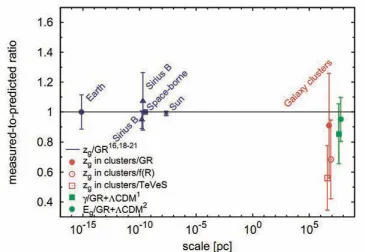
9. The authors of work 1109.6571 applied the original methodology to verify the theories of gravity. They used observations of about 100 thousand galaxies in 8 thousand accumulations to highlight the effect of gravitational red displacement. As a result, it is possible to compare the profiles of gravitational accumulation potentials obtained according to the movement of galaxies and in red displacement. For different theories of gravity, the results should be different. Best of all the test is the general theory of relativity. The worst of all is Teves (a relativistic version of a modified Newtonian dynamics, which is an alternative to models with a dark substance).
10. The planets can rotate around the stars forming a double system. There are two options. According to the first, the planet is spinning in orbit with a very small radius around one star, and the second rotates in a much wider orbit. The second is more interesting. In this case, the planet rotates immediately around two stars, so that the distance between the stars is much smaller than the size of the planet orbit. It is about such a situation that is described in the work of 1109.3432. The system received the name Kepler-16.
11. Corot satellite continues to give out important discoveries. One of the most interesting in 2011 was the detection of a massive planet of high density (1109.3203). With a mass of more than four Jupi-core Corot-20B, a radius has less than Jupiter, about 15 percent. This corresponds to a density above 8 g/cm3 in a cubic centimeter. The appearance of such planets does not fit well in standard scenarios.
12. In the Galaxy NGC 3393, two ultra -massive black holes were found at a distance of 130 PCs from each other (1109.0483). This fact itself is not very interesting. The unusualness is that the analysis of the properties of the galaxy itself shows that this could hardly be the result of the merger of two approximately equal massive galaxies. So, two galaxies of different masses merged. Previously, pairs of black holes remaining from such mergers were not observed.
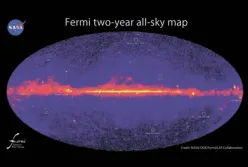
13. The Fermi satellite continues its work, and in 2011 the second catalog of sources found using the Lat tool (1108.1435) was published. It included almost 2 thousand sources registered in two years of observation.
14. The most distant quasar was discovered (1106.6088). The red displacement is slightly superior to 7 and is measured significantly and with high accuracy. This is not a recordly distant object, but it is important that the data on luminosity allow you to get the lower limit to the mass of the black hole. The hole is large (2*109 mass of the sun). This poses questions before the models of the formation of embryos of ultra -massive black holes. Apparently, in this case, the embryo could not form from the massive star of the first generation, as is usually assumed in standard scenarios.
15. In astronomy, a big problem is to measure distances. In 2011, it was possible to determine exactly (in the parallactic method) to determine how far the most famous candidate for black holes is-the Lebed X-1 system (1106.3688). According to the authors, it is 1.81.9 kiloparsk. This is just the second accurate definition of the distance to the system with a black hole, and the first for systems in which the second star is massive. In addition, thanks to new data, all the characteristics that determine the movement of the swan X-1 in the galaxy became known. Now you can build significantly more accurate models of this system that the authors have done in their subsequent work.
16. With the help of the Atamsky Cosmological Telescope (using the WMAP satellite data), it was possible to show that the existence of dark energy can be proved using only data on relict radiation (1105.0419). In addition, the new information from this 6-meter telescope operating in the submilimeter range made it possible to clarify the data on the spectrum of primary density disturbances in the universe (1105.4887).
17. In March 2011, an unusual gamma-ray gamut was discovered. It was very long and came from the central part of the galaxy in the red displacement Z = 0.35. The surge managed to endure in different range ranges, which is described in Article 1104.3356. Several models immediately appeared. The most realistic is that this event is the formation of Jet (i.e. stream) after a tidal rupture of the star of a super -massive black hole, and Jet turned out to be directed right at us.
18. An amazing system is open (1102.0291). A star of the sun type rotates six planets. They are all transit. Five have orbital periods from 10 to 47 days. The internal planets are one of the lightest of the known ones, but the radius estimates indicate a low average density: the planets have shells from light gases. The system received the name Kepler-11.
It is impossible not to mention the series of February preprints of the Kepler satellite team (1102.0541, 1102.0543, 1102.0544, 1102.0547), which described more than 1000 new planetary candidates discovered by this project. During the year, various articles on the analysis of these data appeared.
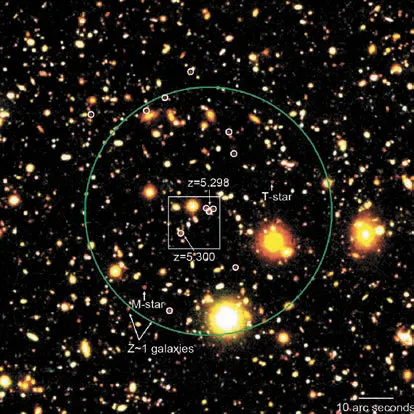
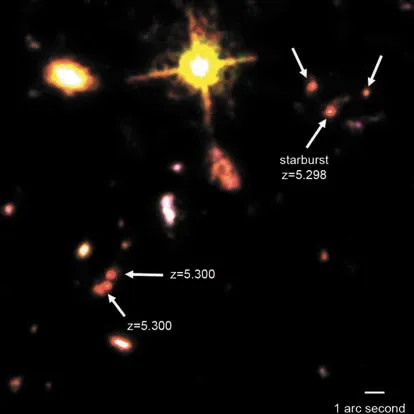
19. For the first time it was possible to reliably identify the distant protoscope of the galaxies (1101.3586). It is observed on the red displacement Z = 5.3. By that time, the expansion lasted a little more than a billion years. Objects were found that will form a giant central galaxy of accumulation in the future. This is an important confirmation of the standard scenario of the evolution of the universe.
20. At the beginning of 2011, the first results of the satellite Planck (1101.2022 and another 20 articles in the archive) were presented. At the end of the year, intermediate results began to be published (1112.5595). The published data is not yet directly related to the definition of cosmological parameters, but this is not just technological data: the properties of our galaxy and individual non -galactic sources are studied, including accumulations of galaxies.
Sergey Popov