
Translated material
NASA and independent US experts rejected the version of the radar in the death of Fobos
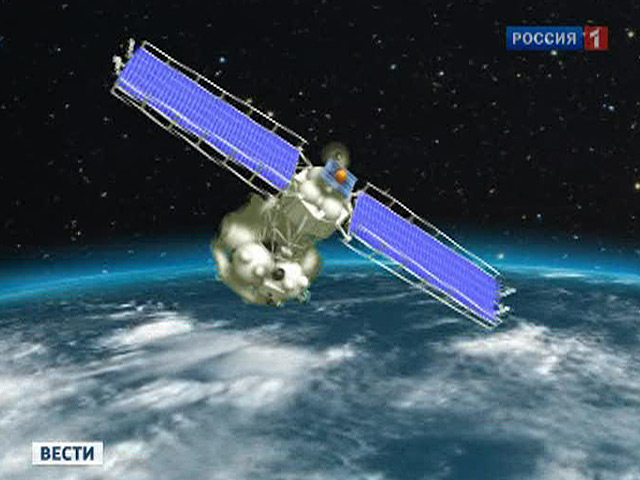
The American space department - NASA - and independent experts in the United States rejected the version expressed in Russia that the Fobos Grunct interplanetary station could suffer from the impact of the US radar.
The fact that in the first hours after the start, the device could accidentally find himself in the radar area installed on the Kvajalein atoll (Marshallov Island), the Russian newspaper Kommersant Russian newspaper said last Tuesday, January 17.
According to her, the radar station (radar) at that moment tracked the trajectory of one of the asteroids, and as a result of the exposure of the megavat pulse, a failure occurred in the electronics of the station.
According to the official representative of NASA Bob Jacobs, on the day of launch of the Russian station on November 9, researchers of the American department did not use the radar in the Marshall Islands to track the movements of the asteroid. NASA was involved for this purpose of radars only in California and Puerto Rico, added Jacobs.
The Pentagon is still refraining from comments. “I have nothing to say about this, we recommend that you contact the State Department,” the official representative of the military department Wandy Snyder answered the corresponding ITAR -TASS request.
Independent American experts also consider the “insolvent” hypothesis that the “phobos-group” was no longer able to issue a command to turn on the motor installation into the beam zone.
“Radar has nothing to do with it,” said Robert Zubrin, a former engineer of the Lockheed -Martin Aerospace Corporation, last Tuesday. According to him, if the radars could have been out of order of the satellites so easily, the latter "would all the time would become unusable, since they constantly fly over a particular radar."
A number of experts also indicated that even if we assume that the “phobos group”, racing at a speed of 24 thousand km per hour, could be in the radar beam zone, the exposure of the beam would last only less than 100 nanoseconds, which would clearly not be enough to cause any damage.
The former NASA employee, and now a cosmic technology consultant, James Oberg, agreed with the expressed views. The army radar in the Marshall Islands usually monitors every Russian space launch, he noted. “And I can say that they (radar operators) never accidentally or intentionally disabled spacecraft,” the expert emphasized.
"The safety of our (American) astronauts depends on how mature and reasonably they (Russia) are capable of solving the problems that arise," Oberg added, recalling that NASA so far depends on Russia in terms of delivery to the International Space Station of its astronauts.
“Russia, and before it, the Soviet Union made 19 attempts to send their stations to Mars, and only in three cases these missions can be considered partially successful,” the expert Frank Reed, in turn. “Such is reality. This can be considered“ just bad luck ”, but there are grounds for criticism on the merits.”