
Translated material
The diagnosis of power
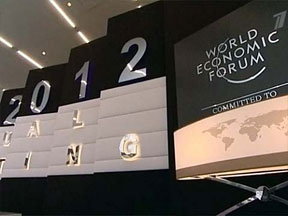
The Russian elite is extremely skeptical of its own state. Prominent officials and businessmen admitted in Davos that corruption rules in Russia, the state apparatus is ineffective, and the public sector in the economy will go. However, it is not possible to solve these problems. It turns out only a session of group psychotherapy.
What does the Russian and European elite challenges facing our country see? Both the development strategy, and what future will wait for Russia in the near future, depends on this question.
These questions inevitably fell into the forum’s agenda in the Swiss Davos, which takes place these days. The answers, I must say, require some understanding. As Tatyana Lysova, editor -in -chief of Vedomosti, told the degree and the world, on the business breakfast arranged by Sberbank, the head of Sberman German Gref proposed to evaluate the audience - and including large foreign investors, Russian businessmen and officials - to evaluate what challenges are faced with Russia today.
The “fatigue from the current political elites”, “lack of trust in society”, “low efficiency of the authorities” and so on, only 9 points are included in the number of potential “threats” “threats”. And according to the hall, as the chief editor of Vedomosti tells, it turned out that the three main challenges for Russia are corruption, an excessive public sector and an outdated political system. This is in descending order, for the leader of the vote - corruption - about 24 percent of the audience voted.
And when evaluating the effectiveness of the Russian authorities on a scale of 1 to 9, only 1.5 percent was put by the authorities of the nine. Moreover, Gref failed to find out who these optimists are, the moderator of breakfast. But the First Deputy Prime Minister of the Russian government, Igor Shuvalov, specified that neither he nor the assistant to the President Arkady Dvorkovich in these one and a half percent-both set the other estimates. In general, the “low efficiency of the authorities” in the call rating took an honorable fourth place with a result of 12 percent.
Of course, one can certainly assume that “liberals from power” go to Davos, but in this case, any beautiful-sided assessments of the country's rapid development in the 2000s are, to put it mildly, to adjust. And attempts to increase the efficiency of the government, its initiatives for the nationalization of large business and his struggle against corruption should be recognized if not at the end of the failure, then at least not giving the expected result. It is also interesting that the audience has not yet believed in the active discontent of citizens and the “electoral fatigue” has not been among the leaders.
The elite, thus, is fully aware that the bureaucracy (both in the act of government and in the public sector of the economy) is ineffective and fragile, and the management mechanisms themselves cannot fix this. Valuable recognition from the "salt of the earth", from those whose hands are actually made by Russian economic policy.
Since, to overcome the bone bureaucratic system, at least the reform of the government system is needed. And here on the agenda all sorts of non -trivial things already arise, such as abandoning the manual control system, establishing the independence of ships, sanitation and professionalization of the official corps. Not to mention the basic and expensive things, such as an adequate education system (otherwise from where, albeit in the future, uninvited officials?).
And how few people represent how to approach these problems. In addition, on any “a” of one part of the state apparatus (including the highest bureaucracy), “B”, “C” and even “I” from other representatives of the elites immediately follows. The managers of state -owned companies are confident in the inviolability of their management method, albeit ineffective. The law enforcement agencies consider any transparency to be harmful, and threats to their own departmental and material interests are issued for threats to the country's security in general and the authorities in particular. Regional elites require money from the center in one form or another and all this effectiveness in general on the drum. And so on.
And “the best people in the bureaucratic apparatus” are ultimately beneficial “manual control” and relative “blurring functionality”, when formal powers mean little, compared with hardware weight, and courts that can make politically motivated decisions. Otherwise, the actual system itself is unlikely to work. Thus, the consensus “diagnosis” of the Russian political system in Davos, rather, resembles a session of psychotherapy.