
Translated material
Egypt: After the emergency
After emergency. In Egypt, a state of emergency was canceled, operating in the country for more than 30 years. This happened on January 25, on the first anniversary of the popular uprising, which led to the overthrow of the regime Hosni Mubarak. And two days before, a new parliament began work. But the change of milestones do not measure only events-symbols. How real life has changed in the most densely populated country in the Middle East is a much more difficult question 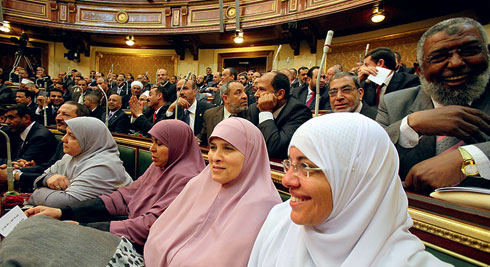
A year ago, when a revolution occurred, the role of the military elite was mostly reduced to facilitating Hosni Mubaraca to leave power. In January, she was overwhelmed by a public desire to celebrate the anniversary of this departure by military parades and air show. A year ago, the main engine of the riot against the then power was groups of protesting youth and democrats activists. Today, the same groups organized a protest campaign under the slogan “Generals- Falsers”: on the streets- mini-demonstrations with audio and video presentations that open abuses by the police and the military. A year ago, Islamist politicians approved those who went to Tahrir Square. Today, having won the parliamentary elections, they approve of the actions of the military, although they call them to the speedy transfer of power of the civil administration.
What did Egypt, playing a key role in the region, even despite the poverty and stagnation, as a result of the January revolution? Although it is sad to admit - not so much.
The legacy of Mubarak Yes, independent media are earned diligently by state criminals. Yes, a trial of former President Mubarak was organized on charges of organizing the murders of Protestants. Yes, on January 23, the lower house of the Egyptian Parliament began work - the People's Assembly
* * The previous composition of the parliament was dissolved after the All -Russian Assembly came to power. . And although most places in it belong to Islamist parties and associations, which significantly ahead of their non -religious and liberal opponents, but this is still the result of the first free elections in Egypt over many years.
And yet, despite the above, most of the repressive heritage of the dictator of Mubarak was preserved and even intensified. All -in -law is still at the helm of the state. Moreover, the military made it clear that they did not intend to give in to the leading positions that they occupy six decades in a row - from the date of the overthrow of the monarchy in the country
* The last king of Egypt Ahmed Fuad II was overthrown on June 18, 1953.
Over the past year, that the All -Russian Academy of Sciences directly leads the country, a huge number of civilians were convicted by military courts. But such a practice has remained since the reign of Mubarak, although under it the military tried civilians only in so -called exceptional cases. All the same, the ban on meetings in the amount of more than five people who "threaten public peace." Meanwhile, this ban leads its beginning since Egypt was under the protectorate of Great Britain.
"
What did Egypt have received as a result of the January revolution? Even though it is sad to recognize - not so much
"
Prizes for “shooting” are caused by fears and too broad authority of the police. According to international standards, measures with death, and in other words, is allowed to shoot only in cases of protection of life. However, according to the current law, in Egypt, the police, actually controlled by the All -Russian Union, have unlimited possibilities for firing on protesters. The Minister of Internal Affairs has the right to personally make decisions on the use of weapons against demonstrators. In early January, the “Egyptian initiative for individual rights”, an independent organization for human rights, condemned the statement of the Minister of the Interior that the police will receive bonuses for the shooting of “bandits” - this is how the current authorities call demonstrators.
The military behavior looks even more shocking. In October, in Cairo in the square in front of the television center, soldiers crushed demonstrators who gathered for a rally against the oppression of Christian-koptes. At least 27 people were killed and several hundred were injured as a result of the subsequent clashes of demonstrators with the army and security forces. A month later, in November, during the next wave of clashes between protesters and security forces in Tahrir Square, at least 40 demonstrators were killed in the very center of Cairo. Several hundred people were detained. Human Rights Watch recorded cases of torture and cruelty to the arrested. The military subjected the detained women to violent "virgin tests."
The “dark forces” of the main task of the state media still remains the struggle against the opposition and non -state organizations, which journalists call “subversive performers of dark foreign forces”. The laws acting in Egypt still allow citizens to bring criminal liability for “insulting” speeches or words, “detailed” for morality, which is equated with calls to a change in the existing political system.
In March 2011, he added a new obstacle to the freedom of speech and meetings, recognizing strikes and demonstrations with illegal and “impedes public work”. In April, the military court sentenced the young blogger Michael Nabil to three years in prison for “insulting military power”
* See the New Times No. 42 of December 12, 2011. The young man’s fault was that he allowed himself to criticize the military leadership on his blog and on Facebook.
True, in mid-January 2012, the All-Union Assembly said that the nabil and more than 1900 other prisoners convicted by a military court will be pardoned and released. Of course, it was just a beautiful gesture on the eve of the holiday on January 25. To begin with, Nabil, according to human rights activists, should not have been arrested and convicted at all.
Without delay on January 29, elections to the upper house of parliament - advisory council will start. Then the deputies of both chambers will form a constitutional commission of 100 people, which will develop the new basic law of the country. The situation in the country is such that the new parliament will act quickly. According to some reports, the first legislative initiative of the Ang Nur party, representing the conservative direction of Islam in the lower house, will be a bill on the abolition of deputy inviolability. This is hardly the most priority task for deputies. The main thing is to conduct an audit of laws restricting freedom of speech, associations and meetings that give too much police freedom for firing at Protestants. The parliament should also limit the jurisdiction of the military court only by the military - this will become a decisive step on the way to civil society and the rejection of the dictatorship.
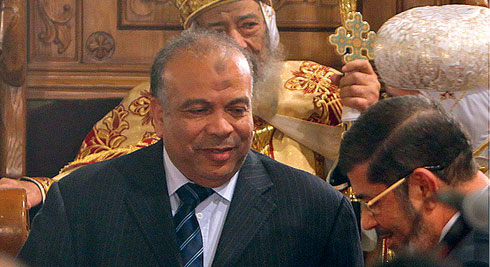
The leader of the Party of Freedom and Justice (PSS) Muhammad Saad Al-Kattani was elected by the speaker of the People’s Assembly in 399.
Born in 1952 in the city of al-Miny. The Muslim Brothers organization joined in 1982 for the basic education of Al-Kattani-a biologist. For a long time he taught microbiology at the University of El Manya. I received an Islamic education at the same university. Al-Kattani has extensive experience in parliamentary work: being during the reign of ex-president Hosni Mubarak, “Muslim brothers” delegated their members to parliamentary elections as independent candidates. In particular, Al-Kattani headed the faction of independent Islamitist candidates in parliament, who were elected in 2005. The faction totaled 88 deputies and at that time was the largest opposition faction in the Egyptian parliament.
The structure of the new Egypt parliament
Islamists: Party of Freedom and Justice (PSS, political wing of the Muslim Brothers-235 seats, 43%); The Salafist party "An-Nur"-121, 27%.“Traditional” secular parties: the oldest liberal party “New WAFD” - 69 seats; Block of the liberal parties Al-Kutl al-Masmya (Egyptian Blok)-33; Center Party "Al-Vasat"-10; "Revolutionary coalition" - 7.
Parties created after the revolution January 25: the Party of Reforms and Development, the Freedom Party, the National Union of Egypt - a total of 23 mandates.In total, there are 498 seats in the lower house of parliament.
332 deputies are elected on party lists, the rest in single -member districts.Translated from English Oksana Klicnikova
* Daniel Williams worked as a foreign correspondent for Miami Held, The Los Angeles Times, The Washington Post, Bloomberg News agencies. Behind his shoulders is Salvador, Bosnia, Chechnya, other hot spots. In 1998–2001 - The chief of The Washington Post in Moscow. For the past 10 years, it has covered events in the Middle East.