Translated material
"They were appointed to be rich"

In February, the publishing house of the OGA published the books of Vladimir Pastukhov “Restoration instead of the Reformation. Twenty years that shocked ”and Andrei Prokofiev “ White Garbage ”. Andrei Prokofiev asks Vladimir Pastukhov about politics.
Andrey Prokofiev: If you take all the programs as a whole, what would you say about paragraphs dedicated to legal reforms? What affected your gray matter of a lawyer?
Vladimir Pastukhov: I have a dual impression: on the one hand, I, of course, was glad how many smart people in Russia. And since Pushkin, the Russian language is so rich and diverse-one and the same can be expressed differently. On the other hand, all this did not affect me, because I did not feel the connection with the realities that surround us. That is, there are a lot of good words, a lot of sensible sentences that would be fine if they were fulfilled. The problem is that between these sentences and the existing reality some gray moon with which no one knows what to do. Everyone is well aware that all these proposals are not implemented today. Not to say that all sentences are good: there are controversial, impenetrated, chaotic. But they are united by what can be offered today, you can write, you can glue all the fences and other places with them, but not one of them will pass.
A.P.: And even 20 Article of the UN Convention to Combat Corruption? Already, only the lazy did not enter her into the program-to follow the costs of officials.
VP: Each separately the proposal can be fulfilled, but all together they are aimed one way or another at creating a competitive environment - political and economic - in the country. And in today's conditions, the current government is no longer competitive in such rules of the game, and therefore it will prevent the creation of a competitive environment. The Bolsheviks were more straightforward in due time. They directly said that in conditions of bourgeois democracy, they would not hold power during the year, and they frankly chose power in this situation and established a monopoly on power, abandoning the principle of bourgeois democracy. The peculiarity of our time is that we live in the conditions of the most demagogic social system and, perhaps, even generations, because we have nothing to be called our names. It would be much easier for me if we argued about real things. On the benefits of competition, about the benefits of usurpation of power. For example, Trotsky said that "we must hold power before the arrival of the world revolution." Controversial. But, at least, frankly and understandable. But here, no one says that we will hold power until such a moment, we say: "We will fight for sovereign democracy." A certain euphemism that hides the essence of things. I have no feeling that in today's situation, any of these proposals can be implemented. Even if any of them is realized in form, then then it will be perverted in essence. With direct implementation, in by -laws, in law enforcement practice. Therefore, this left me cool enough. Although the direction of thought is correct.
AP: Well, there are radical sentences. This time, the program is not only with Zyuganov, but even to a greater extent Mironov, and, hints, Putin has the topic of redistribution of wealth. In the first two cases by nationalization, in the latter-more gently, through taxes and some conditionally liberal-economic tools. It turns out that the question is on the surface? Will they decide?
VP: In this sense, we must realize that Putin, Zyuganov, and Mironov are on one side of the barricades. Only at first glance the word “nationalization” is frightening and seems to be a call to the flagrant violation of the law. But I would say that the Government de Facto pursues a policy of nationalization. And the government in practice implements what Zyuganov and Mironov speaks in theory only. In my opinion, the government has already nationalized a significant part of the economy, and above all, the raw material complex, but this did not do it within the law and within the framework of the rules, but did it according to concepts. I had one meeting in my life with a person who significantly determined the ideology of the Kremlin, and he struck me, frankly stating: “Over the past few years, we solved one of the key tasks, we have appointed wealthy people of Russia.” I asked: "In what sense?" And he calmly, without irony, without fucker, said: “You understand that all people who consider themselves rich are rich with the permission and approval of the state, and if the state changes to consider them rich, they will cease to be rich.” Therefore, they feel not so much the owners of their property as people who were appointed to be rich.
The authorities have much more effectively conducted a program of nationalization than Zyuganov or Mironov propose. Today we live with the economy not at all the one we think about. We have real state capitalism, but at the same time it exists in a perverted hidden form, in which some Trustee (trusted managers - Polit . Ru ) control the main resources of the country, that is, we have, in principle, offshore economics. We have people appointed to manage oil, or who are allowed to manage metallurgical assets, some other assets. They perfectly understand that they control exactly as much as they allowed them to do, and hence their attitude to property. At the same time, this is insanely wasteful, because all these people are temporary workers, they have the psychology of temporary workers, and therefore they leave such a margin to themselves, to their relatives that the economy loses much more due to ineffective management than it earns.
In my opinion, nationalization as such could be useful, since it would record the real state of things, remove the lie. Another thing is that I do not agree with the nationalization of Zyuganov or Mironov, Zyuganov has a primitive, dogmatic view of the economy. And for him, nationalization is not an economic action, but ideological, and it proceeds from the fact that public administration is obviously more effective, and assets do not belong to someone in particular-these are two common postulates that are not based on anything other than inertia of thinking, and nationalization will not give anything in this form. Mironov in this sense differs only the directness of the expression of his views.
For me, nationalization is a tool. The economy, for example, Britain, experienced the era of nationalization, privatization - these were economic management tools. We have Norway, which manages oil and gas resources through a state -owned company. This should be treated rationally: today, nationalization is needed for clear purposes: to eliminate the parasitic class Trustee , which have never earned this property de facto, but stole it with the permission of the state, which have no entrepreneurial psychology that are not a bourgeoisie. This is an absolutely parasitic class, it does not add or develop anything. Elimination of this class is now a rather important issue. It is best to do this through a reasonable nationalization, this is a very difficult question - how to approach this. The nationalization project is not so stupid, but normal privatization should follow this nationalization on normal market conditions. But no privatization can be done in two days, and these will be the years of the coexistence of state and private capitalism. That is, as the nationalization of Zyuganov or Mironov represent, it looks like complete legal nihilism and economic hooliganism. Moreover, we were already there and lived in this market for 70 years.
A.P.: One of the Trustee you mentioned is running for president, and, despite the puppetment of this step, he worked quite seriously on the program and, in general, the campaign and offers very advanced things related to judicial reform. Is it possible to adjust such a program to adjust the system?
VP: A lot of what he proposes is openly discussed in a political and legal discussion, but there are things that need further study. It is very important, in my opinion, the point, and I completely agree with him, in which Prokhorov proposes to withdraw the appointment of judges from the presidential administration. I would propose the creation of a special collegium that would appoint judges under the State Duma, which would include representatives of all Duma parties, that is, this process would not be controlled by one political force, there would be some kind of commission that would consider personal affairs, and this process would be more transparent. Because the current situation when the judges actually appoints the personnel department of the Presidential Administration in a very closed opaque regime, and sets most of the problems that we have.
At the beginning of the zero, our judicial system survived the strongest counter-reform, although this counter-reform [Dmitry] Kozak (at that time the deputy head of the presidential administration- Polit . Ru ) for some reason is called reform. In fact, this is an absolute counter-reform that destroyed the beginnings of progressiveness that appeared in the stormy 90s. The task consists of two parts: the first is the elimination of this counter -reform and the fact that these 10 years were screwed on it. The second task is to go further-to do what was not done in the 90s. The fact is that our Criminal Code, the Code of Criminal Procedure is the turned off the Soviet codes, and in this part, the reform needs to be started from scratch, especially since now we already have extensive experience.
A.P.: As for the “main” candidate: you believe, his restraint on the problem of judicial reform, in terms of which, in my opinion, was proposed only to the creation of administrative courts, which no one has been arguing about for a long time, and the installation of video cameras beloved by Vladimir Putin in the courts of general jurisdiction - this restraint is connected with what? He simply did not go deeper or this system is not needed by the court?
VP: Even if a person is unsympathetic in some ways, I try to adequately evaluate it by the warehouse of my character. I think that Putin is really one of the most educated leaders of Russia over the past 70 years, with a flexible mind, smartly smart, with developed intuition. Plus - it occupies a place in which it is simply impossible not to be informed. Everything else is from the category of Russian myths about the king, who is surrounded by bad boyars and deceive. This is not so, because the boyars themselves compete with each other, and if one boyar does not report something, the other boyar will certainly make up for this drawback, so it is difficult to say that Putin does not understand something. Of course, he understands everything, but sees a lot better than us, simply because he has more information. The point is that this situation is satisfied.
The authorities need controlled justice, because in other conditions it is uncompetitive, and we return to the thesis that in the conditions of democracy, the Bolsheviks could not hold power. And now their great -grandchildren in the context of bourgeois democracy can also not hold power. In the entire system of controlled justice, the courts play a system -forming role. They set the matrix. Everything was rotten: the investigation, the prosecutor's office, customs, the army, but the courts are the main component. Not a single cop would behave the way he behaves if he knew that his actions in court would really be checked. They behave boorishly because they know that the court will cover them. The court forms the whole system. Therefore, the courts are the most important. The FSB is also important, the prosecutor is also important, but if it once needs to start with something, it will be necessary to start with the court. Because if the court does not allow them to behave like that, they do not behave. Sometimes, when I see all these horrors about the police, I also think with indignation that this is some kind of rebirth, not people, but the animals are in the law enforcement system. We see everywhere: arbitrariness, arbitrariness, arbitrariness, arbitrariness.
But here I begin to think: people were not brought from other planets, these are the same ordinary Russian peasants, they were the same, and 20, and 30, but behaved differently. They behaved differently, because there is a certain matrix that is set from above, which makes people behave either one or another. Here the court is what the matrix sets. Therefore, the court needs to be controlled. No [chairman of the Moscow City Court Olga] Egorova - there is no Khodorkovsky business, there is no Magnitsky’s business, there is no much other. Therefore, I think that Putin makes a conscious choice in favor of protecting the existing system. And he will do it, how much he will have enough strength. And the need of society is to break this system. Because you need to move from privileges and concessions to some rules. That is, this is Putin’s position, there are no mistakes.
A.P.: But in this case it turns out that in conditions when everything has come out and overripe for society, the authorities will be guarded. And what will this lead to? If they are smart, they must understand.
VP: This means that society has entered during the preparation of the revolution. Many very mistakenly narrowly assess the revolution as the moment of the explosion and chaos. In fact, a revolution is a process that lasts decades. When society is falling into this rut, it is very scary, because society does not manage more, and, as I wrote, the destiny of those smart people who are destined to live in the conditions of preparation for the revolution is unhappy. They are useless for their people, for their time. They understand everything, but are not able to change anything. Unfortunately, we have already fallen into this rut of the revolution, and each plays his own role, prescribed to him by history. Putin prescribes the role of the guardian. And he is no longer able to get out of this role.
Putin’s problem is that he can no longer run to the other side, because the key criterion for assessing people in the future will be a criterion for moral purity. And the story will celebrate Putin, and in general, the majority of those who are now against him, because they will be asked the question: “What did you do in the previous 20 years, where were you, what did you do?” This will be a key question. It seems to me that the resolution of many problems will become possible only after a few years, when the generation of the 80s-those who were 10-15 years old in politics and right. This does not mean that they are better. This means that there is nothing on them. I look at the situation very pessimistic, because everything will explode like an abscess, and will flow the gnome. Naturally, the authorities want to delay this moment, but the more you delay it, the greater the danger of gangrene. Therefore, yes, you can freeze society, despite this whole new wave, for six or even 10 years. The problem is that if this happens then, then there is very little chance of keeping Russia in the boundaries in which it exists today. The further we move the explosion, the more we call into question the existence of Russia as a single, sovereign state.
In February, books are published in the OGA publishing house
The book of the famous researcher of Russian politics, publicist and lawyer, permanent author "Polit.ru" Vladimir Pastukhov (left Russia in 2008 in connection with the participation as a defender in the Hermitage case ) is a final work, leading a line under the twenty years of studying the author of Russian power and Russian law in the era of the post -communist historical off -season.
***
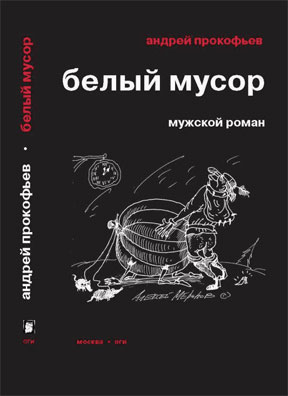
The subtitle of the "Male Roman" should indicate that this is something opposite to the vulgarity of pink literature. Perhaps it is. This is the prose of a counter-murmur, dense in detail. The author claims that he carried out serious research work, and all stories, both uncomplicated and frightening, did not invent, but took from life, his own and others. This is a story about a small, as if a fake man of the 21st century, who was born, grew up and survived in the era of all -Union drunkenness, formed during publicity, perestroika and Kazan gopota, and was educated in the dashing nineties. He lives simply, like a mouse or rabbit and does not think about why he does it - he lives. Numerous love frustrations reveal the deformities of both the hero himself and others. A variety of markers of the last 20 years pass the background - nouveau riches, bandits, business, tents, democrats, Ephesians, dissidents, retired officers, stupid women, esoterics, heroine, psychics, democrats. Is this white garbage? Question. It is possible that the book itself is white garbage. Thanks to one of such heroes -markers - a homosexual expert from America - the main character is metaphorically turning into a pederast, it is not clear accurately, in a bad or good sense, and becomes a participant in a grandiose pederastical coup. And everything ends well, as the creators of the series say, the “spin -off” - a plot with a branch in which the protagonist throws his beloved mother from the balcony, but leaves responsibility. The excerpt of the book can be read here .