
Translated material
Guru "Color Revolutions" explained that it was not to blame for the protests in Russia: on the contrary, he studied with Russians himself
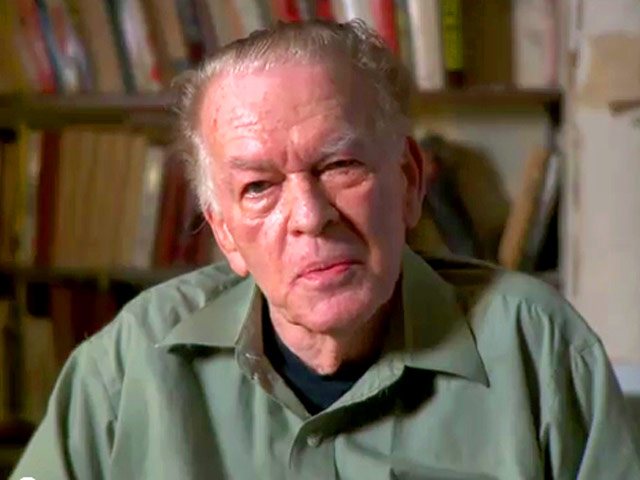
The developer of the methods of non -violent forms of power resistance, quite successfully used for two decades in many countries of the world, the American historian and political scientist Jin Sharp denies his involvement in the opposition mood that has covered Russia since the end of last year. Sharp, deservedly wearing the title of “ideologist of the orange revolutions,” says that he himself studied from the Russians, and asks the Russians not to forget the “glorious pages of the history of the struggle against tsarism and Stalinism”.
To say that non -violent struggle is an American product imported into other countries, according to Sharp, is simply wrong. "And for the Russians this is simply non -powerful. The great story of non -violent resistance in Russia, against tsarism and Stalinism, is very impressive. I learned a lot from the Russians," Sharp said in an interview with the Russian BBC service.
The vast majority of Russians, we note, do not believe that protests in the country are directed from abroad. According to a survey of the Romir research holding, only 9% of respondents believe in foreign organizers of mass shares for honest elections. 80% of respondents know about the rallies of protests that have swept through the country in recent months. Every third (33%) approves of these shares, but only 5% of respondents took part in them. 27% of citizens relate to these shares negatively. 30% claim that they do not care, quotes Interfax .
- Putin told the military how to withdraw the "orange threat" from Russia
- He believes: "Banderalogs" act in the interests of abroad
- Clinton is justified: the US State Department did not suit anything in Russia
In Oxford, where he defended his dissertation in political science, Sharp studied the February revolution, as well as the works of Gandhi, in which he refers to "Russian methods of combating tyranny." “If the Russians refuse their history and say that (non -violent struggle) is an American method - this is very bad,” the political scientist says.
He does not deny that he has some connections with the US government, but the “revolutionary theoretician” works independently and special love, according to him, he does not feel for America. "The American government did a lot of terrible things, including planting its people, overthrowing democratic governments ... The USA is in no way an angel. But there are some people who see the devil even for good deeds," says Sharp.
Sharpa tried to see the American devil, for good deeds, the former first deputy head of the Kremlin administration, and now - deputy head of government Vladislav Surkov. He recently stated that the non -systemic opposition and its supporters who arrange protests in Moscow and other cities "act literally according to Sharp's books." From which Surkov becomes bored , and he advised the organizers to "deviate a little from the instructions , fantasize."
It all started from the burma
The world learned about the "Books of Sharpa" in the early 1990s. The most famous text of the political scientist was created specifically for Burma, in the late 1980s covered by protest moods, on the basis of which even the name of the country was changed - to Myanmar. Then, in order to support the democratic impulses of the Burmans, led by the leader of the Democratic League, Aun San Su Zi , and the famous work of Sharpa "from the dictatorship to democracy" was written.
Gradually, the list of revolutionary works of the American political scientist was replenished with new "user manuals", which were simultaneously translated into new languages. To date, “a book to democracy” has been translated from more than 40 languages, among which there are Russian , as well as a number of other Slavic languages. For example, there is a translation into a Serbian one - Sharp’s book is believed to be a desktop for Kosovo activists of the second half of the 1990s.
Jin Sharp says that in 2000 the people of Serbia defeated, and in 2004 - the people of Ukraine. According to him, his role in Ukrainian events was completely insignificant, although Sharp admits that he maintained contact with the "orange".
“They found a copy of the“ from the dictatorship to democracy. ”I don’t know. I don’t know. This work was transferred, but their organization was so poor that there was no money to publish a transfer. They sent us e-mail: helped a little money. We seemed to send them six thousand dollars,” Sharp says and assures that this was the only case of direct contact with the Ukrainian opposition. Although according to other sources, he and his assistants taught the leaders of the Ukrainian movement "Time!". As well as the heads of the Belorussian "dick", the Georgian "Kmar", the Kyrgyz "Kelkel", if we talk about the post -Soviet space.
However, there are concrete events that the scientist is proud: for example, the struggle for the independence of the three Baltic republics in 1990-199, when Sharp was in the Baltic states and advised the leaders of the movement for independence: "Yes, this is true. And I will take guilty for this because I consider it a great achievement."
From dictatorship to democracy
Sharp now leads the Albert Einstein Institute founded by him. Popular employees are units: now three, in the best years 11 people worked there. But enthusiasts are constantly appearing, ready to translate and adapt the texts made by the institute into other languages and thereby carry sacred knowledge into the corners of the planet that are not yet touched by democracy.
The methods of the founder of the institute are also simply and schematically arranged. Sharp collected and described in detail almost two hundred methods of non -violent struggle, as well as some options for their interaction. There is no strict instruction - methods can be used in any combination in any country.
The method is based on the principle that power is always heterogeneous, since it consists of people. In addition, the strength of any power is based on the obedience of the people by the orders of the ruling leaders, which means that if the people do not obey, the leaders automatically lose power. So the essence of Sharpe’s methods is to find the weak points of the regime. In other words, to worsen what is no longer “not very”, and to attract universal attention to this.
The change of power should take place in three stages. First: protests, spread of the expression "illegitimacy of power." The task is to verify the reaction of the authorities, to form local protest groups in the anti -government movement, to determine the mobilization protest potential of society.
The second stage: discrediting power structures and state apparatus, agitation to sabotage and sabotage.
The third stage: direct overthrow of power. True, the book does not write how exactly this should happen and who should take this work.
“The common mistake of past political disobedience campaigns was the rate of only one or two methods, for example, strikes and mass demonstrations. In fact, there are many methods that allow strategists of resistance as necessary to concentrate the struggle or spray it,” the Sharpa book says.
One of the main postulates of his methodology - resistance should be non -violent. “It makes sense to choose non -violent actions not just because it is good or pleasant, but because it is more effective,” says Sharp. Moreover, he does not believe in the potential of negotiations of the democratic opposition with the authorities: "All negotiations are determined by which side of the table more than the club is hidden."
Among the other works of Sharpa: “Self -Complement”, “Real Alternatives” and others, including many historical essays about revolutionary processes in different countries. Also, "Scientific works on the Revolution" are written by Sharp's colleagues at the Einstein Institute.
Sharpe is divided into several groups into several groups, each of which is divided into small subgroups. The groups are as follows: the rejection of social cooperation, the rejection of political cooperation, the rejection of economic cooperation, non -violent protest and belief, non -violent intervention. The first group includes 54 methods, among which: rallies, caricatures and slogans, motorcade, marches, picket, satirical awards.
The second group of methods belong to the following: student strikes, public disobedience, emigration and others.
Methods of refusing economic cooperation are divided into two subgroups: economic boycotts and strikes, each of which unites numerous types of strikes and labor sabotage.
The methods of refusing political cooperation include: boycotts of government and other state institutions, disobedience to "unfair" laws, refusal of judicial cooperation and much more. And also, it is noteworthy - evasion in the army, shoots and manufacture of fake documents and the like.
Sharp calls non -violent intervention, for example, a hunger strike, demonstrative suicide, sitting and standing as a form of protest promotions, and blocking roads. Sharp list of a number of methods aimed at creating a "new state in the state" summarize: the creation of alternative economic institutions and markets, a transport system, and the proclamation of the power of a parallel government.
The full list of 198 methods of non -violent resistance on Sharp is given by the Anti -Liberast portal.