
Translated material
Ex libris Sergey Shargunov
"There are strong human documents." Writer, politician, blogger, “Drive-Commutor of Public Processes” not only reads modern literature, but also re-reads the Soviet 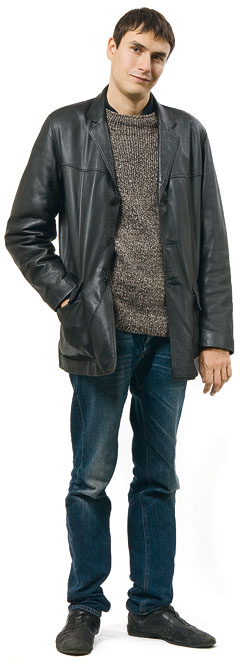
1. I read the Almanac of Prose - a collection of Russian and Italian modern writers, released in Sicily in two languages. An excellent story by Alessandro Metlik about the shell of the turtle, which was obtained from the grandfather who fought and later captured. This shell travels through the years, lying next to the computer mouse, and, reading, I felt interest in the fabric of time, the author’s desire to escape from nonsense, connecting myself with the previous fates.
The book of the essay “I want to be poor” Lev Pirogov was published. Pirogov is a writer who does not like literature. And loves the truth of life, overcoming the style in the name of the essence. But he says that. And by his own example he refutes. For the storage of presentation, this author is loved by me. What is the book about? About the interview. For Pirogov, a homeless person is a hundred times sweeter than the developer.
2. A two -volume alternative textbook "Literary Matrix" , where the authors of articles - forty modern writers, was given to the textbook Russian literature, I recommend it to all. There I had a text about Griboedov and “Woe from Wit”. Now the “matrix” is being prepared, dedicated to optional literature, to writers, as it were, the second row. For some reason, I wanted to delve into Serafimovich. Wrote an article about him. He was not his fan and did not. But much seems to have seen. Alexander Serafimovich first praised Lev Tolstoy, then the Soviet government was taken as a lifetime, and now no one re -reads. I had to re -read - and not only the Iron Stream, but also other books. It turns out that it was such a completely decident, fixated on the aesthetics of a nightmare and deadly. Before the revolution, Leonid Andreev’s brother actively protected him in spirit. It is somewhat amazing, of course, that the “iron stream” - this flower of evil of Russian literature - was included in the mandatory program for Soviet schoolchildren. As for the personality of Serafimovich - he was not devoid of sincerity and even courage. For example, in 1940, when the prototype of the hero of the “iron stream” Comacor Kovtyuh was shot as an “enemy of the people”, the writer openly at a meeting with schoolchildren called him an innocent victim. Are there many writers who are ready to substitute now, arguing with the system for less occasions and with less risks?
3. I also read literature on the Internet. In the LiveJournal, the poet of Vsevolod Emelind (Emelind) with his witty and stormy verses and prose writer Denis Dragunsky (Clear-Text) with his elegant short stories.
4. I look forward to the new novel by Alexander Terekhov . They say he wrote a thick one. Terekhov goes to write big books. It bizarrely interferes with rigid reporting, existential longing and colorful, excess lyrics. In the previous “Stone Bridge”, it was the volume and the sweet viscosity of the style that gave an amazing effect of loss, when it is incomprehensible: in this light or in what era, now or in the forty -third year, when the son of the People’s Commissar shot the daughter of the ambassador near the house on the embankment. But in short forms of Terehs, it is also good. Therefore, those who are scared away by the thickness of the book can advise his collection “This is an unbearably bright future” and a lovely and bitter story “Summer” put there. In general, Terekhov is pleasant to his softness and non -publicity. Everyone wants to tell everyone about such writers who do not seek to impose themselves. I recommend, for example, the stories of “Fly in amber” Dmitry Novikov and “One year in paradise” by Natalia Klyuchareva . Classic things.
Now I am waiting for new books from new writers who have already made their debut in prose. From Irina Mamaeva, Ildar Abuzyarov, Alexander Snegirev, Vasily Avchenko, Arslan Khasavova.
It would be interesting to read the five -part book of Emmanuel Carrera - the biography of Eduard Limonov , who claims to be the Goncorov Prize.
5. I re-read something all the time. Not only Bunin and Chekhov or Trifonov and Iskander. There are good, but not the most noticeable writers of the Soviet era - Viktor Golyavkin, Yuri Pyarlar, Nora Argunova, Viktor Konetsky, Sofya Fedorchenko. There are strong diaries, memoirs, as they say - human documents. I constantly return to the honest and tragic-zest "Diary" of George (Moore) Efron, son of Marina Tsvetaeva.