Date
Author
Николай Дзись-Войнаровский
Source

Preserved copy
Translated material
"Green" chips are better than "blue"
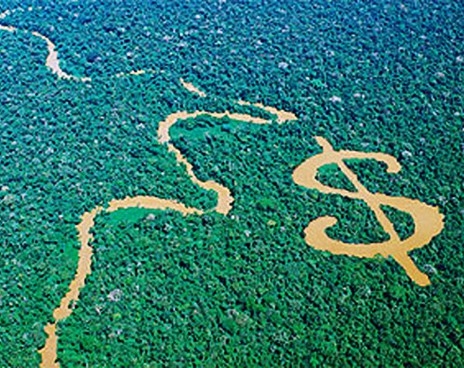
When the company cares about the ecology , this is clearly good for its image. For example, the BP website is made in green tones and is so full of the company's environmental initiatives that at first you think that the company is engaged in the struggle for ecology, and not oil production. The image is cool, but what about the money? Are corporate investments in ecology beneficial? This question is answered by a fresh study of the Harvard Business School.
This is not the first attempt to measure the profitability of environmental friendliness. For this, for example, the Dow Jones Sustainability World index was created, including the shares of companies around the world, whose strategy is determined by the concept of sustainable development (the term “sustainable development” in many ways speaks for itself-in the 70s it was understood narrowly as the struggle for ecology, but now it includes measures to smooth out corruption, to combat corruption etc.). Over the past 12 months, it has fallen by 6%, while the usual DOW Jones Industrial Average has grown over the same period by about the same 6%.
The methodology for including the company in Dow Jones Sustainability World is described in detail on the index website and is based on the company's management survey and information about its activities from external sources. The technique of the Harvard business school is very similar, with the only difference being that information about the activities of companies has been analyzed from 1992 to 2005, that is, since it was not yet fashionable to be socially responsible and “green”. Harvardians selected 90 companies, strongly committed to sustainable development, and 90 companies, with poor adherence to these values. It turned out that “green” initiatives cannot be considered as a type of tax on a large, “bad” corporation - they increase the economic indicators of the company. For example, $ 1, invested at the end of 1992 in a portfolio of shares of “stable” companies in proportion to their market capitalization at that time, at the end of 2010 would have turned into $ 22.6. At the same time, $ 1, which was invested in an “unstable” portfolio, would bring only $ 15.4.
An attentive reader will ask: what if the opposite dependence, the most successful companies have more extra money and therefore invest it in useless, but fashionable environmental projects? The authors of the report answer: managers are able to predict their profits and, accordingly, plan expenses of a maximum of 2-3 years ahead, therefore it is doubtful that this effect could manifest itself in a period of 17 years, which is covered by the study.
Especially strongly the advantage of "green" companies is manifested in three cases. Firstly, companies focused on the end consumer, and not on the corporation, win the most strongly. Secondly, the "green" companies won more in industries, where sales strongly depend on the brand and reputation. The reason is that the client now loves environmental friendliness. Thirdly, “green” companies are ahead of ordinary competitors if they are associated with the extraction of raw materials. It is also explainable: the protests of local residents against the development of deposits, laying pipelines and chemical leaks are not uncommon. This explains why the BP website of such a bright green color. What happened to $ 1, which in 1992 was invested in companies separating the values of sustainable development ( green ) and non -dividing (blue
)? Note: each of the model portfolios is made up of 90 shares of companies of the corresponding type. Money is distributed between shares in proportion to the initial capitalization of companies in 1992.Source: Harvard Business School