
Translated material
ROC and embryos
A few days ago, the media reported that the Russian Orthodox Church calls for a complete ban on obtaining and using embryonic tissues and cells for scientific and medical purposes [1]. Corresponding materials can be found on the official website of the Russian Orthodox Church [2]. We asked scientists to comment on both the initiative itself and in general a situation in which religious organizations are trying to somehow influence the nature and methods of research.
Many brief comments came down to the fact that serious discussion is impossible here, since one of the parties is not competent in the scientific aspects of the problem. So, our author, the doctor Pavel Besvlnov, replied: “It seems to me to seriously discuss the initiatives of the Russian Orthodox Church somehow ridiculous. It's like seriously arguing with a homeopath or astrologer. ” Roman Deev writes about the same in his blog [3] The responsible editor of the magazine “Cellular transplantology and tissue engineering”: “... the level of competence of theologians in cellular biology leaves much to be desired ... Pies should bake a cake, and boots to live a shoemaker. In a normal, of course, society. And in our time, when Russia, despite the “machinations of external forces, the decade will still not get up with corpus callosum knees” - departure to obscurantism is a completely predictable move for poor -quality managers. ”
Below we give a detailed comment on Ruslan Radchuk and hope to continue the discussion.
1 http://mn.ru/society_faith/20120219/311867120.html
2. Www.patriarchia.ru/db/text/2018555.html
3. Http://celltranspl.ru/blog/post/62
Ruslan Radchuk, researcher at the Department of Molecular Genetics, Institute of Cultural Plant Genetics, Hatersleben, Germany
The use of embryonic cells and tissues for scientific and medical purposes undoubtedly requires legislative regulation. The human embryo is subtle matter, and not only from a scientific point of view, but primarily from the ethical. And it is not surprising that in the process of forming legal boundaries, these ethical boundaries must be taken into account, which in various societies can be different. In Europe, the discussion about the permissibility of the use of embryonic cells began long ago and, despite the current ban, continues now. In this discussion, a new understanding of a person is formed taking into account new knowledge and public priorities are felt.
For example, a fertilized egg is a potential person or not? On the one hand, a person can really get out of it, but an artificially fertilized egg has not yet been implanted into the uterus and does not have personality characteristics, while at the same time, using it for medical purposes can maintain the life of an already held personality. Again, a fertilized cage is potentially one person? Until 14 days, even two people can come from it. Fertilization is not a moment, but a process. What do we take at the reference point of the appearance of one individual? Can we consider the formation of the nervous system this reference point? In the process of natural fertilization, embryos are often naturally eliminated. Is there a fundamental difference if another embryo is eliminated by an unnatural way? Whether we have the moral right to solve the fate of a particular embryo and program the fact that he will never become a person, although he could potentially. And if we are talking about the life of another person? And if this is the life of the closest person?
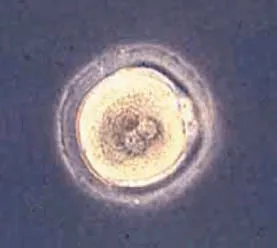

About the zygote (1) to blastocysts (2). F from Gary Smith, University of Michigan and UNSW Embryology
It seems to me that the Orthodox Church tries to solve all these issues in one fell swoop, guided by its dogmas.
Let me remind you that the concept of the human embryo is still relatively fresh. There will be no two hundred years, as opened. By the way, the academician of the St. Petersburg Academy of Sciences Karl Maksimovich Ber, the gift, was discovered, which is German. I remember that he was somewhat outside the religious discourse.
So, among the listed proposals from the Russian Orthodox Church - the introduction of a clear definition of the embryo (“a person whose body is at a development stage from zygote to 8 weeks”). Since thanks to Baer, we are aware of what an embryo is, the definition from the Russian Orthodox Church requires clarification of what a person is. Christianity has its own answer to this question, but I suspect that it does not lie at all in the plane of embryonic development.
It is likely that for Christians the issue of ethics or inequality of manipulations with embryos may not stand at all. Most likely, unambiguously unethical. But society itself must determine how ready to recognize only this moral and ethical point of view and this stop all discussions on this topic, as well as lose new promising medical technologies.