
Translated material
The perfect hierarchy of words
Bookshelf
The Book Regiment of Zakhara Prilepin: “Stay a little more” by Anna Andronova and “School” by Sergei Shestakov.
Anna Andronova. Stay here a little more. M., Publishing House "AST / Astrel", 2011
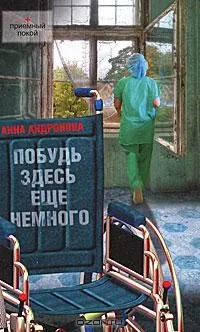
Anna Andronova is a cardiologist, but she is not engaged in a recording of “doctoral hohm”, now actively published and have become fashionable from some moment (and at some point), and-let's be without abyss-literature.
Here we can talk about a qualitative text without any discounts (“Ah, as interesting-a writing doctor! It is always so interesting to read something like that”), but according to the Hamburg account.
Moreover, Chekhov and Bulgakov proved that the doctor is not the most superfluous for the writer.
Figurely (slightly unnecessarily figuratively) expressing himself, the writer deals with a naked man. With a person without all overly. And here is either a war, or a prison, or the hospital put everything in their places.
The only problem Andronova is that she, apparently, does not have some literary super -assassins. She does not write a great book, she does not create - she tells stories.
Her skills, or rather, will say - her literary skill, is almost invisible. A rather attentive reader needs to pay attention to the fact that the young woman Zhenya, who has a little son, "lives at home for seven days, obeying the thermometer as a conductor." Or to what ease in the story “Dog. Ru ”The author alternately gives out the human character in one paragraph, then the character of the pet of this person in one line, then with three waves of the brush - another grandmother with a leash, then a swift pattern - the next walking beast on the leash. For that, finally, as not trivial and on time, Andronov knows how to complete every story ...
Some kind of natural modesty stands behind the literary needlework of Andronova.
And this, of course, is the Chekhov line.
From Chekhov (I don’t know, from the writer or from the doctor), Andronova has one very important and even determining thing. It would seem that everything that she describes is, well, to put it mildly, joylessly. Weak men, tortured women, constantly sick children who always lack attention of the employees, then the divorce of their parents; Golden fish in the aquarium will die, not having time to fulfill a single desire; To get at least one man in the house, women make a dog; Porny and once beautiful dogs get old, become bald, blind and smell of something inanimate; A girlfriend of the heroine is either poisoned by pills, or lies that she was poisoned in order to attract at least someone else's attention, and the doctor at work-a handsome and shallow man-sleeps with all the nurses in the hospital, although he loves, yes, it happens-madly loves his wife. What a longing, God you are! So I would beat all these people with a stick on the head in order to admonish at least a little bit.
But, a strange paradox, with Andronova (as I say, with the classic)-with its complete absence and morality, and at least some happy finals-there is always a secret, as if outside the text, a world-scale. If you want, light.
This is very Christian literature, although it is not mentioned about God and faith there at all - with the exception of the last (and the most unsuccessful in the collection) story.
And, again, as in the case of Chekhov, the only thing that Andronov cannot reconcile with - who has come to terms with male irresponsibility, and with female, from loneliness and longing, prominent, and with pain, and with betrayal, and even with death - she cannot come to terms with vulgarity.
The action in most texts takes place in hospitals, and now we see how the granddaughter rushes to the grandmother lying after a stroke: “Grandma, get up!”
“... granddaughter, like Malvina: heeled shoes, a short dress with a magnificent skirt, the eyes are painted as if a vacation. Vera was surprised - every morning to paint so that then to appear in the hospital, sob, smear everything on the cheeks, and in the end in the toilet to wash off with cold water. <...> Vera was surprised - she would curl, and every day to stand on the heels, and put on this Malvinino dress if she had the most native people in two hospitals? "
But even on the glaring vulgarity, Andronova does not have the strength to be angry and hate her.
There is very little strength at all, they must be protected.
Comparison with Chekhov should not scare you. Obviously, Chekhov is a genius, and Andronov, like all of us, is not.
But even the fact that in her prose may seem like weakness is also important in its own way and in some ways charming. I am talking about Andronova’s manner on the first page of my little stories to release three, four, five, look - already seven characters.
On the one hand, this is generally a sign of female conversation and female thinking: “Remember, Shurin of a neighbor - who, with my friend, even in that previous job, shared a man ...”
On the other hand, in the texts it immediately becomes crowded, as in the hallway, full of guests, you need to listen immediately and look closely so as not to confuse voices, and fur coats, and fate.
In the end, that Andronova knows how to consider in every person where he hurts. It hurts only human.
Everyone without exception has a human one.
Why do we live so sadly, Ani?
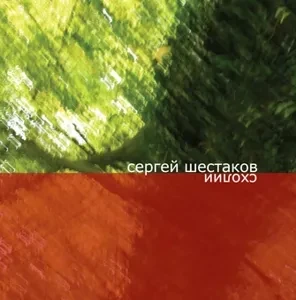
Sergey Shestakov. Scholly. M., Atelierventura Publishing House, 2011
For example, I really like the verses of Sasha Kabanov, Igor Belov or Andrei Korovin - these are, perhaps, the best modern poets - but I do not remember anything there. I read - I admire, my heart is melting, I will close the book - and as a cow licked my tongue.
Did something with my memory become?
But I remember the verses of Brodsky or Yuri Kuznetsov. Even what I recently read for the first time, I often remember, and then these lines stand across consciousness for weeks.
In modern poetry there is some kind of optional words. As if everything is not true there. And there everything is true - this is what a paradox.
Moreover, I really want to learn, if not entire poems, then at least the quatrains at the same Shestakov. Shestakov seems to have released the best poetic book of the last year. For several months now I have been reading several poems in the morning and a few in the night. And I feel good, thoughtfully, warm, as if put an important, tart pill under the tongue.
Leo Tolstoy said about Pushkin: "The perfect hierarchy of words." Brilliant, given what under the words Tolstoy meant the meanings too. Modern poetry is completely in a nearby - this is the ideal hierarchy of words, where the meaning is probably not superfluous - but also not mandatory for sure.
The music itself, these seething, cooing louds of words in the mouth - and there is its meaning.
... a wonderful sliding along the surface of meaning or enchanted fermentation in the bowels of the dictionary ...
It seems to me that Vladimir Gandelsman partly speaks of the same in the preface to the collection of Shestakov: “... all the molecules have already tried all possible combinations, decaying and uniting again, as if in an attempt to form a substance of life from spreading elements.”
The poet is like a pellet - who amazingly does not know which of the pellets the ball of meaning is hidden in. And he tries like this, then like this, then again - and suddenly, surprised himself the most, guesses where the ball is.
No, to say that Shestakov has completely meaningless poems - it would be stupidity. On the contrary, most of its texts are smart, deep. But the feeling that the meanings here seem to swim, that the author marks them dashed - and then the dotted line strives to crumble and confuse - does not leave.
He and in one place say about the same thing that I try to say now.
“The music is out of the day and whispers in Kurzala, / Tight millstones move, knives scurry, / Every word wants to be said, / every heart is that it is found, / named is not worth the dreams and promises, / the word in the Lord’s dictionary is exactly one, but here / every miracle is looking for a tag for being, / each bullet - a lives of heart ...” ”
The poet, pouring words, hastily, not a harsh thread, sews tags for things, events and feelings. Then he himself tides these tags, picking up again. A beautiful, inspired mess reigns in the poetic universe. Maybe otherwise it is not possible these days?
“Run in the clouds on snowdrifts, / feast with frost on a balloon, / reach an skipping to the Alps, or not the Balkan, / and exchange the clogging for mormyshka.”
Imagine how Bunin was raging if you read these poems? Clouding, mormyshka, monkey! - shouted. But what do we need Bunin!
“Time looks green, blue, / catches gray, blacks, / and crows sit down in ramers / on Merlushkaya March ice, / Time loves spring, brown, / Nothing that you are not aware, / Owarin whistles on the outskirts, / and soars over the bakery smoke ...”
And nothing that I am not aware, really.
This, probably, is it time for us to somehow decide for ourselves: the prophets speak clearly or incomprehensible? Will the prophets mint or speak?
Or the prophets can be so and so?
After all, if poetry becomes nature - what a demand is with it. Do not look for the human meaning in the noise of the forest and the voice of a stream?
Shestakov has one short poem about spring, but in fact these are poems about poetry itself.
“Say: spring - and spring will become, look: / this foliage over us rings lightly, / these are air amber in the pupils, / blue rivers, white clouds, / these are high ash, high oak, / distant paradise, its corners, / it is from your hot lips / bluecons, alkutos, squares, brushes ...”
Words and birds fly off the lips - and just have time to catch all this carousel color. Or do not catch - that is, do not decipher, do not remember, do not grab the meaning for the feathers on the tail, otherwise the meaning will remain without a plumage - naked and unsightly.
Here, poetry is just the case when the crane in the sky is better than a tit in a fist.