
Translated material
Putin: The police did not beat anyone on March 5
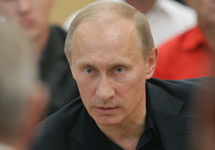
On March 5, the police did not beat anyone, although a number of rally were sought to apply force to them, Vladimir Putin told reporters. “They worked very professionally. They didn’t beat anyone, they didn’t use special equipment,” RIA Novosti quotes Putin's review of the police. Putin replied to the remark about beaten journalists that "there were representatives of the media whom the police saved."
On Monday, after the end of the agreed rally on Pushkinskaya Square, OMON harshly dispersed the people left there with caustic gas, they also used force to journalists. Several people were injured, an assistant to the State Duma deputy Alena Popova’s hand was broken. That same evening, the police dispersed the action of the other Russia on Lubyanka, while the Kommersant FM correspondent Ulyana Malashenko, an employee of Moscow News, Pavel Nikulin and other journalists were beaten. In the police department "Zamoskvorechye" and on the way brutally beaten the detained political activists. Tatyana Kadieva was beaten face about the car carrier, she had multiple nasal fractures, the frontal bone was broken. Doctors diagnosed a concussion and suspicion of hemorrhage in the brain.
Kadieva and another 8 activists in protest against illegal detentions and beatings refused to call themselves and announced a dry hunger strike. The last 6 activists left the Zamoskvorechy police department only on Wednesday afternoon.
On Wednesday, the editor -in -chief of Kommersant FM Dmitry Solopov demanded from the head of the Moscow police Vladimir Kolokoltsev explanations about the actions of the police on Lubyanka and the beating of Ulyana Malashenko. “Do General Kolokoltsev, do you consider the beaten by the police to be admitted by the police officers during the execution of the official assignment by journalists?” Solopov asks in an open letter. “General Kolokoltsev, a question for you as an officer: do you think your subordinates beat a woman on the head with a club?” After the publication of an open letter, Kolokoltsev called Solopov, and they agreed on a meeting. “The moral aspect of this situation is worried,” Solopes explained to Interfax. “We know that the Moscow police can behave absolutely correctly. We saw it in December, January and February. And suddenly on Monday we again have another nightmare, which is not clear with what is connected with.” In his opinion, the head of the metropolitan police should give a public assessment of the actions of his subordinates.
In turn, the Commissioner for Human Rights in Russia Vladimir Lukin did not see aggression and cruelty in the actions of the police on Lubyanka on March 5. He told Gazeta.ru that he was relied on on the reports of his elderly - "very objective people." In his report, the representative of Lukin pointed out that the police "acted adequately, without aggression and unreasonable cruelty." "Exceeding of force or illegal use of special equipment has not been identified," the report said. It is noted that on Lubyanka "there was no large accumulation of police and special equipment." At the same time, the author of the report believes that "the order on the need to detain did not meet the requirements of the rule of law, since the spontaneously arose inconsistent rallies were non -violent in nature."