
Translated material
"My brother is not a statist"
Irina Prokhorova - The New Times
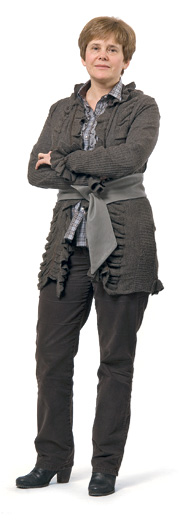 |
"My brother is not a statist." The main surprise of the presidential election is the second place in Moscow and the third businessman Mikhail Prokhorov in Russia. In the television debates of the candidate, his sister, editor -in -chief of the NFO publishing house Irina Prokhorova represented: she collected enthusiastic responses on the Internet. They even wrote that they voted not so much for Prokhorov *as for Prokhorov *. Will she go into politics, is it ready, if they offer to become the Minister of Culture under President Putin, how can participation in politics end for one of the richest people in Russia - Irina Prokhorova told The New Times How do you evaluate the result of the brother in the elections? Personally, I was ready for any result, realizing that there was very little time to deploy the campaign. The brother entered politics as a new person, and he had, of course, the minimum access to the media compared to, say, with our main candidate. I thought that at least 10-12% he had to receive. And apparently, probably, it was, and maybe even more. 15-16%that independent observers give him - I think fair numbers.
The numbers indicate that the most votes were stolen from Prokhorov. You do not regret that you went to politics? No. We talked a lot with him when he said that he was going into politics. I told him that I was ready to support him in any case, but warned that politics is a special type of profession. Although business is also a serious risk field. But you understand what is the matter: the mass of people in the country is convinced that nothing can be done. And when you start doing, it turns out-something turns out. And those results that the brother received in the election confirm this.
The big game is strange that you did not begin to dissuade your brother after a shame with the “right business” when the party was just taken away from him. It was not his shame, but the shame of the party itself, which actually had a chance to become a real political force. Instead, the straprechers simply arranged this ugly story and, in fact, destroyed themselves as politicians. It was not a very worthy game by Mr. Surkov and the presidential administration. I believe that my brother with honor got out of the situation. He very quickly understood the situation. He is a man of a big game. And I respect him because he decided: no, I will not retreat.
My brother had to start several times from scratch. In the 98th year, everything collapsed. I remember, we discussed with him then: what are we going to do? We knit boots, knit the sweaters? He said: "Nothing, we will rise." And he re -built a business. It seems to me that we somehow quickly give up. See: there were large protests, swamp, Sakharov, again swamp. However, all the same, the president was chosen as a candidate whom the protest movement did not want. And what? Now the question of the structuring is to close, not to think about anything for six years, and a year before the new elections to go out and scream again “Down with Putin!”? It seems to me that this is absolutely wrong. Any society has to resist, build alternative scenarios. As for these elections, I am most concerned about what was not, by the way, in the previous ones - the appearance of the rhetoric of the civil war. And on both sides. And one side and the other begin to look for enemies of the people. No matter how we relate to the silent majority that votes for Putin, there are still quite a lot of it. And my brother is trying to propose other principles of political culture. Let's stop blaming each other.
Nevertheless, the opposition did not begin the rhetoric of the war - power: “die near Moscow ...”, etc. Yes, let us, why do we always pay attention to what they say? They let the impulses, and we begin to tremble. We are non -independent psychologically. In the end, even in soviet times, people built a parallel system of life, what we still call a underground. There was another art, other way and lifestyle, other places of meetings, its own infrastructure of information distribution - in fact, it was a parallel world. And I would say, we are not taking this experience. In fact, it was a self -organization of society - all these kitchens, KVNs that accidentally arose laboratories ... There was a tremendous experience of life in conditions of much more difficult compared to the current ones. We can also build the infrastructure of our life.
Be free in a non -free country? Freedom is conquered. There were few dissidents, but they played a large role. We have not written the history of the dissident movement. No one is doing this. The poor guys who have longed about United Russia simply know nothing. And they also want ideals and heroes. This pantheon must be created.
And who are the heroes for you? First of all, human rights activists of the Soviet era who risked everyone. In addition, a large number of reasonable people who, being loyal, nevertheless tried to do something inside the system. We must live our life. Spring in any mode spring.
"
Why do we always pay attention to what the authorities say? They let the impulses, and we begin to tremble. We are non -independent psychologically
"
 |
 |
 |
Respect the opponent , but I would like to return to the conversation about the culture of political discourse. And not only political. Disrespect for opponents is our classical and terrible trouble. After the debate with Mikhalkov
* * On February 14, on the channel “Russia 24”, the debate was held between film director Nikita Mikhalkov, representative of presidential candidate Vladimir Putin, and Irina Prokhorova, who represented her brother Mikhail Prokhorova. Many asked me: why didn't you give him him? I answered: in fact, I did not have such a task. Whatever views he professes, not close to me, I see in him a talented director, an actor who left a noticeable mark in Russian cinema. My task was to talk with him about culture. And if his views are really not close to me, this does not mean that I should now roll him out on the table.
Are you worried before the debate? Very worried. We discussed this at the headquarters of the brother. I said that I can talk about culture and education - this is what I really know. In my brother’s program, I wrote a section on culture and education. I understood that Nikita Sergeyevich is a politically experienced person, a master of dispute. And I represented my brother. And she could not let him down.
It seems to me that I got a rather interesting conversation. I tried to answer all those questions that are regularly asked: about religion, about the 90s, about my brother’s wealth, about the family. And I explained that in the end we have the right and not to believe in God. If we are citizens and observe laws, law and order, and so on, this is our personal file - to believe or not.
Are you an atheist? This word is loaded with such an amount of ideological trash that I do not know whether I am an atheist or not. But I do not go to church. And I do not think that this is a crime, this is really a voluntary matter. I am trying to live according to elementary norms of morality: not to insult loved ones, take care of the family, engage in charity, as far as possible. That is, the system of values that has long been no exclusively Christian - universal in any case. Everything is transferred to us to ideological and political rails. This is such a Soviet tradition. You do not go to church - it means that the enemy of the people, you do not vote for Putin - the enemy of the people.
Cultural policy you are always saying “my brother”, but it seems that the main thing in your bunch is natural, with regard to the presidential campaign, you are actually. And you probably know that quite a few people voted for Prokhorov, and not for Prokhorov. Why don't you go into politics? This question is complicated. Still, I was engaged in politics for twenty years, only it was a cultural policy. I honestly believed that I deserved good words for my publishing house and a magazine, which, according to many experts, has quite a lot of changed the domestic humanitarian field and continues to change. This is a leading cultural publishing house that does a lot so that we can fit into the international intellectual context. I have been leading the Foundation of Mikhail Prokhorov for eight years, which supports culture in the regions. And in this sense, I have long been in politics, because culture is not entertainment, and here I quote my brother, this is the foundation of the new economy - the economy of the 21st century.
If we are talking about politics and the creation of civil society, then civil society is a system of institutions and various organizations, which together constitute a field of democracy. In this way, society affects power, because we correctly make the authorities many complaints that it is authoritarian, but you can fight authoritarianism only by building such a buffer in the form of horizontal connections of people among themselves. It is not for nothing that any power, as soon as she tries to conquer more powers, begins to destroy institutions. And most often we do not fight for them, because we do not understand their significance. For example, if the whole country had defended NPOs (non -profit organizations), realizing that this is actually our platform, then, probably, we would now have a completely different situation.
If people with the same conditions as your brother were invested in different NGOs, as Khodorkovsky did, who invested their money in “open Russia”, we would really live in another country. Excuse me, but my brother created the Fund of Cultural Initiatives eight years ago. We support many organizations - and those who work with dysfunctional families, children, drug addicts. In general, in Russia a huge number of non -state funds and charitable organizations. No one is seriously interested in them, they are fighting to change the legislation. The movement of charity began in the 90s. At first, people gave personal money, saved schools, kindergartens, orphanages. And in fact, private charity saved the country and most of the cultural institutions. The authorities at that moment had neither money nor desire, and in general it was to anything. But none of the journalists have ever studied this topic. I know exactly from my colleagues-bastards that there are a huge number of rich people, and even, perhaps, average wealth that they say: we want to help, tell us where to invest money? But there is an unspoken policy of television channels and the radio not to mention the names of charitable foundations. And this, by the way, shows what is the status of a philanthropist in our society. And I know that many of my colleagues working in these sectors say: “It seems that we live in a country that fundamentally does not see us.”
You always emphasize that not so much politics changes society as a culture. You do not exaggerate her role? I am sure that the need for culture is much higher in our country than is commonly believed. When I took up charity work, I became the co -founder of the Prokhorov Foundation and we began to arrange book fairs in Norilsk and Krasnoyarsk, festivals of modern culture, and so on, it turned out that we had a living, energetic, very easily trained society and the main values have not disappeared. I saw the wonderful faces of the intelligentsia in Krasnoyarsk, and in the new generation. Riddle - how does this model of life be reproduced in conditions when they are almost poisoned? So, we do not know our own society, we do not understand the points of growth. We do not understand who and how to support. I always give as an example the city of Kansk in Siberia, which broke up in the 90s, when enterprises stood up. A group of young artists led by Pavel Labazov arrived there ten years ago, and they decided to make an informal cinema festival there. They called it the "Kan Video Festival." It is impossible to imagine a more crazy venture. But in ten years they made a cool international festival, where they come from around the world. And the city gradually begins around this cultural initiative to build the infrastructure of its life. This is what is called "new cultural technologies" - this is what to do, whom to support. We do it.
There is some kind of beautifulness in this. Do I have to help everyone? You will not, say, as a publisher to invest in a bad writer? You will rather publish Pushkin or Saltykov-Shchedrin. I think - bad, and the other publisher will say - brilliant. There should not be one criterion of “goodness”. There should be a large spectrum of publishers, which in different ways understand the idea of good. Then there is a chance that there will be many different talented writers. In this case, you must be humane people. If you come to the real city and the region, you must understand that there is a local community there and they have their own public opinion leaders. Maybe they seem to us not bright and modern enough, but does it mean that we should tell them: “You are fools there, and we will show you now”? This is a colonial policy. It may not be more humane to shock them with a supermino, but it is better to bring a symphony orchestra, but the cool one is Pletnev, for example, and let them be happy.
And after the scandal in Thailand, would you take Pletnev? And we drove him after the scandal.
And it doesn't bother you? There is a presumption of innocence. He was accused and did not prove anything. Moreover, I have the feeling that that scandal was a consequence of his rather sharp performances against opaqueness in the distribution of grants. I do not blame anyone, but somehow after that it happened.
"
The authorities again managed to convince society that the big brother listens to everyone and that everything is controlled by the Kremlin, up to our sneezing in the gateway. This paralyzes any initiative: whatever do - they will still say that the Kremlin
"
 |
 |
 |
The risks after the arrest of Khodorkovsky none of our major businessmen dared to engage in politics. How do you evaluate your brother's risks? Politics is generally risky. And in our country, of course, this is a very tough field. But again, the question arises: someone should try? The story of Khodorkovsky is complex and very sad, and I do not presume to judge. But you see, in the early 1990s, when many of my friends and colleagues in the conditions of the collapse of the economy began a new business, including I opened the magazine, they all the time told me: it is useless who needs it, who needs a thick humanitarian magazine in 1992, when the demand only for poppies? And see how much it was possible to create. So something is possible?
I think that the main problem of our society is that for many years of authoritarianism and totalitarianism, this normal, cultural training of initiative has not developed in us. It's hard to fight this: people do not believe that something can really be done. But we know that even in Soviet times, initiative people sought something, and there were almost impossible conditions there. In the end, Yuri Lotman left Leningrad in the late 40s, in the midst of monstrous devastating campaigns, managed to create the best humanitarian department in Estonia. And those conditions are in no way comparable to the current ones, and the risks that people then took upon themselves are also not comparable. Therefore, when you ask if I was discouraging my brother, - of course I did not discourage.
Prokhorov’s success is now his main risk. He participated in collateral auctions, he was fantastically rich, and the authorities expected that the country would again demonstrate its hatred of the rich. And suddenly a newcomer in politics, with a train of scandals and gossip, the unmarried is gaining so many votes. It is clear that the votes of protest are partially invested in it. And yet - why? This speaks very well about our society, which is better than we imagine it. So, not all people believe in all this nonsense about the 90s that everything was sawn there. A new generation has appeared that appreciates success and wants to be successful too. And it turns out that social envy is not as strong as they try to present. So everything is not hopeless.
But how do you explain that it was in Krasnoyarsk, where your fund Mikhail Prokhorov did so much, the candidate Prokhorov gained so little, only 6% of the vote? I absolutely do not believe in these numbers. This definitely does not correspond to reality.
And again we repeat the question: you do not want to go into politics? We need to think. This is very responsible. In fact, it was unexpected for me how society reacted to our debate with Mikhalkov. After all, there was a conversation about culture, about the problems of libraries. Six months ago, such a conversation would hardly have attracted a large number of people to this problem. I think that in the last two months, something has happened to society itself.
How do you feel about the movement of angry townspeople? This is a movement for a system of values. The tragedy of a large part of the young generation is that it has grown in the atmosphere of extreme cynicism and considers it normal. I come across this all the time. When you ask them what is good, what is bad, they are lost. Therefore, I think that we have a battle for the system of moral values ahead: talking about abstract democracies cost nothing. Я, например, считаю, что у нас будет замечательное общество не тогда, когда кругом будут висеть плакаты «Мы за демократию», а когда мать, родившая сына, не будет просыпаться в холодном поту каждую ночь, думая о том, что через 18 лет ее мальчика могут забрать в армию и надо нам начинать готовиться заранее, чтобы, извините, его отмазать от армии, кого купить… Знаете, я много разговаривала с людьми на книжных ярмарках, а туда приходит не только интеллигенция, но и совершенно простые люди, потому что авторитет образования, культуры в нашей стране фантастический. Так, может быть, мы признаем это как замечательную возможность структурирования нашей социальной деятельности — сквозь призму культуры и образования, через метафоры культуры. Сейчас мы идем от заемных политических метафор, которые ничего людям не говорят. А потом утверждаем, что наше общество не готово к демократии. Оно готово к демократии, но оно имеет свою фокусировку проблем и свою социальную метафорику, как в любой стране, кстати. Ведь политики в одной стране говорят одно, и попробуйте то же самое сказать в другой — не будет работать. Просто мы не нашли язык, на котором надо говорить с людьми.
Средневековье Возвращаясь к теме выборов: Михаилу Прохорову отдали свои голоса почти 4 млн человек. И многие из них сейчас опасаются, что Михаил Дмитриевич выступил в роли статиста, что его задача была придать выборам флер легитимности и теперь он уйдет из политики… Почему вы считаете, что он статист?
Это распространенная точка зрения… Значит, власти снова удалось убедить общество в том, что Большой Брат всех слушает и что все контролируется Кремлем, вплоть до нашего чиха в подворотне. Это парализует любую инициативу: что ни делай — все равно кремлевская. Но, извините, тогда получается, что и Болотная тоже — кремлевская? Почему же раньше не разрешали, гоняли ребят из «Марша несогласных», в кутузках их били под ребра и так далее, а потом вдруг взяли и разрешили?
Зачем моему брату быть статистом? Он богатый, независимый человек. Он к трубе не присосался, путинский режим ему ничего не давал. Он состоялся раньше и свой бизнес ведет совершенно вне этих коррупционных систем, не занимается ни газом, ни нефтью и прочими коррупционными бизнесами… Вы считаете, что человек такого уровня может быть статистом? По-вашему, получается: давайте дождемся, извините, когда моего брата посадят, и вот тогда мы скажем: «Ну, он действительно не кремлевский проект». Это — Средневековье. Как тогда определяли, виновен человек или нет? Его привязывали к стулу и бросали в воду, и если он утонул, значит, не виновен, а всплыл, значит, виновен и его надо казнить. Давайте мы немножечко все-таки перенесемся в современную систему координат.
Ваш брат чувствует свою ответственность перед людьми, которые отдали за него голоса? Он же честно сказал на митинге (5 марта на Пушкинской площади), что сейчас собираются все материалы по злоупотреблениям и фальсификациям. Бессмысленно подавать в суд, если у вас нет документальных доказательств. То, что он не кричал «Долой Путина!», было принципиальным решением. Мой брат, может быть, наивно, но искренне полагает, что современный политик должен показывать что-то перспективное, показывать то, что можно реально сделать. Вот это можно сделать за первый год, вот это — за десять лет. Наверное, потребуется очень много времени для того, чтобы бессмысленный радикализм уступил место более трезвому понимаю. Понимаете, это та же самая ситуация: мы не ценим человека, который нам предлагает такие вещи, которые реально могут улучшить наше положение, пусть не радикально и кардинально — мы не станем Швейцарией через 15 лет, сколько бы вам ни хотелось, но мы можем выйти из кризиса. А нам он не нравится, потому что он недостаточно радикальный.
Он не орет: «Партию воров и жуликов — к ответу!» Конечно, это очень красиво, но что вы будете делать, когда придете к власти? Или вы сядете вместо этих людей и будете делать то же самое? Я никого не хочу обвинять, я скорее предъявляю некоторые претензии обществу, которое не хочет читать программы. Если вы хотите клоуна на троне, тогда нам говорить не о чем. Вообще клоуны в другом месте выступают. А современный президент в современной стране не должен быть массовиком-затейником, он должен быть эффективным человеком, управленцем, который умеет координировать действия, делегировать полномочия и создавать правильную систему.
Если вам предложат место министра культуры в правительстве Медведева, о чем пошли слухи, вы пойдете? Я не знаю… Ну во-первых, предложат ли? Во-вторых, что это будет за правительство? Чем оно будет заниматься?
Но вы об этом думали? Знаете, я не думала об этом до того момента, пока мне не стали задавать подобные вопросы разные люди. Это, конечно, лестно, но знаете, вообще-то дело за принцем… А потом тут очень важно понимать, как эту культуру видят, например, глава правительства и президент. Что они хотят от этого? И какой политика будет вообще в целом?
Вы 12 лет знаете этого президента… Вот поэтому я и боюсь на такие вопросы отвечать.
"
Меня всегда интересовало, как происходит выламывание из канона. Когда начинается переход от одного к другому, на этих территориях создается самое интересное. Пограничные состояния — наиболее плодотворные, там выстраивается фундамент для нового искусства
"
Вне канона Благодаря президентской кампании мы довольно много узнали о вашем брате. Tell us about yourself. Ваши мама и бабушка были ученые, микробиологи. Откуда у вас интерес к литературе? Не знаю, наверное, природная склонность. Я гуманитарный человек, и мама это довольно быстро распознала. И вообще родители не пытались нас тащить в свою профессию, за что я им страшно благодарна. Я выбирала между медициной и филфаком. Кстати, может быть, я была бы неплохим врачом, потому что, когда прихожу даже в наши страшные больницы, я легко представляю себе, что надеваю белый халат и иду в обход. Но мне очень хотелось заниматься литературой, историей литературы. И родители меня поддержали, хотя никаких связей у нас не было, а поступление в университет — это отдельная песня. Я чуть вообще не сорвалась. Пришлось сражаться, потому что мне сначала поставили четверку, потом зачеркнули и поставили тройку. И я подавала апелляцию… В общем, целая история. Я окончила романо-германское отделение филфака МГУ.
Известно, что ваши родители рано ушли и вам пришлось практически стать брату мамой. Насколько это повлияло на вашу жизнь? Я бы сказала, что это ему неожиданно пришлось стать главой семьи, из мальчика и беззаботного студента он стал кормильцем семьи.
А насколько брат к вам прислушивался — особенно когда стал богатым и знаменитым? Знаете, прислушивается. Я вряд ли могу что-то советовать ему по бизнесу, как вы понимаете, но мы разговариваем на разные темы. И поскольку я из другой среды, гуманитарной, художественной, то какой-то свой опыт, свое видение я пытаюсь передать ему, а он, отчасти, делится со мной тем, что такое бизнес.
А о личных вещах вы разговариваете? Что вы имеете в виду под личным?
Влюбленности, друзья, обиды? Чем-то — делимся, а что-то является частью нашей личной жизни.
Вы живете вместе, это не тяжело? Нет… Кухня у нас просторная (смеется).
Кто ваш любимый писатель? В 50 с лишним лет об этом странно говорить. В юности на меня чрезвычайно повлиял Набоков, его «Дар». Это было открытие — вся линия высокого модернизма. В поэзии, понятно, весь круг Серебряного века, он стал мне доступен уже в университете. Люблю Заболоцкого, особенно раннего и сразу послепосадочного, его трагические циклы.
А художники? Всегда любила раннее Возрождение. Но увидела в оригинале, конечно, только в 90-е годы. Меня всегда интересовало, как происходит выламывание из канона. Я недавно приехала в Падую и посмотрела еще раз Джотто, уже новыми глазами, и подумала, что недаром его называют отцом современной живописи. Нового канона еще нет, и он выстраивает вот это сочетание условной, символической природы с перспективой. Когда начинается переход от одного к другому, на этих территориях создается самое интересное. Возрождение привлекательно тем, что там такой набор разных трендов, который до сих пор не исчерпан. Там была развилка эстетических путей, которые я вижу и в современной живописи. Мне кажется, пограничные состояния — самые плодотворные, там выстраивается фундамент для нового искусства.
Irina Prokhorova
Born in Moscow. Окончила филфак МГУ, кандидат филологических наук. Главный редактор издательства «Новое литературное обозрение» («НЛО»). Лауреат Госпремии за 2002 г. в номинации «Лучший просветительский проект». В 2003 г. получила независимую премию Liberty (США) — «За вклад в развитие русско-американских связей». Соучредитель Благотворительного фонда Михаила Прохорова. У Ирины Дмитриевны взрослая дочь и внучка.
Материал подготовили Зоя Светова и Любовь Цуканова