
Translated material
Olympic syndrome
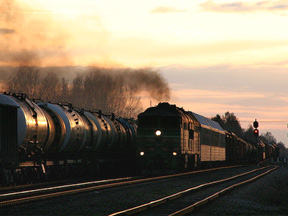
Responsible for the Olympics in Sochi again collided with the problem - the railway is overloaded. For the responsible ones themselves failed the task of transporting goods for the "construction of the century" by road and sea transport. Either business or citizens will suffer. Someone will again ask to pay for its mistakes.
The Olympic construction in Sochi again fell into the center of attention of federal media and again not in the most pleasant context. The Ministry of Transport, according to Kommersant, turned to Russian Railways with a request to consider the possibility of increasing the cargo flow due to, among other things, changes in the passenger transportation schedule. The railway monopoly assures that they can do without canceling trains to the Russian south in the summer. However, a sharp increase in the cargo necessary for Olympic construction projects without reducing passenger transportation will hit companies that use southern ports (primarily Tuapse) to export products.
The reason for the Ministry of Transport’s request is that the plan of alternative delivery of goods for construction in Sochi - by sea and on cars - was ripped off and all hope remains only for railway transportation. And the flow of goods in the coming year will increase by almost one and a half times. And it turns out that all this will have to be taken by Russian Railways.
In fact, the state has not fully thought out the logistics of the transportation of goods for the Olympic construction and now forced to limit someone-either business or ordinary citizens. The choice is unpleasant, if only because you will have to limit the same state “Rosneft” with its powerful lobbying potential. And the abolition of passenger trains to the south at the height of the holiday season is a solution fraught with the troubles of the already social plan.
People who are not the richest, those who are used to relaxing in Russia, and people who, for some reason, are deprived of the possibility of relaxing abroad, go to the resorts of the Krasnodar Territory. If there is nowhere to go the last, then the first and latter may well reorient to other places of rest, not within the Russian Federation. In this regard, any, even for one season, the reduction in transportation and the creation of an artificial deficit contradicts the most declared meaning of the Olympic project.
His goal seemed to be the transformation of Sochi - and the region as a whole - into a modern year -round tourist center and attracting the masses there.
But it turns out that in order to increase the tourist flow it should be limited for a while. This may also mean that then the massive advertising campaigns to return Russian tourists to the Russian south will have to be held again. Moreover, no one can give guarantees that such a policy will be successful.
The inhabitants of Sochi itself have already expressed dissatisfaction and traffic jams in the city because of the construction projects, and the forced removal of houses and lands necessary for the construction of facilities. Now, the distribution will inevitably fall into either businessmen or ordinary citizens from other regions of Russia.
The habit of the state to force someone else for its mistakes in principle is not any news. Like the passion of state husbands to implement large projects, the meaning of which is often controversial, and the effect is far from what it was declared at the start of the project. However, once having declared a large project as a priority (in the case of the Olympics, also at the international level), officials can no longer stop and spend all available resources on its implementation. Including formally strangers.
The logic is again and again triggered that a businessman can only be state -oriented, and therefore he can be deprived of earnings, if there is a will of officials. And citizens can and even have to endure hardships, if this is the decision of the authorities. This is not to say that the interests of business and citizens are not at all taken into account. If the business involves their defense system from state officials, and citizens suddenly begin to actively protest, officials are trying to hand back and try to find other ways to solve the problem fraught with less costs. But almost never interests are taken into account at the stage of study of the project.
And the authorities begin to look for an alternative when they suddenly begin to speak with them from the standpoint of power.
An example is the same metropolitan rallies. The large project “Elections of 2011-2012” suddenly was threatened by implementation: during the Duma elections, they overdook it in Moscow and counted frankly unpopular in the capital of the “party of power” more votes than the amount in which theoretically could be believed. And after many thousands of protests with the main slogan “these ... got”, they had to hastily offer half -hearted political reform (which, however, was not a clear response to “got”). Officially, of course, it was announced that there was no connection between reform and elections, but all the people are adults, aren't it?
The power itself and through its own projects creates man-made crises one after another, then it is surprised that it has not been spent again, and then tries to convince herself and others that they still love it. Then the cycle is repeated - about the new project and in a new place. “Purely written in paper, but forgot about the ravines,” Lev Tolstoy wrote during the Crimean war in the middle of the century before last. It is still relevant, for the Putin Olympiad, including.