
Translated material
Fragments of the speech L.Ya. Borkina at the Conference of Rashan, January 24, 2012
On January 24, 2012, the first conference of the Russian Association of Assistance to Science (Rashan) was held in the Public Chamber of the Russian Federation. We publish several performances at this forum.
Lev Yakovlevich Borkin, zoologist, expert in the field of evolutionary genetics of animals, chairman of the board of St. Petersburg Union of Scientists:
Dear colleagues, those performances that were in the first part showed that our manifesto, which we have already accepted as a whole today, covers quite widely, the most different spheres of scientific, educational and engineering activities, and in the subject corresponded to it.
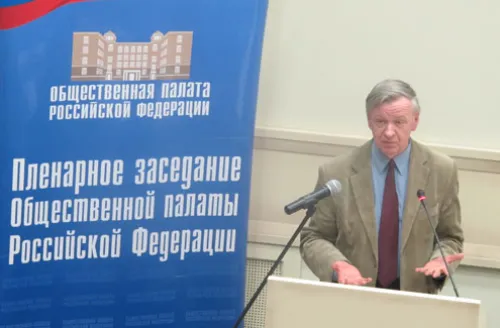
In this regard, I would like to submit to your consideration, I emphasize, a personal point of view. Although I am a member of the Presidium of Rasun, but we did not discuss this on the presidium. I want to offer you to discuss the problem of structuring our organization, in the form of the creation of those commissions and committees that can formally work. Because it is clear that in order to penetrate into some activity, this activity must be adjustable.
The tasks of the races
But first I would like to say a few words about science as a whole. The fact is that now, especially in the West, the problem of not science and power has been very widely discussed in the last decade, which, perhaps, has a slightly sore subject. And the problem of science and society.
The fact is that since the Western system is built on democratic principles, this is very affected by making decisions in the legislative sphere, and, accordingly, this affects the budget in the field of science and education. I know this process in the United States well, since I lived there for about a month in Washington, and studied this organization, which we take as a model, the American Association of Assistance to Science, and specially studied the decision -making process in the field of the scientific budget. The scheme is about the same as ours, I will not say details now. But the situation is very important. Because under the influence of groups of interests, certain commissions in the Congress, certain senators and congressmen vote in this way or a kind. I will not express details now, because I do not have time.
Naturally, inevitably we will come to the same situation, and our society can also influence the development of federal policy in the field of science and education. But the trouble is that the development of science occurs at such a rapid pace that society is not able to understand the successes that occur in science.
I myself, in my narrow specialty, is a biologist, I am engaged in evolutionary biology. More precisely, even I am a zoologist. I am engaged in the evolutionary genetics of animals. I can say that even in this area, relatively small, it develops violently, it is very difficult to keep track of modern things. And this is a big problem when scientists themselves cannot trace a wide front of science. The achievements of science become incomprehensible society. This is not clear to people who make political decisions. And they have experts, they themselves cannot, they are based on the opinions of a person - this is a key thing that is widely discussed in the West. And this is fundamentally important, we must understand this.
And here is one of the tasks of our organization, and in the manifesto it is written, and we discussed this at the presidium - to try, if you want, to generalize the opinion of various groups of society, primarily in the field of science, education and technology, and to broadcast, of course, in our interpretation, those layers that make decisions. First of all, I mean the federal government in the broad sense of the word.
The budget is adopted by the federal government in the field of science. Science refers to joint jurisdiction of the Federation and regions, according to the Constitution with us. But the main budget is adopted at the federal level. Because regional financing of science is very small. I know this following the example of St. Petersburg in particular. It practically does not affect. And many organizations are of federal significance, for example, the Academy of Sciences - regional bodies cannot finance the Academy of Sciences.
The second important problem is the problem of reporting the expert opinion of the scientific community, I am now widely said, to political power. Today I listened with great interest to Professor Tsibulsky, the first report, which concerned quite general problems, in particular, the problems of the cost of goods and raw materials. And everything that was said - I completely agree with this.
But I just want to recall, now we say a lot with us, and the current president, and in the future the same thing will happen - that we are building an innovative society. In 1996, approximately, 15 years ago, at a joint meeting of the Union of Scientific Societies of Russia, such an organization was created around those years, and the Ministry of Science and Technology, as it was called, considered three main scenarios of the country's development - raw material, according to which we are developing; buying patents abroad; And the innovative path.
And then experts, we all came to the conclusion that the innovation path is very expensive, but the most promising. And it will provide, among other things, things such as the independence of the country, and so on.
15 years have passed when they began to talk about this at the highest political level. If we develop and continue so slowly, then we will inevitably lag behind more and more at a greater speed compared to other developed countries. Therefore, we must help accelerate the point of view, which reaches the highest political power - so that this process passes faster, and all this is perceived better.
Now it is common words that everyone is building a knowledge of knowledge. I can say that such a directive was adopted in the European Union 10 years ago. They then began to say that we will build Knowledge Society, a society of knowledge. This Portuguese declaration is the so -called. This was recorded, based on this, a directive plan was adopted, according to which, for example, the creation of new jobs in the field of science and education was calculated.
By the way, keep in mind that those reliefs that will be made regarding visas in our country are largely due to the fact that according to these plans, the European Union will not have enough about 700 thousand seats in high -tech areas, and they hope to get them at our expense. These are their calculations, these are not my calculations. And places of workers. Because neither in the United States, nor in Western Europe, local, indigenous people do not readily go to science, because from the point of view of monetary issues, this is almost the most deplorable segment of society.
These are common words. Another important thing-if you remember, when perestroika began, then General Secretary Mikhail Sergeyevich Gorbachev at the last plenum of the Central Committee of the CPSU said that the country in many ways, I will delicate, is developing not as it should, due to the fact that we missed the scientific and technical revolution. And there was a special plenum of the Central Committee on this. We were late and could not do anything.
But I can say that in the mid-90s we missed another scientific revolution. I witnessed how it happened, I just lived in the USA at that time, and at that time there was a change in the paradigm, there are physical and technical sciences, I now mean the political level and paradigmatic level, were replaced by sciences, as they say, about life. They do not say - biology, they say “Life Sciences”. Everything is included here. In short, this is biomedicine. And on political Washington jargon they say this - this is the science of human health, and environmental health.
We perceive this as common words. But I was amazed when they gave me the documents of the new paradigm of the State Department. It would seem very far - it was all changed in the field of nature protection, and in the field of ecology, as we say. There was a replacement of the subject of human rights, Human Rights, on this topic. And the most important thing is that new interpretations have appeared as a change in the environment in unstable countries, in particular, as an example was Afghanistan, it was 1996, and can reflect the immediate interest of the United States.
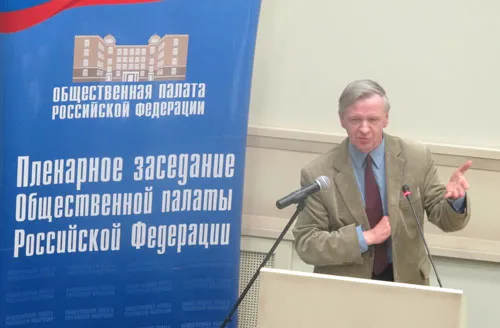
That is, purely scientific issues that were formulated by the scientific community, are perceived by the government and interpreted in terms of foreign policy.
And naturally, there were sharp changes in domestic policy. There were immediately requirements for the so -called. Green business, there were requirements for the environmentalization of everything that is possible, education, and so on. This is very important.
And this is an indicator of how the scientific expert community, of course, when it formulates sane documents, and not just slogans - can affect power. I think that we should go the same way, and since our association claims to be, and I hope that it turns out that we will represent all layers of the scientific community and educational and engineering, then, of course, we will represent general strength.
I can say that so far there was no such organization in our country. For six years I was an expert at the State Duma on science, so I know how lobbying occurs. We have what I call competitive lobbying, when some department or a large organization lobbies its interests. I will not reveal the secrets to you, I saw how this happens, the struggle for the budget in the field of science, this is clear to everyone.
But because of this, we lose everything. In the West, in the United States, in particular, common interests in the field of science are lobbying, and then, if you want, the coordination of partial Parzillar Consentations is already going on. And we have on the contrary. And we all lose all because of this.
We have never, in the history of Russia, the law on science has been fulfilled literally, there should be at least 4% of the federal budget. He was never fulfilled. Although I can tell you, since I took part in the development of this law as an expert - at first we laid the number 7, then we brought to 4. The ceiling, which was 2%. For this, too, you have to fight so that there is at least 4.
On the structure of commissions and commissions of races
Now go to our tasks. I propose to your consideration, and it is very important that you react very creatively, your some considerations. What commissions do we need, in my opinion? I want to list only the most important.
Of course, the structures that we create must be divided into three groups. The first group of commissions that we create is a structure that determines the functioning of our organization itself. If you want, a bureaucratic structure. This is the selection committee. Naturally, while it goes through the Presidium, but the Presidium cannot do this for the mass, this is not the task of the presidium. At first - yes.
Further, of course, this is a financial commission. You feel all this, because everyone came at your own expense. It is clear that we must create some kind of our enduum, that is, target capital. Now the law allows you to do this, and the financial commission must do this. In my opinion, the chairman of the financial commission should be the deputy chairman of the Presidium, because this is an important work.
We have already created 50 regional branches, I think that then this process will expand. And, in my opinion, the coordination of the work of regional branches - this is actually the life basis of our organization. Because if there is no work in regional branches, we will create another shell that will not be very effective.
Therefore, in my opinion, it is necessary to create a special coordination commission so that people know who you can contact, not just to the presidium. And the person who coordinates this work - of course, he should also be the deputy chairman of the presidium so that he has great powers.
Of course, there should be an international commission, an expert commission is very important. (...) We recorded for ourselves an ambitious function. We want to be a partner of the government. Better to say - federal government. Because it is not only the government.
Since we proceed from political science, in Western political science Power, this is all, electoral, legislative power, the judicial one is all Power. If we are partners - what do foreign organizations earn on? They act as experts of federal or international bodies. And their examination is paid. And you should create a serious expert commission where there will be serious people who - sorry so that crooks do not get there, and so on. There is a specificity in our country, we also know this well.
Now let's move on to such commissions, committees in areas, not internal work, but external. This is what will provide, if you like, our reputation. Not only in the country, but also abroad. Although I believe that the reputation in the country is more important than the reputation abroad. But this does not mean that we must neglect because we work in Russia.
We have three segments of the most important societies that we rely on. This is a conditional division, but nevertheless, it exists in our statistics even. There are researchers, teachers, teachers - they give separately. And the field of technology and engineers. These three groups are spelled out in our country, we are defending it, it is very important that the organization has been created for the first time that protects the interests of all these groups.
It is clear that we must create committees on politics in the field of science, on education policy, and the Committee on Politics in the field of technology and innovative development.
Of course, interaction should be carried out between these committees. So far, apparently, this will be carried out at the level of the presidium. Then think about how we will do it. This is a fundamentally important thing - so that we create a group of highly professional people who will track fundamental changes in federal, regional and general politics. At the regional level, the regional branch should be engaged in this, and on the federal, of course, those committees that we will create. If you agree with this.
The American Association of Assistance to Science is mainly engaged in these things. It has a huge impact on decision -making in Congress and the White House. The European Association of Assistance to Science, Eurosyens, I was one of the founders of this organization. We (the St. Petersburg Union of Scientists), by the way, enter as a collective body and the American association too. This Eurosaypens is an expert, an European Union consultant on science. And this determines their high status and influence.
Therefore, we must create these three committees. Of course, people who understand how scientific policy at the regional and federal levels is formed there, and how it is realized. This is very important. If you have no experience, you will not do many things there simply.
Naturally, these committees should cooperate with the relevant relevant committees of the parliament of both chambers, of course, with the Ministry of Science, corresponding to the Department in the Kremlin, and with those organizations that are also engaged in this - the Russian Academy of Sciences, the Council of Rectors, and so on.
Therefore, I do not discuss the details, that's all understandable. One of the important points is to track the acceptance of the budget in the field of these areas. T. Naz was created in America. Intersociety Council, such advice, which includes representatives of about 30 large societies. And they track the adoption of the federal budget from the moment the draft budget from the White House enters Congress. The acceptance scheme is about the same as ours. At first, the government is preparing at first, enters the Duma.
As soon as the first budget appears, they receive a copy, and immediately write their expert opinion. Then the commission works - yes, these are professional people simple. By the way, there are a large number of people, I talked with them, there are a 30-60 people of very experienced people. We have such people, by the way, have. And then they work in the commissions, if they see any flaws, they analyze the general budget, its dynamics compared to what happened, and with what is needed. And then they can trace him through the departments. For example, the NASA budget, the budget of national health institutions, is biomedicine, the National Scientific Fund, and so on.
As well as in scientific areas, separately physics, biology, geology, and so on - this is a giant work. After that, they accept the conclusion to the Congress, and the Congress forms their decision to finance science. And AAAS works with the commissions of the Congress, exerts pressure on them, if necessary - public pressure, through the press, and so on.
But for the most part these are, of course, negotiations. Yes, the negotiation process itself is not disclosed, of course. After that, when the Congress accepts the budget in the first reading, this group is independent AaAAS, publishes its conclusion, there are such books. And when, if the congress does not accept their amendments, when the final budget is accepted, in America this process takes about 1.5 years, then they publish comment on their behalf. It can be positive or negative.
I forgot to add, they still do separate things for each state. And this has a tremendous influence. When Reagan decided to reduce the deficit of the federal budget, which they still have not succeeded, including at the expense of science - just buch rose in the United States.
Но самое интересное, что Американскую ассоциацию поддержали знаете кто – крупнейшие американские корпорации. Многие из них вы знаете. Например, Procter & Gamble, то есть парфюмерия поддержала. Не только высокотехнические, не только Боинг, допустим. Потому что везде нужна наука. Вы не можете разработать нового парфюма, если там ученых нет. Сейчас везде применяются так называемые секс-парфюмы – но эту задачу ученым задали. Везде нужны исследования, у них везде большие научные лаборатории есть. И корпорации и Нобелевские лауреаты поддержали кампанию AAAS в защиту науки, и было оказано колоссальное давление на федеральную власть. У меня есть статья на эту тему. И они победили.
То же самое было сделано, когда Маргарет Тэтчер хотела сэкономить на науке в Англии. Тоже было создано общество, которое называлось «Спасите британскую науку», и вместе с учителями – сами ученые ничего не могут сделать – и с бизнесом они заставили железную леди отступить. Потому что было сказано, будет забастовка. Они сказали так – бизнес, вы не получите новые высокообразованные кадры, мы не будем их учить, и мы не будем с вами взаимодействовать, и вы через некоторое время будете неконкурентоспособны. И они это поняли, и вместе победили.
Вот этим мы должны тоже заниматься, должны создать такую бюджетную группу, которая будет мониторить эти процессы.
Этика науки
Дальше очень важные вещи – на мой взгляд, принципиально важно, коллеги, я излагаю личную точку зрения, можете с ней не соглашаться, это не есть официальная точка зрения. Комитет по научной этике – это больная тема в нашей стране. Я не хочу сейчас ничего говорить, но мы знаем, что наука и образование во многих частях коррумпирована. Мы знаем, что пишутся диссертации людьми, которые даже ничего не делали. Я такие примеры знаю просто. Я не хочу сейчас об этом говорить.
На Западе комитеты по научной этике существуют давно. В той же Американской ассоциации содействия науке, о которой говорил Евгений Павлович, есть специальный комитет. Такие же комитеты есть во всех крупных университетах американских обязательно. И они существуют во многих европейских университетах.
Они имеют очень важную социальную функцию – если этот комитет признал какого-то человека жуликом – с этим человеком контракт не продлевается. Это всё, это смерть для него просто. Мы не должны быть жандармами, это неправильно. Но мы должны иметь такую репутацию, что если наш комитет, который мы санкционируем, будет высказываться по поводу плагиата, или того, или другого – то чтобы эти люди несли ответственность. Но это будет только в том случае, если у нас будет репутация.
Но мы должны очищать науку, чтобы не было петрикгейтов, и так далее. Это принципиальная вещь. Потому что если мы этого не сделаем – это наносит большой удар по репутации науки в целом российской, и за рубежом в частности.
Дальше, на мой взгляд – принципиально важно создание комитета по свободе научной информации. И – дальше у нас почему-то не произносят – ответственности ученых. Меня всегда поражало, почему у нас говорят слово «свобода», но не говорят «ответственность». В той же ассоциации АААS комитет называется “responsibility”. Потому что они говорят – если говорить только о свободе, то это будет анархия. Человек должен нести ответственность за то, что он говорит. Он должен нести ответственность за те ценности, которые он провозглашает. Потому что эти ценности могут быть вовсе не благородные.
Это важная вещь. У нас почему-то эта свобода информации – я могу сказать, что у нас большой опыт в Санкт-Петербургском союзе ученых, у нас такой комитет работал в 90-е годы много лет. Но мы в основном занимались тогда поддержкой прессы, и проблемой гостайны.
Но сейчас ситуация изменилась, и существует не только государственная тайна, сейчас существует и коммерческая тайна, существует, вы знаете, по нашим законам, проблема индивидуальной информации. То есть это большая тема, которой требуется серьезная, научная экспертиза, потому что очень часто трактуется все это неправильно.
Science and religion
Есть еще один аспект, очень печальный. У нас происходит сейчас клерикализация общества во всех сферах. И я, например, знаю сферы – не хочу называть, поскольку идет запись, ни фамилий, ни регионов, когда религиозные фанатики, даже не буду называть, какая конфессия, угрожали ученым, и требовали, чтобы они прекратили преподавать эволюционную теорию, угрожая их убить. Я знаю это от одного профессора, который плакал и говорил – что мне теперь делать?
Это тоже свобода научной информации, мы должны защищать ее, мы должны защищать интересы науки, и людей.
Исходя из этого, нам нужно создать специальный комитет, который будет заниматься проблемами науки, образования, и взаимодействия с религией. Должен сказать, что сейчас происходят довольно серьезные подвижки. В прошлом году Санкт-Петербургский союз ученых участвовал в конференции, которую в Петербурге провела наша православная церковь, о взаимоотношениях между наукой и религией, и патриарх Кирилл, который сейчас возглавляет РПЦ – уделяет большое внимание науке. Ситуация там такая, – я думаю, что я не разглашу никакой тайны, поскольку мне об этом сказали, а я сам атеист, я никакой подписки не давал о неразглашении – церковь озабочена тем, что наше современное священство, которое бурно развивается вширь, не имеет образования естественнонаучного.
Я посмотрел библиотеку Духовной академии Санкт-Петербурга, она считается довольно приличной. У них отличная библиотека, они 7 лет учатся. Там ни одной книжки нет ни по физике, ни по биологии. Я говорю – как же вы можете вступать в дискуссию с учеными по проблемам биоэтики и науки, если вы даже учебников не читаете? У них нет этого.
Но они вынуждены будут сейчас этим заниматься. У нас хорошие отношения, в частности, у меня лично, с людьми из РПЦ. Потому что они понимают, что им нужны сейчас, они хотят получить статус обычных вузов, и поэтому они должны будут давать т.наз. федеральный стандарт образования, и поэтому там должно быть естественнонаучное образование. Они ищут ученых, которые могли бы там читать лекции, мы им помогаем в этом сейчас.
This is a very important thing. И патриарх Кирилл – знаете, какие две проблемы его заботили о поднятии уровня образованности священников – он считает, что современная церковь должна понимать основные закономерности в развитии науки, и уважать науку, это очень важно. И не высказываться против науки, это принципиально важная вещь, про которую я сказал – зафиксируйте в прессе. В отличие от предыдущих патриархов. Помните, гонения были на эволюционную биологию.
И его поразили вещи – то, с чего Вы, Евгений Павлович, начали – проблема космогонии. Эти безумно интересные вещи, которые простому человеку непонятны. Которые происходят в сфере астрофизики. Это настолько интересно, это так быстро развивается. Профессор Филькенштейн сделал шикарный доклад тогда, шикарный. Это в нашей (Петербургской) Духовной академии, все были потрясены просто. Вторая тема, которая их интересует – это биология. Потому что это две области, которые влияют на наше миропонимание. Они отвечают на вопросы – кто мы, откуда мы, и куда мы идем. Поэтому это проблема взаимодействия между религией и наукой. И мы должны четко транслировать свои достижения, и понимать.
Профессор Филькенштейн замечательную фразу сказал, немножко не политесную, поскольку это было все-таки в Духовной академии – он сказал так, если вы хотите выжить, вы должны принимать наши достижения, а не бороться с нами. Так идут западные сообщества. Поэтому эта проблема очень аккуратная, деликатная, и мы должны ею заниматься – естественно, там не должно быть экстремизма ни в ту, ни в другую сторону. Это должен быть хороший договор, но мы должны отстаивать свои позиции. Поэтому у нас в манифесте РАСН написано – мы за образование на научной основе, не на клерикальной, это очень важно.
Воспроизводство научных кадров
Следующая важная вещь – если мы посмотрим друг на друга, и посмотрим на статистику нашего научного сообщества, оно получило уже довольно давно такое жаргонное название – модель двугорбого верблюда. Потому что есть «горб» молодежи, но дальше средние, наиболее эффективные возраста, отсутствуют, они уходят или в бизнес, или за границу, и дальше второй горб ученых старших поколений. Это – «двугорбый верблюд».
Самое печальное, что этот второй горб с каждым годом продвигается, его пик – на один год. Сейчас средний возраст в науке очень высокий – я сам молодой пенсионер, так что я знаю, о чем говорю. And this is very sad. Поэтому если у нас не будет научной перспективы, я имею в виду, смены, то организация тоже никому не нужна будет. Эта проблема является ключевой для всех, не только для нас.
Во всех западных крупных сообществах есть эта проблема, они называют ее, например, по-немецки научный подрост, термин тот же самый. Везде эта проблема, не только у нас. И мы не знаем, как мы сможем заинтересовать молодежь, чтобы она вступала в Российскую ассоциацию содействия науке.
Но независимо от этого, – они сами могут быть абсолютно индифферентны, – мы должны за них бороться. Иначе не будет будущего не только у науки, но и у страны. Потому что без науки будущего у нашей страны не будет, перспективного, чтобы мы заняли достойное место в мировом сообществе.
Важна другая проблема – социальная проблема научного сообщества. Я вчера ехал в поезде со своими коллегами, и был потрясен, когда мне сказали, что в одном очень уважаемом университете в Санкт-Петербурге, тоже не хочу говорить, в каком, старший научный сотрудник получает 12 тысяч рублей. Или профессор даже. Понимаете, это несерьезно просто.
Конечно – я интервью недавно давал, и журналистка мне говорит – а вы организуйте забастовку. Я говорю – у нас мотивация другая. Мы занимаемся тем, без чего жить не можем. Поэтому нам бессмысленно бастовать. И происходит эксплуатация ученых, непонимание со стороны современного общества и государства. И мы должны отстаивать свои права, здесь не надо стесняться, надо работать вместе с профсоюзами, и надо жестко ставить эти проблемы.
Popularization of science
Дальше, принципиально важная вещь – на Западе это целая, если хотите, бизнес-сфера, у нас это практически отсутствует, только немножко есть попытки, в частности, фонд Дм. Зимина, газета «Троицкий вариант», несколько журналов есть, в том числе журнал Санкт-Петербургского союза ученых – но это капля в море. Мы должны заниматься популяризацией науки. В США это давно поняли политики. Если хотите, чтобы общество вас поддерживало – до него необходимо доносить достижения науки. (...)
Мы должны это доносить до людей, это должно делаться каждый день, везде. Говорить про науку и образование, каждый день, и разные люди должны быть для этого. И тогда будет понимание в обществе. Могу сказать, что политики и журналисты часто эксплуатируют эту проблему, говорят, что писать про науку и образование неинтересно, народу якобы неинтересно.
Могу сказать, что это не так. Я в сентябре прошлого года получил удивительный опыт, Санкт-Петербургский союз ученых организовал научную конференцию по историю науки, 18-й век, в небольшом городке Волгоградской области, в Палласовке – там был петербургский академик Паллас в 1773 году. Я в своей жизни не видел такого милого, нежного и ласкового отношения к ученым, как было проявлено местной администрацией и местным бизнес-сообществом. Они оплатили проезд ученых, там были люди из многих городов России и из Казахстана. Они оплатили дорогу туда и обратно, они оплатили проживание в гостинице. Сентябрь прошлого года. Они оплатили даже питание. Я никогда в жизни такого не видел. На нас буквально не дышали.
Вот вам отношение общества. Никто этих людей не заставлял, они сами захотели провести конференцию, посвященную академику Палласу. Кстати, когда они написали письмо в Академию наук – та им даже не ответила. Мне показали письмо из президиума.
Поэтому, если мы сможем вовлечь в нашу организацию журналистов, которые пишут на научные темы, т. наз. научных журналистов, а у нас, по-моему, даже такая ассоциация есть; если мы сможем найти контакты с газетой «Троицкий вариант», и с другими газетами, это очень важно. Могу сказать, что на Западе каждая респектабельная газета имеет обязательно страницу, посвященную science, и раздел, посвященный компьютером. Респектабельная газета, не желтая пресса.
Но желтая тоже иногда пишет. Желтая пресса, я вам в виде юмора приведу пример, есть такая проблема партеногенеза у животных – партеногенез, это развитие без мужчин, понятно молодым людям. И какая-то газета у нас в Москве написала про лесбиянок среди животных. Каждый по-своему понимает.
Поэтому мы должны работать с научными журналистами, это наш такой канал трансляции интересов, на все уровни. Потому что такие статьи читают и простые люди, и вовлеченные во власть, и дети, и так далее.
Поэтому я считаю, что это тоже могла бы быть опора для РАСН. У нас в манифесте записано. Было бы очень важно, чтобы мы смогли найти людей, которые бы эту работу структурировали, и налаживали контакты. Потому что это должны быть специалисты. Поэтому я говорю, что в каждой газете должны быть специалисты по популяризации науки.
Вот, пожалуй, это те основные направления, которые мне видятся принципиально необходимыми, их надо создать как можно быстрее. Но это не означает, что не могут быть какие-то другие комитеты и группы, и это не означает, что региональные отделения должны копировать эту схему. Потому что, конечно, мы должны исходить из ситуации, которая складывается в том или ином регионе. Одна ситуация в Новосибирске, или в Томске, где сильная наука и вузовская, и академическая. Я там был еще в молодые годы, замечательные места. Или Нижний Новгород. А другое дело – регионы, где этого нет. Мы должны гибко подходить.
Вот мои самые важные заметки, спасибо за внимание.