
Translated material
"Ethnic map of Russia"
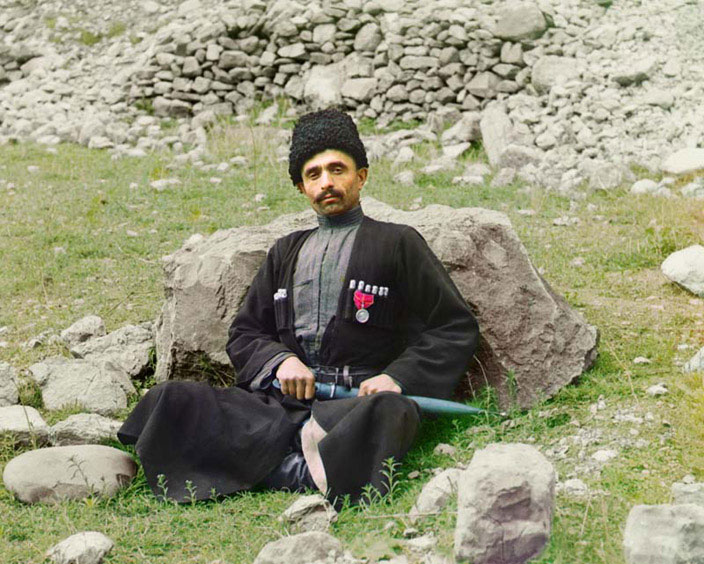
Igor Yakovenko: Sergey Alexandrovich, what does the name Avars mean, what is the origin of this ethnonym?
Sergey Arutyunov: In truth, I do not imagine it very well. In my opinion, there is no consistent opinion in the science of the origin of this ethnonym. It is consonant with the name of the ancient people of "Avara", but, obviously, there is no continuity. Perhaps this is a somewhat distorted self -name of the Avars.
Igor Yakovenko: Abdulgamid Osmanovich, over the past 8 years between the censuses of 2002 and 2010, the number of Avars in Russia has increased somewhat. According to the censuses around the country, by 11%, and in Dagestan there are even more. What explains the population growth?
Abdulgamid Bulatov: I think this is not a matter of one reason, but in a complex of reasons. As one of the most basic, I would allocate mass relocation from the mountains to the plain, to the cities. The fact is that the mountains have certain boundaries for the natural growth of the population, just the boundaries that are set to the possibilities of nature management, employment of people. Although, even when the main masses of the Dagestanis lived in cities, he was some growth, he was incomparable with the growth of the population that began when the massive resettlement of highlanders to the plain went. It acquires especially massive nature in the 90s and early 2000s. There are other living conditions, more comfortable, more favorable. I think this stimulates the birth rate. But here is a kind of paradox: when the rural residents move to the cities, then after a while their birth rate decreases. As far as I can judge by my observations of the peoples of Dagestan, at the level of the first or second generation of immigrants, the birth rate jumps, and then there is a decrease.
Igor Yakovenko: That is, it turns out that this inertia of the rural way of life in the family is extrapolated on the city and it turns out to be explosive growth. Rural rules of life, which in the conditions of urban space lead to such growth.
Abdulgamid Bulatov: I would not call the rural rules of life, because the rules of life are changing. These people are not yet urban residents, but not rural - this is such a transitional part of the population. Live mainly in suburban villages. But there is a certain stereotype that there should be many children in the family, it is preserved. And since living conditions are better, there are opportunities to have children in large numbers.
Igor Yakovenko: Sergey Alexandrovich, a few words about the language. Today, about 80% of the Avars speak their native language, and 85% spoke 85% according to the previous census in Avar, that is, there is a decrease, a decrease in the share of Avars, especially among young people who speak their native language. What is it connected with, what consequences can this have?
Sergey Arutyunov: This decrease is still not very significant. This is primarily due to the fact that the Avars from the original areas of their residence in the mountainous areas move to the plain not only within Dagestan himself, quite a few outside Dagestan, mainly in neighboring areas, in the Stavropol Territory, in Kalmykia there are a rather significant number of Avars. And where they live in a mixed ethnic environment, where Russian becomes the language of interethnic communication and the main means of communication, children grow up, especially in mixed marriages, which in such conditions speak Russian more than in their native and grow without sufficient knowledge of Avar. I think that even those who said not Avar, but Russian-or maybe some other language-their native language, they understand in Avar, but not able to speak, their language competence is insufficient. I think this is the main reason.
Igor Yakovenko: Sergey Alexandrovich, continuing this language theme, the theme of the Avar language, in it, as in many languages of Muslim peoples, an Arabic letter was used until the beginning of the 20th century, since Islam came from the Arabs, Arabic letter came with Islam. Then, in the USSR, from 1928 to 1938, these languages were translated into Latin, then from 1938 to the present were translated into Cyrillic. At the same time, a rather large layer of works in Arabic was lost. What font, from your point of view, is the most organic for the Avar language, corresponds to its organic matter and oral speech?
Sergey Harutyunov: You know, with the exception of the Semitic languages, Hebrew of Jewish or Arabic, where a kind of root structure, stable consonants, and vowels change depending on the grammatical paradigm, most other languages of the world have a stable root composition, stable meaning and, I am convinced that for all languages, except for Semitic languages, the most suitable Latin. In general, for all languages, the Latinage should become the main type of writing, since this is required by computer culture, the computerization of our life. There are programs of fairly branched translations from any font to any font, but still they interfere with work. Therefore, the more comprehensive the computer work with the text, the more need for the transition to the Latinage. As for the languages of the Caucasian, I believe that Arabica, of course, is unsuitable for them, because they have a grammatical system in Arabic, so there are many additional points, the phonetic composition is more difficult than in Arabic, additional letters are needed. In addition, of course, the Arabic font now, except for the Arabic language itself, is not very suitable for other languages and, of course, Latin is preferable. As for the Cyrillic alphabet, there are several advantages of Latin or, say, there are several significant drawbacks of the Cyrillic alphabet. Although, in principle, with the help of diacritic icons, first of all, it is a Caucasian stick, which is full of texts in all Caucasian languages, you can convey all the sounds of these languages. So both Latin and Cyrillic is suitable. But Latin, in my opinion, is better, especially in the age of computerization.
Igor Yakovenko: Abdulgamid Osmanovich, what are the features of beliefs, culture, traditions of the Avars, which distinguish them from other peoples of the North Caucasus?
Abdulgamid Bulatov: I would say that the Avars have no fundamental differences, fundamentally distinguishing them from the culture and views of other peoples of the Caucasus. In principle, they have the same thing in culture, and in religious representations as among other peoples of Dagestan and the North Caucasus as a whole. Another thing is that the forms of expressions of these ideas have their own characteristics. In particular, the Avars later adopted Islam. This is primarily due to their geographical position, with the greater inaccessibility of the territories of their residence. And accordingly, with a later penetration of Islam. In addition, Christianity was spread in a number of Avar regions - and there were quite strong roots. Therefore, there was a period when for a hundred years there was a rivalry between Islam, penetrating these areas, and Christianity, which had already penetrated from Georgia. The later Islamization of the Avars in comparison with other peoples of Dagestan contributed to the fact that the period of revival of Islam since the late 80s of the last century, this process was much faster with them. And therefore, many of the previous pre -Islamic beliefs, which the Avars were quite clearly manifested, like other peoples of Dagestan, are currently either emerging from the turnover, from everyday use, or have already been erased to a large extent. This is just the result of secondary Islamization. In other peoples, this also manifests itself, but to a much lesser extent. I myself have been engaged in a long time to study the ancient religious views and cults among the peoples of Dagestan, I can say, I found this material at the end. Those who tried to work in this area after me were already much more complicated, because the informants either did not want to talk about this topic, or they said that this was not. I would single out such a feature as one of the noticeable ones. And in other fundamental differences there are no.