
Translated material
Whether corruption in Russia was correctly measured
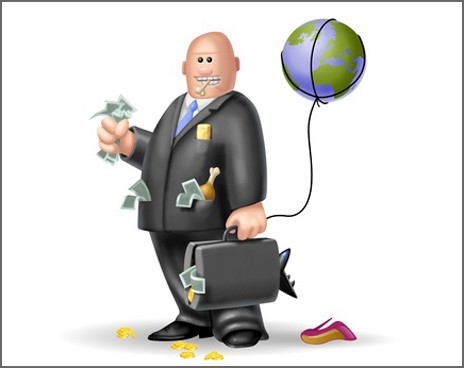
How to check the reliability of ratings? Not so long ago, the head of the Presidential Administration, Sergei Ivanov, said that it is not worth trusting in numerous Western ratings, but it is necessary to create your own. “I do not really trust the numerous ratings, primarily the Western, where they arbitrarily different organizations, for example, Transparency International, are put on one or another place,” he said.
Specialists proved that in countries with the highest level of democracy and the highest level of GDP per capita - the lowest level of corruption: the richest countries do not need corruption.
Renaissance Capital analysts compared the index of perception of corruption Transparency International (the index evaluating the impression of the country that develops mainly among foreign investors) and the data of the Polity IV, which connects the level of corruption and the level of democracy in different countries. The least corrupt countries, the average rating of which is close to the indicator 6.6 on a scale of 0-10 - is 34 states with a maximum rating of +10, according to the Polity IV scale. At the other end of the scale, a small number of oil exporters are also with a very low level of corruption.
But as soon as we move from the +10 rating towards +9, according to Polity IV, which also corresponds to strong democracies, the average perception of corruption is much worse - about 3.8 with an average of 6.6 in countries with a democracy rating +10. The level of corruption coincides in countries throughout the Polity IV base range-from strong democracies (+9) to strong autocracies (-7).
Corruption perception index (2011) and Polity IV data (2010)
Source: Polity IV base, Transparency International, Renaissance Capital Renaissance
It turns out that in countries with the highest level of democracy, according to Polity IV, the lowest average level of corruption is really noted, according to Transparency International estimates. The data demonstrate that the level of perception of corruption in Russia corresponds to the level of democracy in the country. Of course, the data perception of corruption Transparency International can be regarded not as truth in the last instance (due to the features of the analysis). But if two independent authoritative ratings talk about the same thing, then it is likely that they reflect the real picture. In other words, the comparison and analysis of the data forces to believe in the veracity of international ratings.