
Translated material
Belgian astronomer took "posthumous" pictures of the Soviet satellite
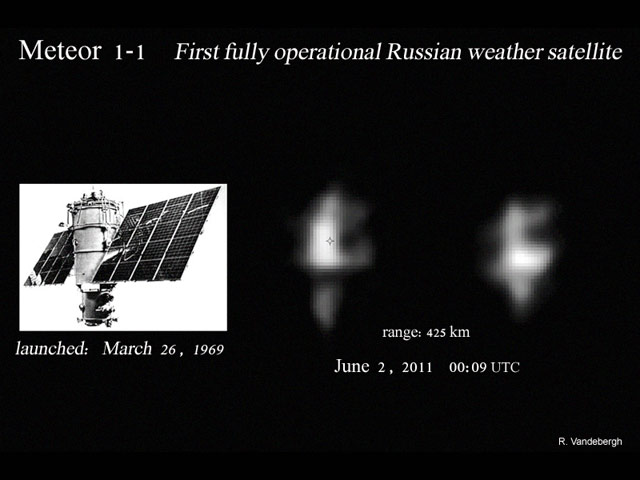
The Belgian amateur astronomer Ralph Vandeberg took pictures of the First Soviet Meteor Meteor-1 meteorus, RIA Novosti reports. This companion after 43 years in orbit in the coming days will enter the dense layers of the atmosphere.
Meteor-1 was launched from the Plesetsk cosmodrome on March 26, 1969. After a series of experimental devices, he became the first full -fledged meteorological satellite, which broadcast on the ground the temperature data, pictures taken in the visible and infrared range. Information from the apparatus entered the hydrometeorological center, and was also transmitted to meteorological services of other countries.
According to NASA, the satellite stopped working in July 1970, when the transfer of video information and infrared shooting from the USSR to the USA through special channels created during the Cold War was interrupted.
Initially, the device weighing about 1.2 tons was brought into a polar circular orbit 650 kilometers high. In the summer of 2011, the satellite was at an altitude of about 400 kilometers, but nine months later, in March 2012 it decreased to 250 kilometers.
Currently, "Meteor-1" is quickly losing height. According to the US space control system, on March 21, its orbit height fell to 220 kilometers. According to experts, the device may enter the atmosphere on March 25.
Amateur astrophotograph Ralph Vandeberg, specializing in spacecraft pictures, published several pictures of the "Meteor" on Wednesday, which may become the last in the long life of the satellite.
According to Vandeberg, the device, apparently, intensively "somersaults" intensively, greatly changing brightness. In the best pictures taken on March 20, you can distinguish sunny batteries and a cylindrical satellite case.