
Translated material
The reference thing is the French "New Wave"
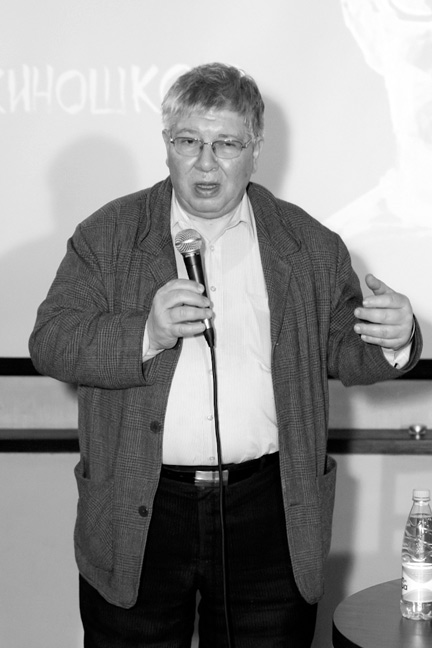
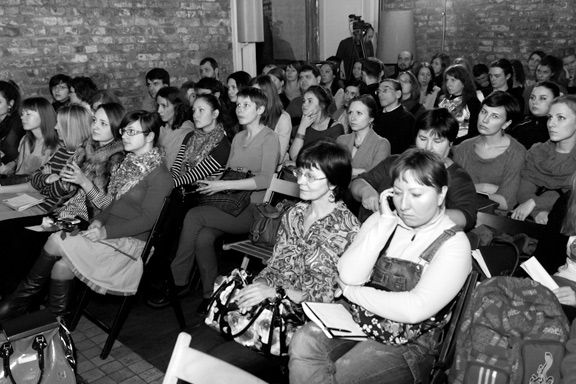
We publish fragments of a lecture of the director of the Russian Institute of Cultural Studies, a doctor of art history, professor, author of numerous books and articles on modern culture issues published in Russia and abroad, Kirill Razlogov on the topic "French" New Wave ", read on March 3, 2012 at the Zavtra club (ex -pies on Srevenka). The lecture is organized by the film school. McGaffin in the framework of the project “ Public Lectures Polit.ru ”.
A lecture broadcast video can be viewed here.
Read the full text of the lecture here.
Polit.ru : Is the spectator a profession?
Kirill Razlogov :
The viewer is not a profession, this is a pleasure.
But among the audience there is a certain group of people who approaches this professionally. In the cinema, such people are called moviegoers.
“Polit.ru” : How do you think the ordinary viewer makes some part of the path to understand the film?
K. Razlogov : It makes part of the path for understanding the film in the same way as it makes part of the path to understanding life. If life is a profession, then watching a movie is a profession. While cinema is living art, it is perceived naturally, including an unprepared viewer, or rather, prepared by life itself. And when the cinema is a dead art, like painting or literature that is a thing of the past, then in order to watch a movie, it will be necessary to get certain skills. To read books, in particular, we must learn literacy, to understand and perception of letters. Cinema in this regard is easier, because cinema can be watched naturally.
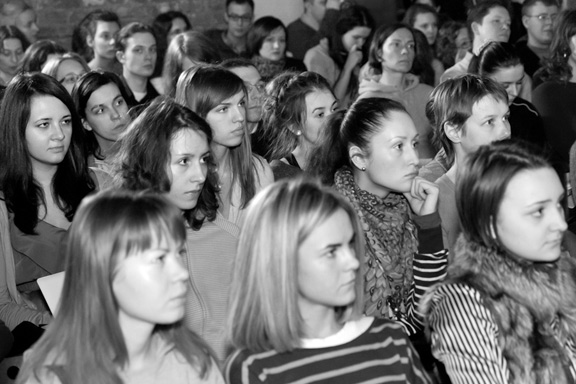 Lectures of lectures by Kirill Razlogov "French" New Wave "
Different films are perceived in different ways. There are films that are perceived naturally because it is believed that this is the right and normal movie. If the film is not from this list, it can also sometimes watch an unprepared viewer and get some knowledge or have a good time. We are talking about different films, different stories, cinema eras, about different relationships of cinema with the audience. In order to expand the horizons of the viewer,
It is necessary to interest him not only in those films that he already watches, but in those that go on cinemas or are available on the Internet, but have not yet reached it.
“Polit.ru” : What would you recommend watching the last films from the last?
K. Razlogov : If domestic paintings, then “Shapito show”, if foreign, then “melancholy”, “keeper of time” and “artist” , and at the intersection of both - “Faust”. This is what it seems to me the most curious.
***
The French "New Wave" to a certain extent is a reference thing, the update of world cinema began with it in the late 1950s and early 60s, an unconventional
A parish in the cinematic profession is not through training in cinematic institutions, but through filmmanism and film critics.
It was a unique case when people came to the profession of a director simply from a great love for cinema, from a large number of paintings watched. Like any new phenomenon, the French “New Wave” denied the previous phenomena in the cinema, which, with the light hand of Francois Truffo, the author of the film “Jules and Jim” , one of the Huhunwes critics of this time, received the name “Daddy's Cinema”, against which he took up arms and which he scolded mercilessly the most gross words.
Of those people who are considered to be involved in the “New Wave”, there was one person who received a traditional cinematic education at the film Institute, worked as an assistant to the director and went through a normal school for a filmmaker - this is Louis Mal. He is a traditionalist, began with a detective, the film "Elevator on the Aptory" , which you could see on the screens with us. He was involved in his “New Wave” his heroine. The main role in the film “The Essay Esset Esset” was played by Jeanne Moro, who became an actress-physhe, ideal, embodied a new type of heroine.
Intellectual heroine-instead of the heroine-beautiful, photogenic and frivolous,
Which was played by Martin Karol, who, unlike Jeanne More, was created to be a star.
Moro was a professional actress, she starred a lot in the cinema in secondary roles. In the early 50s, she even starred in the same famous picture with Jean Gaben “Do not Trower the Premium” , where she played the role of a friend of the protagonist, who betrays him at a decisive moment and turns out to be a villainous. In this role, no one really noticed her. They noticed her in the film “The Lift on the Scaffold”, where she played in a traditional love triangle, forcing her lover to commit a murder, but he stuck in the elevator, which is why he was exposed.
The dilemma of a strong woman and a weak man will then be developed in the films of Michelangelo Antonioni in Italy
Jeannia Moreau was perfectly embodied, because she is in life and on the screen - an unconditionally strong woman who loves to lead the process, and in the film “Jules and Jim” you will see how she does it.
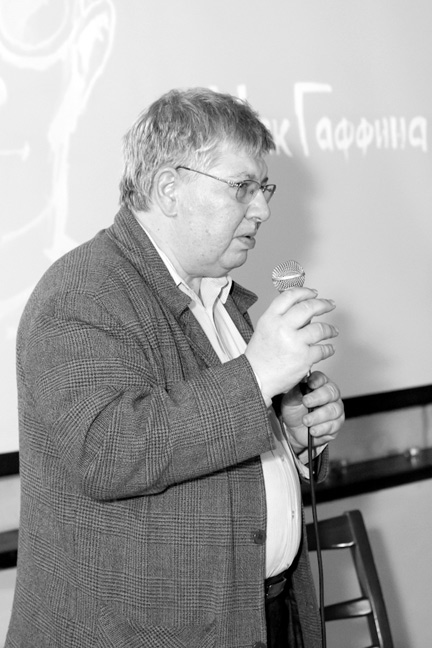
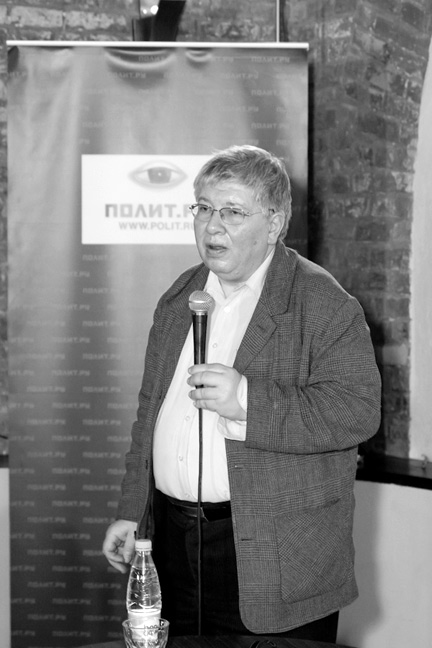 Kirill of Droglov
This new type of heroine was later embodied by the same Louis Male in the film “Lovers” of the 58th year. This picture contributed to the breakdown of traditional ideas within the framework of the plot traditional for French cinema, which is already indicated in the very title of the film. The picture was rather strictly prohibited by the Catholic Church, not only not recommended for viewing, but prohibited to believers. This is due to the fact that there was an erotic scene in the bath at that time, which seemed to be a transcendental thing that is shown, and even more so you could not watch. In fact, it began with a medieval “map of tenderness”, talked about the vicissitudes of human feelings. The heroine was again a strong woman who had a fairly prosperous marriage, a prosperous husband, a very prosperous, beautiful, secured lover, a bourgeois life, which, it would seem, was perfect. The heroine lost her mind on erotic soil, ran away with a visiting journalist who accidentally brought her by car. The insight of Louis Maly and Jeanne Moro in this picture was that the last look that she threw into the camera towards the viewer indicated that she was not at all sure that she was doing the right thing, but, nevertheless, does so. This peculiar picture contributed to the breakdown of that familiar layout of the love triangle, which was characteristic of French cinema before.
The second person who came from the side was director Alain Rene. His most famous picture is called "Hiroshima, my love",
According to the scenario, Margerit Duras. The picture is entirely built on the text, on the complex interaction of historical facts and personal relationships. If you once looked at the picture, it remains in my memory. She shocked the fact that she put an equal sign, compared the love story of a Frenchwoman and a German soldier at the end of the Second World War of the period of the occupation of France. She was punished at the time of liberation, outlining her head, a curse was imposed on her. And the novel of this very woman, who became an actress, with a Japanese who recalled Hiroshima (hence the name of the film). The parallel between the Hiroshima and the unbelief (the small provincial French city is the place of the first novel). Such a four -story, with complex associations, an absolutely literary plot built on the text, which is read as a literary text and this is very different from the French films of a new wave, and this fits into the movement of the intellectualization of world cinema. Where did Alen Rene and became the master of the “New Wave”, although he was older than others, and his path to the profession lay through documentary cinema, and not through film critics and critical articles about what happened.
His most famous documentary- “Night and Fog” of the 56th year, which talked about concentration camps, mounted the historical chronicle about the destruction of people and modern landscapes of those places where there were concentration camps. This half -hour documentary became an absolute classic, it was shown repeatedly with us, but it could pass by, since it does not belong to the Box Office champions. The next after the Hiroshima, his painting “Last year in Marienbad” is a speculative story with speculative moves, resembling a game with matches, which is played by the main characters, with a famous theater actor of Russian origin in the title role and Dolphin Seirig, who later became his beloved actress Alena Rene.
On the movement of these people, the French "new wave" rose. Three names correspond to each movement of film experts. Italian intellectual cinema: Fellini, Antonioni, Visconti. Neogollywood: Scorsese, Spielberg, Coppola. There is still a fourth - George Lucas, Paul Mazur - the fifth.
In the French "New Wave" there is also a trinity-Francois Trufffo, Claude Shabrol and Jean-Luke Hodar. These three are the first.
In fact, they were Alain Rene and Louis Mal, and after them - few people famous masters, but the masters are equally great, if not more - Eric Romer and Jacques Rightt - the same generation, the same group, but they did not fall into this trinity.
The main person, following the results of the process in this trinity, was Francois Truffo, the most unhappy in his personal life, from an uncomplicated family. He became famous in the influential French newspaper “ Arts ” even before the French “New Wave” rose, the article “A certain trend in French cinema”. His favorite example: in order to see how a woman undresses, you just need to open the door to the bathroom, and not motivate it in some other way. Other methods later appeared in the films of a new wave.
At the same time, French masters were fans of American cinema. The 50s are a paradoxical period: on the one hand, this is a period of a cruel economic crisis in Hollywood due to the spread of television. This crisis came to Europe.
One of the reasons why the French “New Wave” appeared was precisely the economic crisis.
There is nothing more fruitful for art than the economic crisis. In the conditions of this crisis, the traditional values of American culture found their completion. All paintings that finish the traditional genres of Hollywood cinema were created in the 50s. The last great classic Western Hawks “Rio Bravo”, his “gentlemen prefer blondes” , other classical comedies and detectives.
The main masters who worshiped the masters of the “New Wave” - Howard Hawks and Alfred Hitchcock.
Nobody took the second seriously, he was considered a small artisan in his own environment. And suddenly the masters of the “New Wave” said that the greatest directors are Hitchcock and Hawks. They created a company called “Hitchcoco-Housing fans”, which included all the listed directors, except Alena Rene, who preferred comics. Francois Truffo later, when he becomes a well-known director, will make a large interview with Hitchcock, and two others-Romer and Shabrov-will write their book about Hitchcock.
Many of the listed masters filled their hand in short films, taking them together. Hodar-Trufffo, Truff-Shabrol, etc. Shortrages were financed by different people. Shabrov was from the province, his aunt was rich and with her money the first film of Claude Shabrole “handsome Serge” was shot. The second - “cousins” - was already taken with the producer's money. There were two producers who believed in them - Pierre Bromberge, who produced these short tapes, and Anatole Doman, a native of Poland. These two people financed the entire “new wave”. Anatol Doman financed “Night and Fog”, “Last year in Marienbad” and “Hiroshima, My Love”. Bromberge financed Trufffo and Godara.
Trufffo made his first picture of the autobiographical, in the late 50s, it is called "400 strokes." This is the story of a teenage boy, whose name is Antoine Duanel, who was played by a very young actor Jean-Pierre Leo, on whose psyche the work with Trufffo has very much influenced. Subsequently, the director made a cycle of films about the life of Antoine Duanel, an eternal teenager, and traced his fate until marriage, even in family life he remained the same teenager who was in the first film.
This film immediately became a sensation and aroused great interest and because Trufffo was scandalously famous, and because in this film there was a completely different idea of reliability on the screen. The picture received one of the prizes of the Cannes festival, which was a paradox, because before that for several years Trufffo had not accredited, the directorate imposed a ban on his name. Trufffo himself is ironic about this in the book “Films of my life” , saying that he was wildly annoyed by bouquets on the forefront in front of the screen, because he was sitting in the front row of the stalls, like all the moviegoers, and could not read subtitles in foreign films because of these bouquets. But when he imagined his film, he was put on the first row of a balcony, and he saw that these flowers were very beautiful. This flair to a change in the gaze and point of view is very important for understanding what was happening with the “new wave”.
Trufffo's work itself was piercing. He made one picture from his life, the next - “Shoot at the pianist” - was a film adaptation of his beloved American detective.
Trufffo transferred the action from the United States to France, saturated all with French realities. There was always a distance: an element of drama where a comedy is an element of comedy where the drama is. It is very characterized by the paradox of the attitude to life itself in life and on the screen.
In the early 60s. Trufffo and Shabrov fit very quickly into the normal system of film production. But rebellious moods in the new wave remained even when they fit into the traditional system of film production: for example,
They demanded to stop half the Cannes Film Festival, when at the same time the students of the Sorbonne protested.
From the further career of Truffo: he turned out to be a very smart businessman and his subsequent paintings, starting from the mid-60s, made only with the consent of the rental of some large Hollywood company. There were two of them - "Warner Bros." And "United Artists". He sent his script to both companies, and as soon as one of them gave his consent, he began to shoot a picture. As a result, he had a guaranteed rental in the States, became a cult director in the United States, starred in Spielberg’s film “close contacts of the third kind” , where he played a French scientist.
The most cute from all his next paintings seems to me the painting “American Night”. So the mechanical device for shooting a night scene during the day with the help of light filters is indicated, using it the lighting system changes. This story is absolutely autobiographical: Trufffo plays the director, Jean-Pierre Leo plays the most extravagant of the actors, the film has a variety of details of filming, filming adventure, and light ironic conditional intonation.
The French "New Wave" is actually about the love of cinema in the cinema, about the love of cinema on the big screen.
To a certain extent, the film “Artist”, which became the main picture of this year, in another generation made by a native of Lithuania Michel Khazanavichus, continues this line of manic love for traditional cinema.
Trufffo had passed away before others, but he lived quite violently and shot a lot of films. His last picture is “funny Sunday” . A curious story is connected with her because he shot a movie about his youth, shot it black and white, and this film became a worthy end of the director’s career.
The second director is Jean-Luke Hodar , which I have already started talking about. He was the largest hooligan and extremist of all, was carried away by the Chinese cultural revolution. Hodar made his first full-length picture “In the last breath” , which struck everyone, because it gave the French screen a new hero-Jean-Paul Belmondo. He sharply broke the traditions of beautiful, stately, well -educated men, but possessed temperament and peculiar physiological magnetism. Belmondo later played in the films of other masters of the French “New Wave”, in particular, with Shabrov, but then he went into normal French commercial cinema, much more successful, and became one of his stars.
In addition to the actor and the hero, who was found by Jean-Luke Hodar, he also found a new narrative system.
It is not linearly, but it was a narrative built on fragments, it constantly rotated around the same key points. In addition, he violated many rules of cinematographic installation, which is characteristic of the new French wave, not according to the rules of cinematic syntax, made episodes, forced the actors to look directly into the camera and shout obscene expressions. Thus, he updated the language of cinema in a large scale than French cinema. He was an extremely well -read person and inserted a huge number of quotes into his films.
Godard had a difficult career, because initially, like Trufffo and other masters of the “new wave”, it seemed to fit into normal film production. He had his own heroine - the Danish woman Anna Karina, he made films that were repulsed from the American musical, associated with modern French culture. По мере обострения политической ситуации он ушел из «нормального» французского кино и стал делать агитационные фильмы. Потом он вернулся в коммерческое кино и снял политическую агитку, где герои брали в плен директора завода и требовали от него сатисфакции. В период перехода от официального кино в кино авангардистское он сделал наиболее интересную для меня картину, построенную как фильм, найденный на свалке и затерянный в космосе, по его собственным словам, которая называется «Уикэнд» . Из картин известных еще была фантастическая «Альфавиль» . А «Уикэнд» - картина, которая сделана как серия фрагментов и цитат из «Алисы в стране чудес», Энгельса, наиболее почитаемого французского поэта Лотреамона. На фоне этих цитат – разного рода фрейдистские ассоциации, цитаты из ранее существовавших сюжетов, как кинематографических, так и нет.
Шокирующие ходы вывели Годара за пределы нормального кинематографа, с тех пор он делал картины на грани допустимого, постоянно малобюджетные.
Третий мастер, который тоже относится к французской «новой волне» – Клод Шаброль , человек совершенно другого плана, с тетушкой из провинции. Две его первые картины – истории отношений провинциалов с городскими жителями, драматические картины. В середине 60-х гг. он делает несколько коммерческих детективных фильмов, а потом возвращается к «свинцовым мерзостям» французской жизни в провинции. Он очень точно чувствует эту среду, и мой любимый такой его фильм называется «Мясник» .
Сейчас все поколение французской «новой волны» уходит, уходит эпоха. Недавно умерли Шаброль, Эрик Ромер. Ромер был единственным консерватором из группы «новой волны», единственным человеком религиозных убеждений, единственным философом. У него очень простые, дешевые и текстовые фильмы, очень назидательные истории с изощренным рисунком сюжета и взаимоотношений между персонажами в тексте.
Эта пятерка: Трюффо, Годар, Шаброль, Ромер и последний, Жак Риветт, наиболее сложный режиссер, реже всего делает фильмы, раз в несколько лет. Он сделал мою самую любимую картину, которая называется «Селин и Жюли едут в лодке» . На самом деле никакой лодки нет, это стыдливый эвфемизм, который по-французски означает «совсем заврались» - они друг друга все время обманывают, и ты не знаешь, правду они говорят или нет в течение всего фильма.
Совсем недавно я показывал его первую короткометражную картину, которая называется «Ход конем» , она очень изящно заканчивает рассказ о французской «новой волне». Картина с простейшим сюжетом, с шахматной ассоциацией: молодая женщина прощается с мужем, убегает к любовнику. Любовник ей дарит шубу на свидании, она не может к мужу вернуться с шубой, и они придумывают, как сделать так, чтобы шуба оказалась у нее, а муж ничего не заметил. Придумывают оставить на вокзале в камере хранения, якобы найдя потом талончик. Женщина уговаривает мужа поехать на вокзал и проверить, что в чемодане. Там оказывается тряпка. Женщина ссорится и расстается с любовником. А вечером приезжает к ней домой сестра, снимает эту шубку, кладет на диван, и «Ход конем» таким образом завершается.
Про фильм «Жюль и Джим»
Эта картина, на мой взгляд – одна из лучших во второй половине ХХ века. Она типична для французской «новой волны» по интонации, нетипична по происхождению. Это экранизация романа, написанного 70-тилетним писателем, его зовут Анри-Пьер Роше, который в своем возрасте вспомнил про юношескую любовь, причем любовный треугольник, в котором он оказался со своим другом и их общей возлюбленной. Главное, что связывает фильм с новой волной – Жанна Моро, про нее одну историю не откажу себе в удовольствии все-таки рассказать. Уже в очень зрелом возрасте Жанна Моро сыграла в фильме Маргериту Дюрас. Темой картины был роман старой писательницы с совсем молодым человеком. Кто-то из журналистов спросил, не было ли ей неудобно играть в своем возрасте историю любви с юношей. На что она ответила: «Великая женщина имеет право на все». Дальше экран будет говорить сам за себя.
Рекомендовано Кириллом Разлоговым (фильмы, названные в процессе лекции):
Режиссер Ален Рене
«В прошлом году в Мариенбаде»
«Дикие травы»
«Ночь и туман»
«Песня о полимерах»
«Только не в губы»
«Хиросима, любовь моя»
Режиссер Жак Риветт
«Селин и Жюли едут в лодке»
«Ход конем»
Режиссер Жан-Люк Годар
"In the last breath"
"Alfavil"
«Жить своей жизнью»
"In the last breath"
"Weekend"
Режиссер Клод Шаброль
"Butcher"
«Красавчик Серж»
«Кузены»
Режиссер Франсуа Трюффо
«Американская ночь»
«Веселенькое воскресенье»
«Жюль и Джим»
"400 strokes"
***
«Артист» (Мишель Хазанавичус)
«Близкие контакты третьего рода» (Стивен Спилберг)
«Джентльмены предпочитают блондинок» (Говард Хоукс)
«Короткий мыс» (Аньес Варда)
«Лифт на эшафот» (Луи Маль)
«Любовники» (Луи Маль)
«Меланхолия» (Ларс фон Триер)
«Не тронь добычу» (Жак Беккер)
«Последнее танго в Париже» (Бернардо Бертолуччи)
«Самурай» (Жан-Пьер Мельвиль)
«Фауст» (Александр Сокуров)
«Хранитель времени» (Мартин Скорсезе)
"Shapito show" (Sergey Loban)
«Шербургские зонтики» (Жак Деми)
Смотрите также: Советское кино как большой гуманистический проект Сквозь дыры в железном занавесе