
Translated material
The saving straw
Why sick children cannot find help in Russia
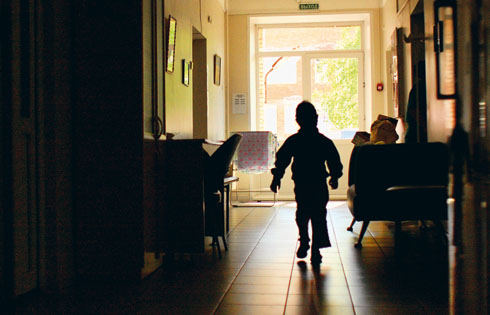
Save, these are our children that the Russian state is not needed. Every day on hundreds of sites on the Internet there are similar requests: a child, for so many years, an urgent operation/treatment abroad is required, it is necessary-and then a five-digit amount in dollars or euros follows. Why can't these children find help in Russia? Why are their parents forced to follow the world with outstretched hand at fabulous oil prices and gas? The New Times tried to find answers to these terrible questions
“Tomorrow we fly to London for treatment. We can’t wait anymore. With our disease, the prognosis is 100 percent mortality during the year of conservative treatment. The doctors said directly so: we are better off to be treated abroad, ” - the father of the little Sonya Mikhail Vakin speaks very calmly, almost impassive, like a person who has just made the most important decision in his life.
In early March, the website of www.helpsofia.ru dedicated to the collection of funds for treatment abroad Sofia Vakina appeared on the Internet, 2 years 8 months. A terrible diagnosis - the tumor of the brain stem - was put in the Morozov hospital on March 7. Parents turned to the Research Institute for them. Burdenko, they refused the operation there. It was about radiation and chemotherapy: having talked with doctors, Sonya’s parents decided that they should try to save her daughter’s life abroad. Treatment in the English clinic costs 17.5 million rubles. So far, less than half has been collected, but this is enough to begin to be treated.
Under the sentence of mortally ill children, parents take abroad when it becomes clear: in Russia they will most likely die, and treatment in the West will give at least a small one, but hope for a cure. “There are some types of treatment that are more accessible and made more qualitatively abroad,” the head of the bone marrow department of the center of children's hematology, oncology and immunology named after Dmitry Rogachev Mikhail Maschan. - Another reason: in severe oncological diseases, patients need bone marrow transplantation (TKM). In Russia, until 2011, no more than 150 such transfers for patients with acute leukemia were performed annually. And the need is 800 transfers per year, even more. Two years ago, this was done only in St. Petersburg at the Institute of Children's Hematology and Transplantology. Raisy Gorbacheva, in RDKB
* * Russian children's clinical hospital. , in the hematological center of the Ministry of Health and in the clinic. Blokhina. 19% of the necessary transplantations were made. The rest of the patients either died or went to be treated abroad. ” Now the situation is a little better: in June 2011, the center was opened. Rogachev - he will be able, according to Dr. Maschan, to make 200 more bone marrow transplants per year. This, of course, is wonderful, but 400–450 sick children and their parents will have to look for help abroad. Or - die.
“In our country, such centers are catastrophically lacking, especially for adults,” says Alla Sadikova. Her daughter Lena, for the treatment of which the money was collected around the world, left less than a year ago: she was 23 years old
* Lena was sick with sharp myeloblastic leukemia. She needed bone marrow transplantation from an unrelated donor. They collected $ 423 thousand, she left for Israel, but did not have time to save her. . “Lena was treated in the leading hematological center of Russia, in the SNC, but they are not engaged in non -treasured transplantations,” says Lena's mother. “She was diagnosed in 2008, but besides chemotherapy courses they did not offer us anything, although they had to raise the question of the need for urgent transplantation.”
Alla Sadikova is sure: Lena died because time was lost. “The reason for the tragedy of my daughter is that in one fate all the problems of Russian medicine as a whole came together. The quotas that the state allocates for treatment is small. Doctors did not say that the toxic Russian drug that was treated with Lena has a foreign analogue, less toxic, but more expensive. They did not say that it was necessary to make a test for resistance (a situation where the body does not take the medicine) to chemotherapy: after all, it is also expensive. ” When Lena arrived for treatment in Israel, local doctors asked: what doses of chemotherapy she received. It turned out that those doses exceed the norm compatible with life. “On the eve of Lena’s transplantation, her heart stopped,” says Alla Sadikova.
"
Parents take deaths abroad, when it becomes clear, when it becomes clear: in Russia they will most likely die, and treatment in the West will give at least a small one, but hope for a cure
"
The system is “the main reason why people go for treatment abroad is a distrust of domestic medicine,” explains Ekaterina Chistyakova from the Foundation “Give Life”. - Parents see how this “machine” works with: that is not enough, this is not enough. Not for all severe patients are free places in Russian clinics. The system bends. And then people break away, take loans, sell everything that is, and leave. There are not enough funding in hospitals. Each Russian clinic in order to survive, must take paid patients. There are paid patients in the RDKB, but we still have to buy medicine for the clinic. In January, we spent about 9 million rubles on medicines and other necessary things for the hospital, in February - 13 million. ”
Four -year -old Rita Komissarova is not such a terrible disease as Sonya Vakina or Lena Sadikova. But Natalya Komissarova also took her daughter to do operation abroad - to Germany. The nurse dropped Rita in the hospital, and the girl deformed the right hand.
“After discharge from the hospital, Rita made a rare diagnosis-the paralysis of Erba-Dyushen. Doctors said that we do not operate on such patients, but treated with massage, ”Natalya Komissarova told The New Times. - For two years we did a massage, the child cried, there was no improvement. In Germany, where we went thanks to private donations, Rita operated on, rearranged the muscles. Now she needs constant rehabilitation: the handle from the shoulder to the elbow is always pressed to the body, she cannot make the simplest movements. Refuses to go to kindergarten: children can put on tights, but she cannot. " Natalia turned to the interview for material assistance. They said that they could allocate 3 thousand rubles. For rehabilitation treatment, Rita needs to go to Yevpatoria to the sanatorium of the Ministry of Defense. There is a treatment for € 1500.
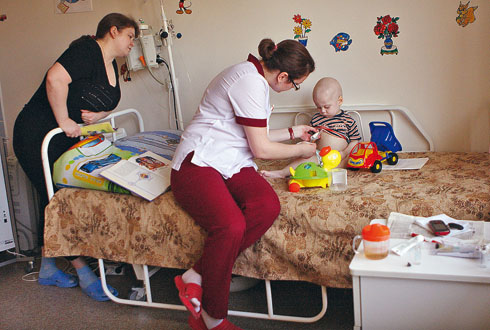
Many parents do not trust Russian medicine and try to collect huge amounts of money for the treatment of their children abroad in charitable foundations if the problems of children's oncology, lack of medicines, and the quotas provided for many years in the center of public attention, the problems of patients with rare (in professional language-orphan) diseases became known to the general public only a few years ago. This happened thanks to the parents of patients and simply caring people who began to create public associations to help such patients.
For example, in Russia they do not know how to treat a rare genetic disease with boulevard epidermolysis. The skin of such children is so fragile that wounds are formed with any careless touch. In the West, for such children they can properly care and they lead an active lifestyle, but we have these children, consider disabled people.
“According to the statistics of“ butter children ”, as we call them, there should be about 4 thousand, but there are fewer of them: many die in the first month of life,” Alena Kuratova, head of the Bela Foundation, told The New Times. - The state is not needed by these children. Last year alone, this disease was included in the list of rare ones and hope appeared. Correct diagnoses to such children, especially in the outback, are made with difficulty. They are still diagnosed according to the 1971 textbook with black and white pictures. We send them for examination to Germany, especially when gastroenterology, dentistry are needed. Genetic analysis costs € 11 thousand, the operation on the hands - about 2.5 million rubles. When the child is in good condition, he needs 50 thousand rubles per month for medicines, when in terrible condition - 100-150 thousand and despite the fact that now this disease is introduced into the list of rare ones, we will have to literally scratch money for medicines and creams due to the law from the state. ”
The salvation of the drowning people is to scratch a lot: quotas for treatment in Moscow, if we are talking about children living in the provinces, the drugs laid down by the law, quotas for treatment abroad. According to the New Times in the press service of the Ministry of Health and Social Development of the Russian Federation, payment for treatment abroad is carried out from the federal budget. From 2009 to 2011, only 50 patients went to such treatment, 33 of them children. In 2012, 177.12 million rubles (approximately € 4.4 million) were planned for medical care to Russians abroad. For comparison: the English clinic, where they will treat Sonechka Vakin, issued her parents an account of £ 375 thousand (about 17.5 million rubles). That is, few can count on expensive treatment abroad.
Understanding that it is extremely difficult to get help from the state for treatment for treatment, many parents do not even turn to the Ministry of Health after her. Why? “There is a commission for sending abroad in the Ministry of Health,” says Mikhail Maschan. - There are patients who receive money for this. But this mechanism is extremely bureaucratic. You need to collect a lot of documents. It is necessary to confirm from leading specialists about what treatment is necessary. Further, the state should find the clinic - after all, the money is huge, in the world there are hundreds of commercial clinics that will be happy to get € 200 thousand for the treatment of a foreign patient. And it turns out that decisions have to wait for an endlessly long time. If you need to urgently make a bone marrow transplant, and the coordination process is stretched for three months, people will not wait. Another thing is when it comes to chronic illness and there is time to go through all the stages. I know cases when patients left and were treated with public money. But most often, patients with leukemia, that is, those who have very little time are asking for financial assistance for leaving abroad. ”
Irina Myasnikova, co-founder of the Public Union of Patients and the creator of the All-Russian Society of Patients with Orphan diseases, tells the history of 28-year-old Pavel Mitichkin. “He urgently needed light transplantation, diagnosis - cystic fibrous
* A hereditary disease in which the organs secreting mucus are affected by the lungs first of all. As a result, patients cannot breathe. . The Ministry of Health refused to pay for the operation abroad, they say that Mitishkina can be carried out light transplantation in Russia. By that time, Russian doctors had made only one such operation. Naturally, the parents did not wait and threw the cry: they raised money for a trip to Germany. When, due to the poor state of the patient, they refused to undergo surgery, Mitichkins were able to achieve it in Strasbourg, in France. Now Pasha is a student of the Sorbonne. But not everyone can leave, but the situation with patients with cystic fibrosis is difficult. In the West they live up to 40 years, and we have up to 25. And although this disease is introduced in the list of seven rare diseases supported by the state, patients do not receive medicines in full. They are vital for four groups of drugs, and at the public expense they receive the medicine of only one group. Many people die due to the lack of antibiotics. We have been shouting about this for many years, but no one hears us. ”
"
Our medicine is better than in Ukraine and in Nigeria ... There are things that we can do for one patient or for 10 patients, but for everyone - there is no yet
"
In the fight against the Ministry of Health, many organizations are fighting for the life of sick children with the Ministry of Health. One of the most active is “The Society of Disabled Persons with Hunter Syndrome”
* A genetic disease in which the body does not produce the right number of enzymes necessary to remove toxic substances: as a result, the body is poisoned, bones are deformed, inflammation of the internal organs, their degradation and early death are underway. . “The child can be effectively treated if the diagnosis is established up to two years, but in our country the disease is diagnosed poorly and late,” says Snezhan Mitin, the head of this organization and the head of the inter -regional public charitable organization of the Union of Patients and Rare Diseases, says. “Even in the only Federal Center for Genetic Diseases, all procedures have to be carried out for a fee, but these children are disabled.”
However, the struggle is unprecedented. On January 1, 2012, the Law on the Basics of Protection of Citizens' Health was published. For the first time, the concept of “rare diseases” is introduced and it is said that the regions should provide such patients with the necessary drugs. Should. In reality, medicines often need to be knocked out with a battle. The son of Snezhana Mitina Pavel is sickly Hunter syndrome: a few years ago she managed to receive funds from the state for the treatment of her son in Germany (more than € 100 thousand) - thanks to this he is alive. But not everyone is lucky: “I get letters from the regions,” says Mitina. - The regions are not ready to pay for treatment even after the adoption of the law (“On the basics of health protection”). But the treatment should be constant and uninterrupted. In Moscow, everything is in order with this. The treatment of my Pavlik costs the metropolitan budget of 1.5 million rubles per week. In Moscow, there are now Volgograd residents, Stavropol, Ryazan and Bashkirs. These are parents with children, patients with Hunter syndrome who were able to move here, registered and got the opportunity to be treated. In some regions, mothers win the courts, and the child gives medication. But subsidies cannot provide such expensive treatment. ” In support of his words, Mitin shows a letter from the Ministry of Health of the Chechen Republic. “The budget of the republic is subsidized,” writes Minister Shahid Akhmadov. - The average cost of an annual course of treatment with Elapraz for Musaev Buvaisara is 22,880 thousand rubles. This is 15% of the republican budget, provided for 2012 for free medicinal support of residents of the Chechen Republic. ” The minister asks Snezhan Mitin to petition to the Ministry of Health and Social Development of the Russian Federation on amendments to the new law, so that it can be provided with medicines for patients with orphan diseases at the expense of the federal budget.
Officials have now had another headache: according to the new law, they are required to draw up registers (lists) of patients with rare diseases - funds to regions should be sent from the federal budget. But: “There are regions, such as the Chelyabinsk region,” says Mitina, “who do not want to declare that they have patients, for example, with polysaccharidosis (its variety is Hunter syndrome. - The New Times). We send them profiles of patients who are registered in them, and ask them to include them in the register. And they answer: according to the Ministry of Health of the region, there are no patients with rare diseases in the region. I will go to the Federation Council tomorrow, I will see the minister Tatyana Golikova there and give her these documents. These officials must be held accountable, because children can die. ”
“The situation is not black and white,” the doctor Mikhail Maschan is sure. - We can say that money is spent inefficiently, that we have theft, kickbacks, the military budget is very large compared to the costs of medicine. But we must understand that medicine in Europe and America is still at another stage of development. We are not the poorest country. Our medicine is better than in Ukraine and Nigeria, but we are forced to spend not only modern technologies, we need to repair hospitals, clinics. I look at this problem somewhat philosophically: there are things that we can do for one patient or for ten patients, but for everyone - not yet. ” While Russian medicine will consider the salvation of at least one out of ten sick children, their parents will have to rely on the mercy of fellow citizens: in the end, their own or strangers are all our children. Although for the Russian state they are often strangers.
Comment by the Ministry of Health
The new Law “On the Basics of Protection of the Health of Citizens of the Russian Federation” prescribes that ensuring patients suffering from rare (orphan) diseases is assigned to regional executive bodies. Two lists of rare diseases have been formed. The first includes 230 diseases (the attachment criterion - no more than 10 cases per 100 thousand people). They can be attributed to rare, regardless of whether there are treatment methods for these diseases and adequate drug therapy for these diseases. The second list is 24 life -threatening and chronic progressive rare (orphan) diseases ... At present, the possibility of providing the regions of subsidies from the federal budget, but first it is necessary to form a federal register ... There should not be such patients.
Irina Vlasova took part in the preparation of the material