
Translated material
The presidential representative was afraid for atheists after the story with Pussy Riot
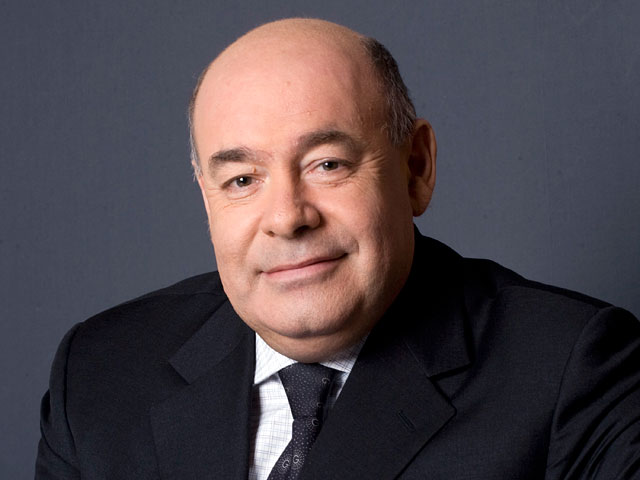
The presidential representative of international cultural cooperation, Mikhail Shvydka, believes that it is time to stop the persecution of the participants of the feminist punk group Pussy Riot, arrested for the "punk-summer" in the Cathedral of Christ the Savior. He fears that this whole story can have negative consequences for atheists in Russia.
“It seems to me that they (arrested) have already received their own. And further judicial persecution is unlikely to be reasonable and useful for society,” the former Minister of Culture in the blog on the website of the Echo of Moscow radio station wrote.
According to him, "political art is always provocative, but the boundaries of the provocation are on the border of the free will of the other," and "the girls presented not only an artistic gesture, but also something else located on the border (or even abroad) of the law."
In this regard, he indicates that "elements of political art can be found in any era," and recalls the comedies of Aristophanes, in which he "got scores with his political opponents."
“But political art has gained special quality in the XVIII -XIX centuries, at the time of great changes and shocks. At the time, when politics becomes fate, rock - this is how Napoleon’s importance in an interview with Goethe in 1807 determined,” the “cultural” representative of Dmitry Medvedev notes.
He also emphasizes that "political art has always been one of the most important trends in the artistic practice of the XX and XXI centuries."
Meanwhile, according to Shvydky, the whole story with Pussy Riot has other consequences, because the question involuntarily arises: "Is there a place for atheism in our modern society? And will there be religious people who are not able to teach in schools or be in public service?" And is there a place for discussion on this subject in our public life? Or in our media? "
In a similar spirit, the Nobel Physics Prize, vice-president of the Russian Academy of Sciences, State Duma deputy Zhores Alferov in an interview with the Rain television channel spoke about this story. In his opinion, Pussy Riot participants, of course, need to be convicted that they went to the altar and so on, but you don’t have to put it in prison. ”
On the eve of the International Human Rights Organization, Amnesty International, recognized the arrested members of the Pussy Riot group with the prisoners of conscience and called for their immediate liberation.
Earlier, on March 14, the head of the Presidential Council of Human Rights, Mikhail Fedotov, said that Pussy Riot participants deserve not criminal prosecution, but a maximum of 15 days of arrest for petty hooliganism.
Recall that several Pussy Riot participants in masks closing their faces sang a song in the temple, which they called the "punk-young". Soon all the participants were detained by the police. On March 4, the court arrested Maria Alekhin and Nadezhda Tolokonnikov, and on March 15 - Ekaterina Samutsevich.
The Pussy Riot action caused a huge public outcry, led to polarization of opinions in society and the Orthodox environment. The leadership of the Russian Orthodox Church and a significant part of the believers demanded the punishment of feminists, but some Orthodox called not to punish them with a prison.
Pussy Riot participants themselves reject the accusations from the church against the “mockery of the shrines” and explained that the Patriarch was mentioned in their “punk-grain” in the temple, since he allowed the Russian Orthodox Church to “become a tool in dirty pre-election intrigues”.