
Translated material
The world was presented to the Azavad
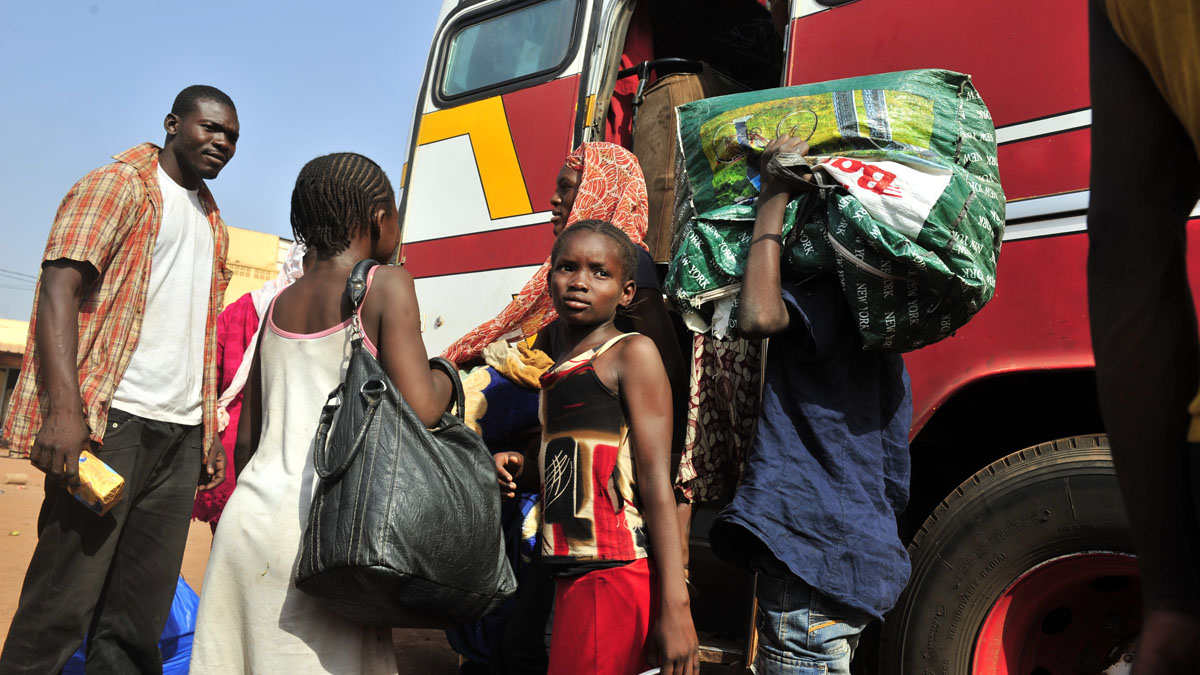
April 6, rebels announced the creation of an independent state in the north and east of Mali.
April 6 rebels announced the creation of an independent state Azavad in the north and east of Mali. Tuarean waged an armed struggle for independence for decades, but they managed to achieve victories only now, in connection with the recent military coup in Mali and the crisis of power in this Western African country.The statement of the National Movement for the Liberation of Azavad (MNLA) on the proclamation of independence appeared on the website of the separatists , and was also read out by their representative on the air of one of the French television channels. A day earlier, Tuares announced one -sided termination of hostilities against the army of Mali, noting that all their goals were achieved. The leaders of MNLA turn to the world community with a request to recognize the sovereignty of the new state of Azavad, and emphasize that the borders of other states will respect. They refer to the UN declaration on the rights of indigenous peoples, indicate the alleged facts of the Tuareg genocide in the last half a century by the Mali and other neighboring countries. Tuares promise to build a modern democratic society with full -fledged state institutions.
The conventional boundaries of the Azavad region are distributed to the entire north-eastern part of Mali, the southeast of Algeria, the north-west of Niger, the extreme north of Burkina-Faso and the south-west of Libya. Now Tuares has only been announced about the independence of the Azavad within the borders of Mali.
MNLA is the largest of the many rebel groups of the region. It appeared in 2011, after the merger of several heterogeneous movements, including radical Islamists. Here is what one of the official representatives of the National Movement for the Liberation of the Azavad Hama Agmud said the day before:
- We are always ready for peace negotiations. However, first we need to establish in our country a firm representative power, which would be supported by all political forces within the people, and which the leading world powers - the USA, France and others would recognize. As for the use of military force, I emphasize again, we strive only to create our own national state, in which there would be no place for the Tuareg genocide. We do not encroach on the territorial integrity of other states and do not want to create problems for anyone, neither our old neighbors, nor new ones. We strive to take a constructive participation in regional politics, in which Azavad should take a worthy place, ”said Hama Agmud.
Tuarean is a semi -nation of the people of Sahara, a number of about 5 million 200 thousand people, consisting of different tribes. According to the official version of anthropologists, this people arose as a result of a mixture of Berber with Arabs and black Africans. They themselves, for the most part, consider themselves the people of warriors, the descendants of two semi -legendary women - the divine fair -skinned queen and her maid. Tuarean, professing Sunni's Muslimism, has dominated for centuries in Sahara, controlling the policy and trade of neighboring peoples, but during the time of French colonial rule they lost their influence. Throughout the twentieth century, they fought for independence. At first, Tuarean fought against the French army, then against the authorities who received the independence of the African states - those in whose composition the Azavad region included, which Tuares is considered their homeland. Says another representative of MNLA, living in London:
- Today we can directly say that the historical moment has come for all Tuaregs living on the African continent. We say: "Yes, finally we did it!" After more than 50 years of suppression of our people, suffering, forced flights of people from their native places - Tuaregs have their own state!
* * *
After the next unsuccessful uprising in 2007 - 2009, in the northern regions of Niger and Mali, many Tuareg rebels emigrated to Libya, which became part of the army of Muamar Gaddafi. In 2011, part of the Tuaregs who served in the Libyan army returned to Mali and contributed to the creation and armament of MNLA. On March 22, in Mali, where the central government belongs to representatives of the black population of the south and the west of the country, a military coup occurred. The generals in the capital of Bamako were removed from the power of President Amadu Tour, who was accused of inability to cope with the uprising of the Tuaregs. However, they themselves also did not achieve any success. The poorly armed units of the Army Mali continued to retreat almost without fighting, until Tuarean captured Timbukta - the famous ancient city on the Niger River, part of the World Cultural Heritage according to UNESCO. At the same time, not a single state of the world recognizes the current ruling military junta Mali - as for now, the Tuareg Azavad.
A number of Western and African politicians are now concerned that in the entire Sahara and West Africa region, new international terrorist bases may arise in connection with the latest events. The rebels from MNLA are accused of relations with the al-Qaeda terrorist network-indicating that fighters from the Al-Qaeda groups in the Islamic Maghriba groups and the ultraylamist Ansar-Din helped to fight the Army of Mali, Niger and other countries. However, MNLA itself denies these connections in every possible way.
-

Alexander GOSTEV
The editor of the RS information service, international observer, author and editor of the heading and podcast "Atlas of the World"
Gosteva@rferl.org