
Translated material
Bosnia. 20 years without war
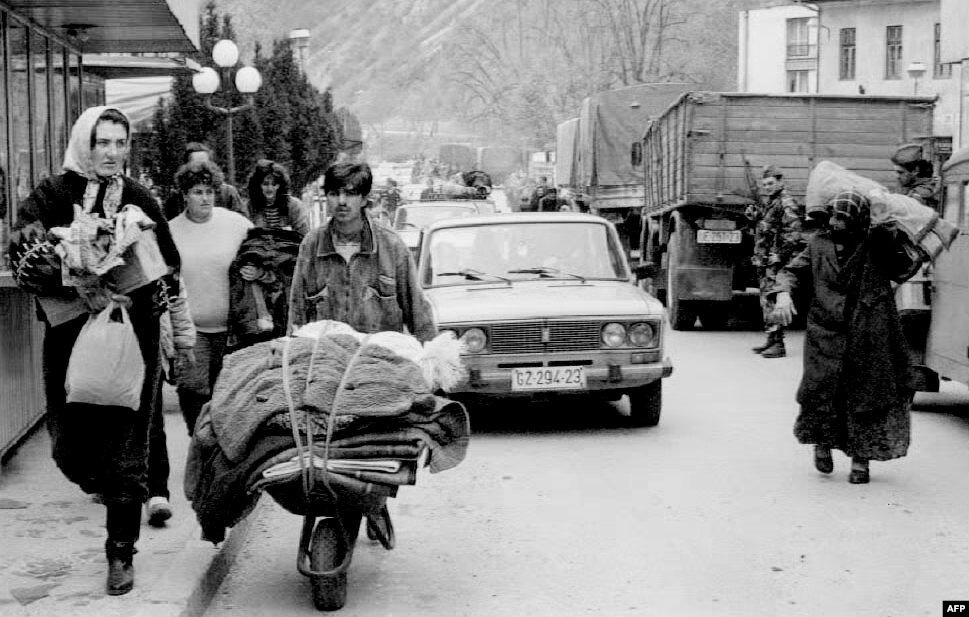
Why does the country live so that sometimes it seems like it is again on the eve of the war?
The situation in Bosnia in an interview with Radio Freedom is reflected by a professor at the University of Sarayev, a former diplomat Lamami Tanovich :
- It could be expected that 16 years after the end of the conflict - with all the help that we received from the international community - life should have become better. But almost nothing improved, except that in Sarajevo you will almost not see traces of war. But most of all I am worried that the enthusiasm that arose after the world reigned, and lasted the first five years, disappeared.
- Why?
- Because nothing is developing. Everything was either stalled, or it gets worse. For example, we hoped that new, best, politicians, new parties would come with the new elections. But even when this happened, they began to behave in the same way as those nationalist parties that remained in power. All political forces that gave rise to all the problems and misfortunes of the 90s remained inviolable. It seems to me that the international community should have banned these parties. Almost all of their leaders in the Hague. However, the international community intervened in many areas of our lives, but not in this one.
Six times we had the opportunity to choose our representatives. And each time it was the wrong choice. At first, we voted because of the fear that if they are not elected nationalists, then the war will begin, because there would be no one to defend national interests. And now we have the policy that is condemned by people and the international community, how can we expect changes to the better in this case?
- The Deuton peace agreements provided the world, but they created a very complex structure of the state and therefore calls for the international community to change the constitution are increasingly audible.
- According to Deuton, Bosnia is one country with one place in the UN. It is partially centralized, but it also includes 10 independent cantons. In addition to all this, there is also an administrative district of Brchko, which lives according to a completely different rules. This is an uncontrollable structure. This is an uncontrollable state. Parts of this structure have the right to block everything - so that it is impossible to achieve consensus, it is impossible to make any decision. This is the Chudovich state, as everyone calls it, is also very expensive. Can you imagine 170 ministries? 170 offices with drivers, secretaries, advisers ... Half of the country's working population works in the state administration. This system is so road that it cannot be financially maintained without outside help.
- In other words, do the Deyton agreements no longer work?
- Our country is lagging behind. Half of the country does not like the idea of Bosnia at all. The Ban-Luke states that they are not worried about what is happening in the state, because they have a Serbian Republic, and Sarajevo is Tehran for them. And people see that there is no state, there is no system, there is no law, no vessels, there is nothing!
- You teach at the university in Sarajevo. What is the mood of students? How do youth develop interethnic relations?
- It is difficult to understand, because we have created such a system when educational institutions are mononational. Previously, before the war, I could more or less accurately determine the nationality of my students by names or surnames. Everyone studied with us! Now you can see only a few not Boshnyaks. In the Ban -Luke, the opposite is true, at the University of the Western Mostar, I think 100 percent of students are Croats. And at the University of Eastern Mostar, I think, also one hundred percent Boshnyaks. By the way, it is curious: a student conference was held two years ago, at which the issues of the Constitution were discussed. There were students from all universities in the country. Students spoke the same words that their leaders-nationalists say.