
Translated material
"NG": the Ministry of Finance blocked the tax maneuver
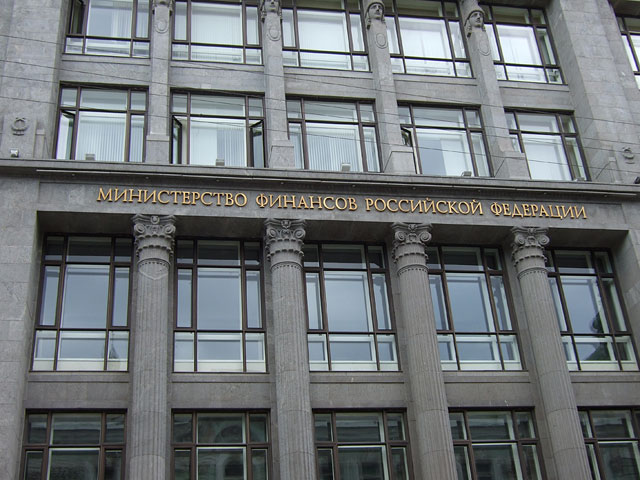
The promising idea of the tax maneuver seems to be blown away before our eyes. More recently, the tax maneuver was understood as the redistribution of the fiscal load, which should stimulate the growth of manufacturing. However, the head of the Ministry of Finance Anton Siluanov recently presented a completely different direction of the future maneuver. He actually put an equal sign between the tax maneuver and the preservation of the existing rate of insurance premiums, writes “Independent Gazeta” .
"The tax maneuver will be implemented since 2013. We have the most important maneuver? This is the preservation of insurance premiums. Since 2014, we will not increase the rate," the finance Minister said.
The rate of insurance premiums was reduced in December 2011 from 34% to 30% for total salaries not exceeding 512 thousand rubles per year. For salaries above 512 thousand rubles, a 10%rate was set. This decrease, initiated by President Dmitry Medvedev, was presented as a temporary, anti -crisis measure, the action of which ends in 2014. Now the Ministry of Finance promised not to increase the rate and immediately warned that this would cost the budget of 400-500 billion rubles.
In its original version, the idea of tax maneuver was completely different. The initiator of the tax maneuver from the business was the organization "Business Russia". In December 2011, Prime Minister Vladimir Putin, speaking at the Congress of Business Russia, pointed out serious fiscal imbalances in the industries that slow down the diversification of the Russian economy.
"The tax burden is uneven even in production industries. For example, in the type of activity: for the production of machines and equipment, the tax load is 11.1%, for construction - 11.3%, and for metallurgy - 3.3%, for the production of coke and oil products - 5%," the prime minister said and concluded that the country needs a decisive tax maneuver. It is necessary to redistribute the tax load that stimulates growth, diversification of the economy and an influx of investment.
Businessmen then called for decisively reducing the real production taxes and offered the Concept 15-15-15: VAT, income tax and insurance premiums should be reduced to 15%. This decrease can be compensated by taxes on consumption and natural rent. We are talking about a tax on mining, excise taxes on tobacco and strong alcohol and real estate tax.
According to the results of a meeting with entrepreneurs, the prime minister instructed the Ministry of Economic Development (mayor) and the Ministry of Finance until February 15, 2012 "submit proposals for improving the tax system, including tax optimization in order to stimulate economic growth and investment in the sphere of high -tech and production business."
However, soon the prime minister began to interpret the idea of tax maneuver differently. At the end of January, Putin published an election article on the economic tasks of Russia. And in this article, he no longer spoke about the fact that taxes on processing and innovative sectors would be reduced, but that taxes on them would not increase. The prime minister proposed to maneuver through the introduction of new taxes in the country - "on wealth, or rather prestigious consumption."
The ministries could not submit their achievements within Putin. They only began to discuss the luxury tax (expensive real estate and powerful cars) and the bets of insurance premiums, which, according to the Ministry of Finance, must be preserved or, according to the mayor, to reduce - though only by 2%. In February, the Ministry of Finance talked about the possibility of freeing a movable depreciable property - expensive production equipment from taxes. But these initiatives, according to experts, are only cosmetic measures.
“The fate of the tax maneuver was a foregone conclusion from the very beginning - against the backdrop of the authorities of the authorities in populism,” continues Igor Nikolaev, director of the Department of Strategic Analysis of the FBK. “As Siluanov recently reported, we have 80% of the budgetary obligations of an unnecessary nature. The budget is planned with a shortage even at a very high price of oil. It is naive to reduce the tax burden of the tax burden on such conditions The processing sector will redistribute it to the mining industries.
"Business Russia" did not agree with the Ministry of Finance interpretation of the idea of tax maneuver. "We believe that today the level of tax burden on the business does not correspond to the tasks of the economy. Fiscal load forced to leave Russia. We see this by outflow of capital. Over the first quarter of 2012, the outflow of capital amounted to about $ 35 billion. Business goes to the far and close foreign countries. For example, business has gone to Kazakhstan from Volgograd. For comparison: in Kazakhstan, insurance in Kazakhstan. Payments are 11%.