
Translated material
Better come back without snowdrops ...
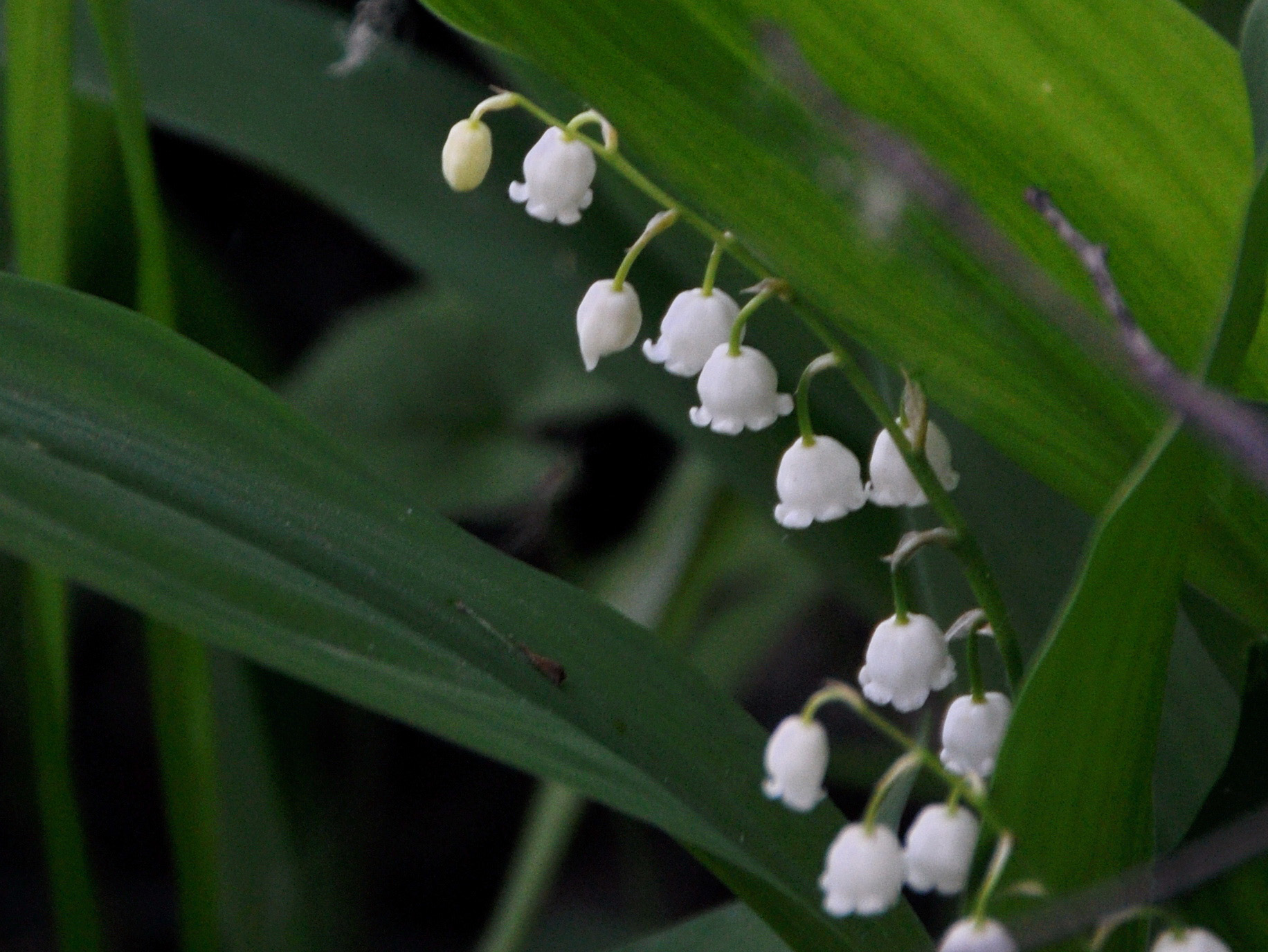
Each spring, primrose merchants appear on the streets. Usually they sell the valley or snowdrops, less often - cyclamen and crocus. In the Red Book of Russia, 6 types of snowdrops, 3 types of saffron (crocus) and 1 type of cyclamen are listed in Russia. What threatens primrose?
In scientific language, the reasons for the reduction of the population of animals or plants are called limiting factors. The main limiting factor for primroses is an anthropogenic effect: collecting flowers on bouquets, digging plants with amateur gardeners, active economic development of territories, trampling.
Plants of the genus Snowdrop (Galanthus) are very suffering from collecting colors, since their bulbs lie very shallow in the soil, and people often pull them together with the plant. But even if the bulb still remains in the ground, the plant does not always survive after collecting colors. All snowdrops listed in the Red Book of Russia (6 species) grow only in the vicinity of the Caucasian mountains and directly in the mountains (i.e., are the endemic species). Also, a summer -bore of the summer, outwardly very similar to a snowdrop. But the white -flowered summer, unlike snowdrops, is not endemic. It can be found on the Black Sea coast, in the Atlantic and Southern Europe, in the north of Turkey and Iran.
Bulbs of plants of the genus Safran (Crocus) , like the bulbs of a snowdrop, lie shallow in the soil, and therefore they also sometimes pull their lands along with flowers. In addition, some types of crocuses, including the beautiful saffron listed in the Red Book of Russia, are poorly propagated by seeds. In the Red Book of Russia, there are 3 types of saffron, which can be found on the Black Sea coast of the Krasnodar Territory, in Transcaucasia, Dagestan, Karachay -Cherkessia and North Ossetia, as well as in Georgia, Turkey, Northern Iran.
The endangered types of the genus Cyclamen ( Cyclameen ) include Cyclamen of the Caucasian, whose populations are threatened by the collection of flowers for bouquets. In addition, cyclamen roots have healing properties, which also does not contribute to survival of the species. Cyclamen Caucasian is widespread on the Black Sea coast of the Krasnodar Territory, in Georgia, Azerbaijan, East Mediterranean, in the Balkans and Asia Minor.
Rod Landallaria is not listed in the Red Book of Russia, but this does not mean that nothing threatens Landysh. Due to the increased extermination of the valley, the valley is included in the application of the Red Book of the Moscow Region (2008), i.e. The list of species subject to constant control and observation. The valley is also protected in other regions of Russia.
The law is called upon to protect the primroses from anthropogenic impact. Article 8.35 of the Code of Administrative Offenses of the Russian Federation provides for a fine (up to 2,500 rubles for citizens 500,000 r. For legal entities), not only for the collection, sale and acquisition of rare species of plants and animals, but also for actions (inaction), which can lead to their death or impaired environment. However, these measures do not stop lovers of modest "bouquets of spring."
Moreover, people who directly or indirectly take part in the destruction of rare plants often refuse to recognize the harm that they cause to nature.
Topic misconceptions are refuted by Maria Galkina, a junior researcher at the Botanical Garden of Moscow State University .
Why is it impossible to dig out wild plants and transplant them to your garden, because the plant does not die?
Firstly, a number of species are difficult to preserve in their garden: some plants are very sensitive to illumination, humidity, soil acidity and other environmental factors, which in private gardens can differ significantly from those in natural habitats. Many wild species are unstable in culture, and even if for several years it is possible to maintain the existence of plants in the garden, they probably will not give germinated seeds or will not bloom and will not tie the fruits. In addition, taking the plant from nature, we will harm the population of this species. The composition of normal populations of all species contains of different age states:, seedlings, young specimens, generative (i.e. blooming and forming fruits), as well as adults temporarily non -flowering plants and, possibly, a small percentage of senile (old) individuals. Most often, amateur gardeners take flowering or very young specimens. The removal of even a small number of young plants in the future will negatively affect the number of populations, generative ones - on its renewal. It is also worth noting that many plants (especially with the rod root system) in adulthood very poorly tolerate transplantation.
Can collection of flowers seriously reduce the ability of the plant to reproduce?
Yes, it is. Unfortunately, for many rare and protected species, one of the limiting factors is still a gathering for bouquets. The fact is that plants of a number of species can be propagated only by seeds, and they have no vegetative propagation (through the rhizome, creeping shoots, etc.). For example, such beautifully flowering plants as Lyubka is a two -leafy, fuchs, a fums, a European swimsuit and some others. Thus, in places of constant gathering for bouquets, the population will gradually grow old, and over time, their number can decrease to a critical level.
Is the bulbs of a snowdrop and saffron damage if the flower is not torn off, but cut off with a knife or scissors?
Well, theoretically reasoning, the onion in this case will not suffer, but many types of snowdrops and crocuses (saffron) are rare, their number has significantly decreased over the past decades, this is mainly due to the collection of plants for the sale and destruction of habitats during the construction of various objects. These species are protected at the regional and state level, entered in the red books of the Russian Federation and neighboring countries, they are generally unacceptable! It is also worth noting that snowdrops and crocuses, like other primroses, are poorly adapted to the removal of biomass, in contrast, for example, from the steppe cereals, which over many years have formed the ability to quickly recover after eating uninhabited ones.
Is the rhizome of the valley damage if the flower is not torn off, but cut off with a knife or scissors?
No, the rhizome in this case is not damaged. But, as mentioned earlier, in the future, an immoderate gathering in bouquets will negatively affect the number of populations. Let me remind you, the valley is included in the application to the Red Book of the Moscow Region. The limiting factors for this species are primarily logging, in second place is the gathering in bouquets.
Do the rhizomes of the valley suffer strongly when trampling?
Some species carry a little trampling. Sometimes it even helps with rare species to get rid of competitors (which, in turn, are completely unstable to such an impact) and maintain their numbers at a constant level. But the valley does not apply to species resistant to trampling. And, of course, it is worth saying that all kinds suffer from strong trampling.
Post Scriptum. Interesting facts about primroses
A little about the valley ...
The heroine of Karamzin’s story “Poor Lisa” met her seducer Erast, selling him a bouquet of lily of the valley. The name "Lily of the Valley" (translated from English - lily of the valley) is the famous song of the Queen group. In Christian symbolism, the valley is a symbol of humility and the second coming of Christ.
A little about the snowdrop ...
In the UK, there are the so -called "Snowdrops Gardens." These are the places of growth of snowdrops, which are specially guarded. Every spring, such gardens attract many tourists. In total, in the United Kingdom of 28 such "gardens".
A little about saffron ...
Safran is extracted from dried stamens of crocus - one of the most expensive spices. For the production of spices, not wild plants are used, but a specially bred type of crocus. As a cheap analogue of saffron in cooking, turmeric is often used - a powder made of dried rhizomes of turmeric ( Curcuma Longa) .
A little about cyclamen ...
Cyclamen European (Cyclameen Europaeus) is sometimes called a European violet, despite the fact that violet and cyclamen belong to different families - violet and primary, respectively. According to legend, Cyclamen inspired King Solomon to create a crown.