
Translated material
10 facts about hamsters
1. In total, 7 clans are known, including about 19 species. The largest is an ordinary hamster (up to 35 cm in length, the mass is up to 400 g or more), the smallest-the hamster hamster (4-5 cm in length, the mass usually does not exceed 10 g).

2. In the wild, hamsters can be found in the steppes, half -deserts and deserts of Eurasia. Some hamsters rise to the mountains to 4000 m, some live with pleasure next to a person - in fields, in gardens, gardens and even in buildings.
3. A popular pet in many countries - a golden, or Syrian hamster in nature has a rather limited range - it can be found in Western Syria and the border regions of Turkey. Millions of animals of this species, living in houses and in laboratories around the world, come from a single brood, mined by Professor Akharoni in 1930. Hams managed to propagate, and a year later, part of the offspring received was taken to England, from where they began their further “procession around the world” as home and laboratory animals.
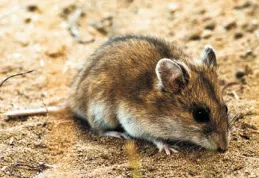
4. Netol also contains several other species: a Chinese hamster, and representatives of a kind of furry hamsters - Dzungarsky, Kampbell hamster and Roborovsky hamster. The rest are almost unknown to anyone except zoologists.
5. The idea of hamsters as good -natured awnings does not quite correspond to reality. Most of them are quite aggressive animals. In nature, almost all hamsters lead a single lifestyle, without maintaining any constant positive contacts with fellow tribesmen. The male, by smell, finds a female ready for mating, mating with her, and on this his participation in the continuation of the genus usually ends - the female is grown alone. Such acocialism of hamsters also applies to communication with a person: in captivity, they, as a rule, are poorly tamed, are not tied to the owner and are not interested in communicating with him. The lines that are brought up in captivity for many generations, aggression in relation to a person is usually stopped, but should not expect the same from animals caught in nature: when trying to pick them up, they will bite violently, and representatives of relatively large species can be very painful.

6. Contrary to the widespread conviction of the Hams of Hams, almost never are difficult. In general, life is a loner and does not have a large and difficult to build a dwelling to acquisition. Nora hamster, as a rule, has one or two output, a nesting chamber and, in some cases, a pantry. But the volume of stocks in some species can be very significant. Hams do not fall into a real long hibernation (such as gophers), so they have to take care of the “food warehouse” for the winter - so that it would not be so woeful to paint a long winter evenings.
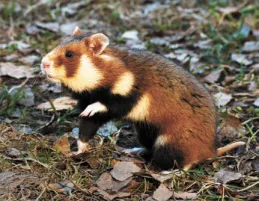
7. One of the most probably known features of hamsters is their close bags. This device really deserves at least a separate mention. It is clear that in order to create any significant feed reserves you need to have a device for transporting them. In this case, the evolution “tried” - in the hill bags, hamsters can transfer the volume of food comparable to the size of the hamster himself.
8. As everyone knows, the basis of the ration of hamsters is grain (seeds of various plants, both wild and cultural). However, in addition, hamsters can use a variety of power sources. The green parts of plants are used mainly as a source of water - since a plentiful dew does not always fall, and the hamsters most often do not have other ways to get water in nature. Hams of some species can enjoy using various fruits and root crops. Most species also show predatory inclinations to one degree or another and make up for a lack of protein due to animal foods - from insects to frogs and lizards.

9. The uniformity of the “hamster” appearance and lifestyle has its exceptions. For example, the name of a rat hammer speaks for itself - in terms of its appearance it can really be confused with the rat. The “rat” color, an elongated body shape, a relatively long tail - all this goes well with the “rat” way of life: unlike hamsters of other species, a rat hammer inhabit relatively wet habitats and has an appropriate metabolism.
10. In total, 7 clamps are known, including about 19 species. About - because the status of some forms remains the subject of discussions of zoologists. The hamsters of Dzhungarsky and Campbell were previously considered one species, but now the species status of each of them has no doubt. But the hamsters of the Barabinsky, Transbaikal and Chinese, some researchers consider different species, while others are forms within the same polymorphic species. They differ in the number of chromosomes, but give prolific offspring.
Georgy Rurikov,
Employee of the Institute of Problems
ecology and evolution (IPE RAS)
(Photos of the author)