
Translated material
The smell for bugs is not the main thing
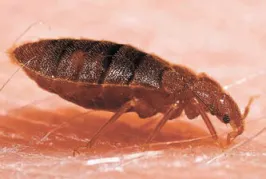
It would seem that in our age of cleaning products, powerful vacuum cleaners and automatic washing machines about bugs can be forgotten, but no! Bed bloodsuckers often bother residents of developed countries, the Internet is full of photographs of Europeans demonstrating bitten places. So the fight against bugs is still relevant, but ineffective, because over many years, people have not found out what bugs are attracted and which scare away. The smell of a person is composed and consists of about 400 components, among which scientists did not find a single obvious amazer.
Specialists of the University of Lund and the Swedish Agricultural University (Swedish University of Agricultural Sciences) led by Professor Rickard Ignell (Rickard Ignell) entered the path of chemical war with bugs. Scientists have found that parasites attract five volatiles, i.e. The odorous, substances distinguished by the human body, is an aldehyde and keton. In search of production, the Cimex Lectularius bedbugs are guided by the body that releases heat and carbon dioxide, as well as these odorous substances. At the same time, insects sensibly evaluate their capabilities and react only to small concentrations of volatile substances. If the smell is too strong, bugs prefer not to contact and retire.
Even in the first half of the twentieth century, experts found that bugs find a person, focusing on the heat and released carbon dioxide emanating from him, which is experimentally confirmed in our century. However, at the same time, in 1932, the researcher from Massachusetts Ezekiel Rivnay found that C. lectularius attracts not only a breathing warm body, but also cold pieces of animal skin. Obviously, bugs are also oriented by smell. But what kind of aromas attract parasites, the scientist could not be installed. According to rivni, the smells of blood, muscles, subcutaneous tissue and purely washed skin do not affect the behavior of bugs, the smell of bile repels them, and the liver first attracts, and then repels; The attractiveness of sweat depends on the stage of its decay. Of the proven substances C. lectularius, skin fat and ear sulfur turned out to be the sweetest.
But the “smell of sebum” is a completely unscientific concept. Swedish researchers checked the reaction of the bugs to separate volatile substances secreted by the human body. First of all, these substances had to be obtained. The study was attended by eight volunteers. No, they were not given to eat bugs. These people for two and a half hours in special bags, of which only their heads protruded. A gas mixture was slowly blew into the bags that did not contain CO2 (20.9 % oxygen and 79.1 % nitrogen), and volatile substances were pumped out and extracted from it. Researchers managed to distinguish about a hundred components of the human smell and check their effect on olfactory receptors of insects.
Bed bugs perceive smells with the help of Sensille located on the antennas. Sensillaes are similar to hairs or spikes, at the base of which there are receptors - neurons that perceive smells. Using the micromanipulator, scientists connected microelectrodes to the sensils and fixed the frequency of electrical impulses that occur in receptors in response to the smell of the whole body and its individual components. It turned out that not all sensillaes react to the imposed incentives, but only one type of them-D-Senusville, or smooth spikes. Moreover, their receptors are excited in response to only a few connections-an unsaturated keton of Sulcaton (6-methyl-5-hepten-2-OH, β-methylgepttenon) and four aldehyde (heptanal, octanal, non-nananal and deanal). This set surprised the researchers, since the data of Aldehyde and Keton are highlighted by the skin of any spinal. And to such volatile substances as geranilaceton or lactic acid characteristic of humans, bugs were indifferent. It turns out that they just to drink warm blood, and from whom it is indifferent.
Not all people highlight a full set of five substances. Researchers continued to work with the smells of two volunteers containing all five volatile formations, with one in which heptanal was absent, and with another, without heptana and octanal. These odorous extracts, as well as a mix - they used a mixture of the smells of all volunteers in a behavioral test, which was supposed to show which reaction causes exciting smells - whether they can serve as a repellent or bait.
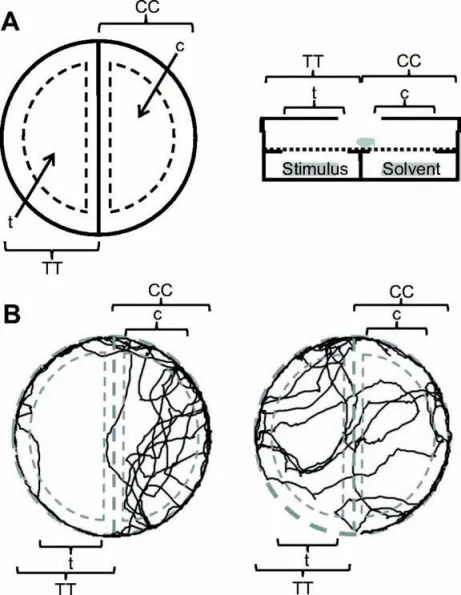
For behavioral test, scientists manufactured a special device - Petri's cup with a cellar. The cup was divided in in half, in each half the filter was placed with a plowing extract (stimulus) or control applied to it. As a control, an extract of artificial air was used, blown through empty bags. This design was closed on top with a frequent mesh on which an insect was released. Researchers worked with virgin males and females of bugs, who were hunger for 10-20 days. The movements of the bug was fixed by the video cameras, and the observers later determined the insect’s half of the cup more time and at what speed in this sector moves. If the bug is worn on the grid and tries to bite it, then it is attracted by the incentive under it, and if it spends more time in the control zone, the smell scares it.
It turned out that the reaction of the bugs to the smell depends on the concentration of volatile substances. Uncreased extracts repel insects, diluted 10 times indifferent to them, and diluted 100 times attract, but not much. Moreover, bugs prefer smells with lower rates of sulcathon to aldehydes. And since the ratio of Keton and aldehydes in different smells is different, this explains why the bugs pester some people more than others.
Researchers concluded that the smell in itself quite poorly affects the behavior of bugs and has a noticeable effect only in combination with other factors: warm and carbon dioxide. In addition, the odorous incentives that bed bugs react to are non -specific. So, although the person and the main owner of C. lectularius, the receptors of the insect are not tuned to the perception of our smells. Perhaps the reason for the low sensitivity and non -specificity of the olfactory system C. lectularius lies that the bug does not have to look for the beloved owner by smell, overcoming long distances for this. The person himself comes under the side, to the clip sofa, and parasites find the object by air movement. And their olfactory receptors bugs, according to many researchers, are used for interpersonal contacts at a low distance, for example, when interacting with individuals of their type.
It turns out that the chemical war with bugs at this stage is ineffective, scientists have not yet found odorous derivatives. Their absence suggests that bugs can drink not only human blood, but also the blood of other vertebrates, such as rodents or birds. But a person who finds himself in the same bed with a bug is not easier to do.
Natalia Reznik
V. Harraca, C. Ryne, G. Birgerson and R. Ignell “Smeling Your Way to Food: Can Bed Bugs Use Our odor?” The Journal of Experimental Biology 215, 623-629, DOI: 10.1242/JEB.065748