
Translated material
Fun barcodes are replaced
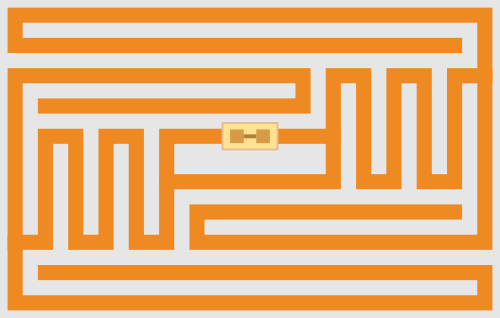
The company "RST-Invent" at the end of March launched the production of RFID meters at a plant in St. Petersburg. RFID - Radio Frequency Identification, that is, radio frequency identification.
The RFID tank is a small chip on which the information is stored, and the antenna that transmits this information. The information is read by the receiver at a distance of a few centimeters to several meters, depending on the design of the label, receiver and material on which the label is glued. The label can be a flexible sticker or have a plastic case. Tags can also be active and passive. Active tags have a much larger reading range, but they are more expensive, larger and require regular replacement of the nutrition element.
The scope of the use of radio frequency labels is extremely wide - from the keys for intercoms to the identification of aircraft during hostilities, but they find the greatest distribution in the areas of trade, accounting and logistics.
Radio frequency marks have advantages over their direct predecessor, a barcode: they are read at a larger distance than a bar-code, do not require direct optical contact with the reader and a certain orientation in relation to it. You can record more information on them, and this information can be re -recorded, edited and deleted. In addition, readers can simultaneously process several RFID meters (industrial-hundreds).
RFID tags allow you to simplify warehouse operations, keep records of raw materials, control technological processes. Now RFID systems are equipped with many automobile and food production. Radio frequency marks are actively used as tickets by public transport, to label livestock, in medicine. Library RFID systems are common. In principle, radio frequency labeling is in demand in almost all areas, where there is a need to take into account and store information about physical objects and their properties.
The main disadvantage that interferes with radio frequency marks to displace the barcodes while their high cost. The lowest price for the tags was offered by the no longer existing Israeli company Smartcode, and amounted to 5 cents when buying from 100 million pieces. The average price of a simple passive mark is 15 cents apiece, and the cost of active labels or marks for difficult conditions can reach several tens of dollars.
Probably one of the steps to increase the availability of radio frequency identification and was the launch of the production of RFID meters at the RST-Invent plant. Initially, RST-Invent was part of the system of Systematics as an RFID department, until in 2011 the “systematics”, together with Rusnano, decided to create a separate design organization. According to Rusnano's plans, whose share in the project is 190 million rubles (out of 650 million), the production of domestic tags should reach 10 million pieces in 2012, 20 million in 2013, and by 2015 the production marks of the RST-Invent should occupy 45% of the domestic market, which, according to Citronics, will reach $ 500 million. The orientation average price. Tags should be in the region of 3.6-4.8 rubles apiece, that is, at a competitive level.
If the company manages to fulfill its own plans, we will witness how the Russian business independently entered one of the most promising innovative markets of the last two years with a very competitive product. Demand for this technology is expected to be large. Now the main thing is to ensure its availability in the domestic market.
At the first stage, “RST-Invent” plans to release the Inano series marks, in three versions: Drugtag marks with improved readiness indicators on glass containers for use in the pharmaceutical industry, bibliotag tags for library funds and logtag for logistics systems. These will be the UHF range (860-960 MHz) on 90 Nm technology built according to EPC Gen2 standards, which allows you to reduce production costs, and at the same time increase the range of the marks of the marks-for example, the radius of confident reading Drugtag should be 30 meters. In addition to the Inano series, which is flexible stickers, the “RST-Invest” will work to improve the universal PATCHTAG mark in a plastic case, optimized for installation on metal surfaces.
This is not the first investment of Rusnano in radio frequency technologies. In St. Petersburg, the Avangard company already exists, which is engaged in the production of specialized labels, which operate at negative temperatures and at contacts with metal surfaces. Another investment of Rusnano in this area is a joint project with the Italian company Galileo Vacuum Systems CJSC Galileo Nanotech-the production of RFID meters and metallized packaging on the Italian-Serb-Russian capacities.
Radio -frequency marks on 90 meters technology are now available in Russia at the Zelenograd Mikron Plant, which is part of the Citronics concern and engaged in the production of non -contact tickets for the Moscow metro. Despite the fact that the micron capacities are not 100%involved in, now the “RST-Invent” does not have certain plans for cooperation with the “Citronics”, and also does not plan to organize its own production of microelectronic components, motivating this unjustified at this stage in the development of the project by costs. Most likely, the microchips and antennas developed by RST-Invent will be produced at factories in Asia-Japan, China, Malaysia or Korea - and will be designed and gather in St. Petersburg.
In the next few years, we will most likely observe the growth of offers in the RFID systems market. Demand will probably also grow, especially in large industries, in the fields of logistics, library business.
In the field of retail trade, RFID tags, according to Russian network retailers, could reduce theft losses by 40%, but in order to occupy this niche, manufacturers need to maintain very low prices-otherwise the equipment of supermarkets will be unprofitable. The joint project “Rusnano”, “Citrix” and X5 Retail Group “The Store of the Future” should help in this, which will be invested in total 350 million rubles. In the case of the project, it is planned to open a few fantastic pilot store based on the X5 Retail Group, fully equipped with radio frequency marks, in which customers will be able to pay for the goods without the help of a cashier. But, most likely, if such a store opens in the near future, it will be a more image project “Rusnano” than a profitable platform.
The image question is important in the case of RFID systems. In Europe and the USA, where this technology is more developed than in Russia, the widespread introduction of radio frequency tags causes concern for some people. Being sewn into clothes or built into gadgets, they can allow you to monitor the movements of a person, register his whereabouts and thus violate the inviolability of private life. Religious organizations, in turn, are outraged by experiments on implantation of radio frequency chips for human skin. With the more massive implementation of technology in Russia, manufacturers may face similar problems.