
Translated material
Direct elections of governors are returning in Russia: finally, Medvedev signed the law
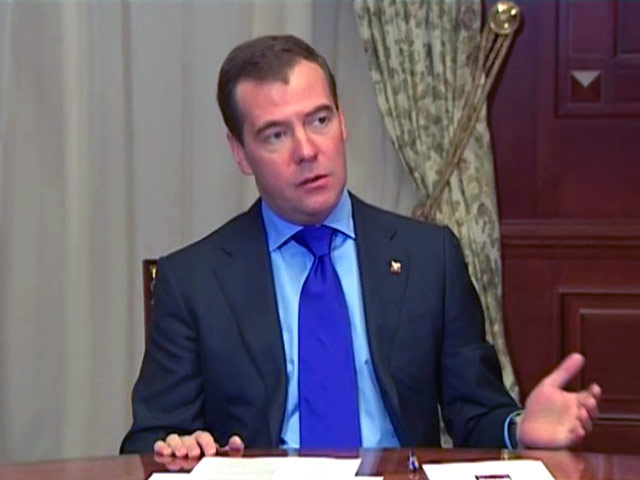
Russian President Dmitry Medvedev signed a law on direct elections of governors. “I have just signed the law on the procedure for the election of governors,” he said at a meeting with the leaders of the Duma factions in Gorki. “This law comes into force, and subsequently all senior officials in the subjects of the country will be elected direct, equal and secret vote of all citizens living in the territory of the relevant subjects,” the president, who is quoted by ITAR -TASS, delighted the audience.
The head of state also said that he released the parties from the need to collect signatures in all cases, except for the nomination of a presidential candidate. However, for participation in the presidential election, the number of necessary signatures is now radically reduced, RIA Novosti reports.
“But there, you know, you adopted this law, the number of signatures necessary to participate in the presidential election is radically reduced, which, of course, will contribute to a more interesting political life,” Medvedev told the deputies. In the past, self -nominates had to collect 2 million signatures, which many experts called unreal , taking into account the compressed deadlines.
Medvedev emphasized that "subsequently all senior officials of our country will be elected direct, equal and secret vote of all citizens living in the territory of the corresponding subject."
Recall that the then President of Russia Vladimir Putin proposed to cancel direct elections of governors in September 2004. Direct governor elections were replaced by the approval of the heads of regions by local legislative meetings on the proposal of the president.
In accordance with the signed law on the election of governors, the highest official of the constituent entity of the Russian Federation is elected by citizens of the Russian Federation on the basis of universal equal and direct suffrage with secret vote.
Candidates for the position are nominated by political parties, while the political party has the right to nominate both its member and non -partisan. The nomination of the candidate in self -nomination may be provided for by the law of the subject of the Russian Federation.
In the constituent entities of the Russian Federation, candidates should support from 5 to 10% of the deputies of representative bodies of municipalities and the heads of municipalities elected in the elections, including 5 to 10% of the deputies of representative bodies of municipal regions and urban districts and the heads of municipal districts and urban districts elected in the elections.
In cities of federal significance, candidates should also support from 5 to 10% of the deputies of representative bodies of intracity municipalities and chiefs of intracity municipalities elected in the elections. At the same time, the candidate needs to receive support in at least three quarters of the municipal regions and urban districts, intracity municipal formations, respectively.
The highest official of the constituent entity of the Federation is elected for a period of not more than five years and cannot replace the indicated position of more than two terms in a row. The candidate is considered elected if more than half of the voters who took part in the vote voted for him.
The first elections on the basis of these provisions will be held on the second Sunday of October 2012 and will be held in those constituent entities of the Russian Federation, whose senior officials expire from the date of the entry into force of the Federal Law and to December 31, 2012 inclusive.
Starting from 2013, the elections will be held on a single voting day of the year, which expires the term of powers of the senior official of the constituent entity of the Russian Federation (the head of the highest executive body of state power of the constituent entity of the Russian Federation), endowed with such powers on the day the federal law enters into force.
"If I become the Prime Minister"
Then Dmitry Medvedev let the parliamentarians understand that he was not saying goodbye to them. "Given the fact that on May 8, a State Duma meeting is scheduled in connection with the need to create a new government, if I get the State Duma mandate, if the State Duma provides me with confidence, then, of course, I will continue to work with all those present in several other formats, but there will also be a significant number of them," the head of state said.
It is obvious that Medvedev was flirting in a sense: even if the opposition finds a threat and vote against the candidacy of the new prime minister, he will unconditionally support United Russia, and this will be enough for his appointment.
“Naturally, I will be ready to meet at different levels and for various reasons,” Medvedev confirmed his plans at the premiere post.
Medvedev thanked the parliamentarians for fruitful work over the past four years. He recalled that during this time more than 200 presidential laws were adopted. “Not everyone supported them, but even critical statements contributed to the development of the most constructive position,” he said.
In his opinion, constructive interaction with the State Duma made it possible to solve such complex issues as the problems of socio-economic development in the context of a global crisis, counteracting corruption, and political transformations.