
Translated material
Some Putin were not afraid
 Photo: ITAR-TASS
The Presidential Council for the Development of Civil Society and Human Rights is left one by one by its participants . Alexander Auzan and Alexei Simonov told Publicpost that they were also ready to leave the council after Dmitry Oreshkin, Svetlana Ganushkina and Elena Panfilova after the inauguration of Vladimir Putin. PublicPost found out which of the council members will not work with the new president, and who is ready to stay.

Alexander Auzan, President of the Institute of National Project "Public Contract":
"I do not see the news in this, the council has always been reorganized under the new president. This is an absolute rule. I think that I will do other things. But, in general, it is too early to talk about it."

Alexey Simonov, President of the Non -Profit Organization "Fund for Protection of Glasses":
“As they say, there will be a day - there will be songs. Of course, it was possible to do more. What we did, we did. And what we did not do will never do. Unfortunately, the effectiveness of this council is very strongly dependent on the effectiveness of the ties between the Council’s customer and the Council itself. Nobody called me anywhere. In general, I think that I have already gone into the circulation in this sense. I have no desire to work with Vladimir Vladimirovich. I do not want to participate in this, with permission to say, the race for the renom, so I keep quiet. "
 Elena Panfilova, Director of the Center for Anti -Corruption Research and Initiatives Transparency International:
"Three points. Clause one: the president who called me there leaves his post, his powers end on May 7. I have the feeling that, together with his powers, an invitation to the Council is also expired. Clause two: over the past three years, which coincided with my membership in the Council, the circumstances have changed not so much in the field of power, but in the field of society. If in 2008, public initiatives to control corruption on the fingers. There are many of them and they are extremely important, more important than the initiatives of the authorities, I would like to concentrate my attention in the field of active civilian opposition to corruption.
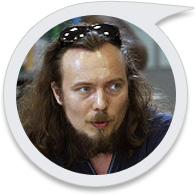 Ivan Zasursky, editor-in-chief of the Internet publication "Private correspondent":
"I do not refuse. Those who refuse-this is their personal choice. I was appointed at the very end of the Council, and I have no feeling that I had time to do something, and at the same time I have no feeling that I was in vain. My colleagues are more often performed, they have such an attitude to their reputation, lean, but it really does not seem to me that anyone else will cause harm to my reputation. I, in principle, is pleasant to the interaction with Medvedev, and I don’t know Putin, so I have no opinion.

Dmitry Oreshkin, political scientist:
"Firstly, I do not like Vladimir Putin’s position on working with non-governmental organizations. The Council is called-the Council under the President of the Russian Federation on the development of civil society and human rights, and Putin built such a structure, he personally or the collective" Putin ", when the receipt of independent grants is considered almost as state treason. And state grants are received only by those who work not in the interests of civil society, but in the interests of the mascot. The collection "Putin" can be in these conditions with such a president?
Secondly, since I am engaged in electoral problems, in particular a group of election rights of citizens, I know better than anyone, how amazing the volume of falsification were and how hopeless attempts were to protect the rights of citizens. The volume of falsifier is increasing, it acquires a critical size: officially Putin has 63.6%, and, according to independent observers, somewhere from 11 to 14% of the points were assigned. Either I have to sacrifice my scientific conscientiousness, or I must say that President Putin's legitimacy is doubtful. Which I say.
Thirdly, this is my assessment of the effectiveness of the activity of such institutions. If under President Dmitry Medvedev our capabilities were very limited, then under President Putin they will be even more limited. The question is what to do there then? "

The head of the Moscow Helsinki group Lyudmila Alekseeva is ready to work as part of the new Presidential Council, Interfax reports. But she stated that she would hardly "work with the same pleasure if the composition of the Council changes radically."

The head of the Presidential Council for Human Rights Mikhail Fedotov is also ready to work in the Council under Vladimir Putin. Fedotov calmly refers to the fact that some members declared their non -participation in the Council. “My reaction, of course, is calm, and what else can it be?” Fedotov said. “I think, offended how the Council has been working for the past three years, they have not the slightest foundation.”
| What was remembered by the Presidential Council |
The Presidential Council for Human Rights has existed since 1993. The Council is not a state body, and all its members work in it on a voluntary basis. In 2011, the Presidential Council for Human Rights was engaged in the study of several resonant cases. On July 5, Medvedev transferred preliminary results of an independent investigation into the death of the Hermitage Capital lawyer Sergei Magnitsky in Butyrsky insulator. In December, the Council invited the Investigative Committee to study the grounds for revising the sentence in the second criminal case against Mikhail Khodorkovsky and Platon Lebedev , that is, to actually cancel the verdict. However, there was no result. A little later, the Council made an extremely tough statement about the past Duma elections. In particular, it was about the resignation of the head of the Central Election Commission of Vladimir Churov .