
Translated material
The ethnic map of Russia
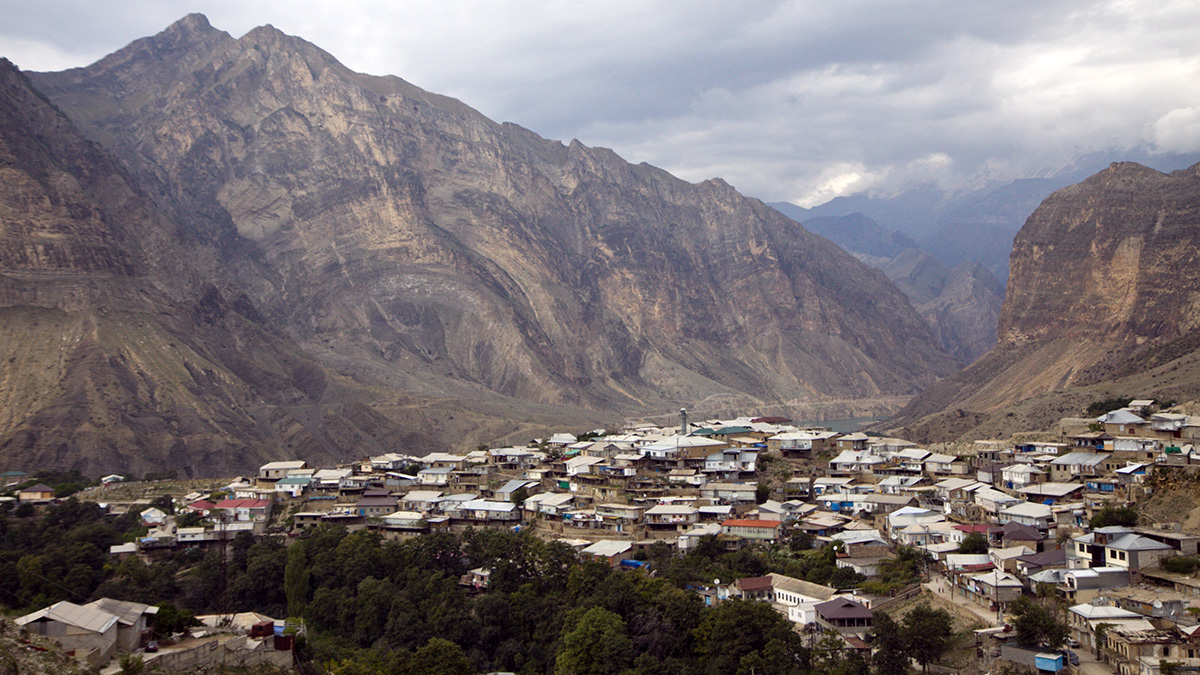
Igor Yakovenko: Sergey Alexandrovich, which means the ethnonym "Dargins", what is its origin when it was mentioned for the first time in some sources?
Sergey Arutyunov: I can’t say when he was mentioned for the first time, in my opinion, in Arabic sources on the history of medieval Dagestan this word is already being used.
Igor Yakovenko: I heard about the 15th century - does this correspond to your knowledge?
Sergey Arutyunov: As far as I know, something like that. As for its etymology, it is not directly etymologized. I don’t know, maybe Abdulgamid Osmanovich will correct me. Just like that, a self -name goes into a fairly deep antiquity.
Igor Yakovenko: Abdulgamid Osmanovich, the question of the Dargian languages, because the multiple number is really found in the literature, the term "Dargin languages" is used primarily, since the existing 17 dialects of the Dargine language differ quite much. At the same time, literary Dargine has a limited use between representatives of different Dargine dialects. How, in this connection, it is justified to talk about the only people, whose representatives in one literary language, as a rule, do not communicate with each other?
Abdulgamid Bulatov: I think that is justified, and that's why. Firstly, nothing special for Dagestan is that there are many dialects whose carriers do not always understand each other quite clearly. The Avars, the largest people of Dagestan, the situation in this regard is not much different. There is an Avar literary language, but it is not understood by everyone, there are a lot of dialects, the carriers of which with difficulty understand each other. Nevertheless, the community of ethnic identity exists.
Here you have to keep in mind the next moment. About 150 years ago, in Dagestan, a person’s belonging was determined mainly by his belonging to some rural society, and not to an ethnic group-this was the main one. But in the future, during the period of the location of Dagestan as part of Russia, first tsarist Russia, then Soviet, the division went on other bases. And especially in the Soviet period, when ethnicity was assigned, including in censions. That is, in this period, people determine themselves, including from the state policy on ethnicity. And regardless of how it was before, a hundred years ago and even earlier, in the present period, in the memory of my generation there is a fairly clear definition of themselves as Dargins, Avars, Lezgins, to whatever society belongs to. It should be borne in mind that for the peoples of Dagestan, like the Caucasus in general, a multi -level identity is characteristic. That is, a person, depending on the environment in which he is located, determines himself by a certain hierarchy of identity. Suppose that abroad will be a Russian, for example, a fighter who acts in competitions, he is awarded as a Russian. In Moscow there will be Caucasians, Dagestanis, in Dagestan there will already be Avars, Dargins, Lezgins. Among the Avars or Dargins, a specific origin will already come to the first place - the district, the village. Among their fellow villagers is already a thujum.
And now returning to the languages. I think that the presence of dialects indicates the presence of certain ethnic groups inside the Dargin people, some of which can be called sub -ethnic groups, although according to the latest censuses they appear as a separate people. In practice, as a rule, no matter what region Dargin is, and no matter what rural society it belongs to, and the Dargins mainly live in rural societies and unions of rural communities, they still have the consciousness of the general -world ethnicity, Dargine unity. The Kaitagians have somewhat special, they have a local self -awareness more, but nevertheless, I would not very hard to separate them from all other Dargins. In my opinion, issues of political nature play a certain role, when in the second half of the 90s, representatives of small peoples were able to be represented in power, then a certain boom began in order to find their expression in power structures. And those who had not previously thought about being written as individual peoples, although they had their self -consciousness inside larger ethnic groups, during this period they began to declare that they were individual peoples. Here is a certain game of identity.
Igor Yakovenko: Can it be assumed that to a large extent the political structure of Dagestan today affects the nature of identity, that is, since the State Council is formed in a certain way, local authorities are also formed largely according to ethnic representation?
Abdulgamid Bulatov: I would not say that this is a defining factor. In my opinion, identity, belonging is a given that a person receives when he was born. But another thing is that it is not ossified something, it can change, it can acquire different forms. And political conditions can have a certain influence on this.
Igor Yakovenko: Sergey Alexandrovich, O religion: what are the features of the religious consciousness of the Dargins, how much they gravitate towards traditional Islamic values in comparison with other peoples of Dagestan?
Sergey Arutyunov: First of all, I will return to the previous issue. Kaitags, yes, make up a certain separate part among the Dargins, distinguished more than other local dialect groups. But this is due to history. Because the Dargins never had a common statehood of the Vozhedrginskaya, the Avars had the Avar Khanate, which more or less Avar united. The Dargins did not have this, but there was a Kaitag's uzmia, which it was Kaitagtsev that united, state education. And the memory of this isolated state existence is maintained to some extent. In addition, even the Kubachi village, kurbuk, which is very ancient, older than the Dargins, is mentioned, it is mentioned at the beginning of our era in Persian sources - this means "manufacturers of chain mail". But now chain mails are not in particular demand in the market, and for a long time this village of professional jewelers and metal workers, manufacturers of valuable metal products. Several thousand people, including small settlements, but basically this is one big village. Kubachintsy, possessing a special dialect, can essentially say a language, in addition, they also have a certain self -consciousness, so Kubachins more often than others will not be called Dargins, but in their native village of Kubachin residents. By the way, and in relation to Kaitag's utsmia, that is, the supreme ruler, they kept very independently. The Utsmius could come there only by enlisting the invitation of some influential resident of the village, who would protect him and took him under his patronage. As for the religious attitude, of course, the Dargins are Muslims-Sunnis, but I would say that they are not characterized by special religious fanaticism. Among them there are Sufi, of course, there are Sheikhs of their Dargins with their circle of followers. But this is not as significant socially as, say, Avar Sufis.
Igor Yakovenko: Abdulgamid Osmanovich, a few words about the political representation, we touched on this topic when we talked about identity and the influence of the political structure. Indeed, the political structure of Dagestan is based on national representative offices, and the Dargins, the second largest people in the republic, several years ago at the head of Dagestan stood a Dargin, today a change of leadership took place. How much are Dargins today in the political elite of Dagestan, and what is their political well -being?
Abdulgamid Bulatov: First of all, and now the Dargin is in power. Such a practice has developed, it went back at the end of the 30s of the last century, when representatives of the Avar and Dargine ethnic group consistently replaced each other's helm of the highest power. Therefore, the Dargins are not deprived, let’s say, by a political representation, moreover, along with the Avars, they are in a privileged position in this regard. Here we must distinguish the bulk of the Dargins, as well as the bulk of the Avars, any other people whose representatives are in power, from those specific people who exercise this power. Because, of course, a person who is a native of some village, from some rural district, he will conduct electricity, gas, build roads in this village, will do all this. But in general, for all the other Dargin peoples, he may not do this if he does not have the opportunity. There is no direct connection here that if the head of the Dargin or Avar, then any Avar from the city or from the remote area may assume that his life is arranged. Therefore, there is a lot of local specifics, but I think that for Dagestan it would be optimal to a continuation of the existence of such an organ as the State Council, it may be when expanding its authority from adviser to greater influence on decision -making.
Igor Yakovenko: Abdulgamid Osmanovich, is there any question that I have not affected, which you would like to answer?
Abdulgamid Bulatov: There may be a small addition that may be curious in terms of ethnic mentality. It is important to say about such a feature of the Dargins in terms of ethnic psychology, conventionally use this term - Protestant ethics. A significant part of the Dargins may not have an idea of what it is, but nevertheless, there are certain features. That is, these are a people who have a very developed entrepreneurial vein. Among the Dargins, there are a lot of capable businessmen, as it was during the years of Soviet power, and now.
-


Irina Lagunina
Head of Special Projects of Russian Service Radio Liberty
Laguninai@rferl.org