
Translated material
The new Parliament of Greece failed attempts to form a government. The country is threatened with re -election
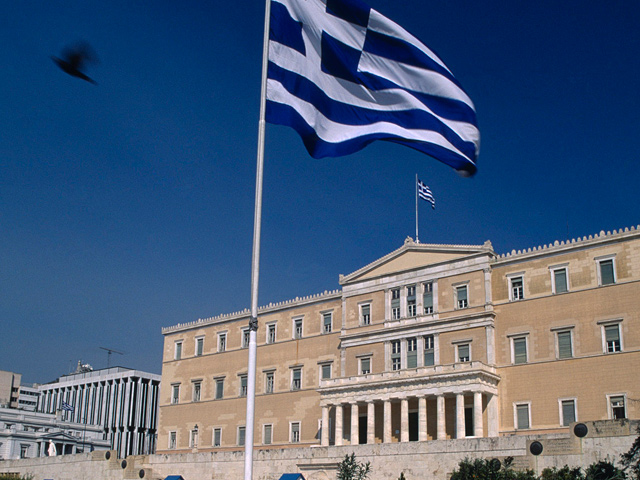
In Greece, the political crisis is aggravated. The last of the three parties that went to parliament according to the election on May 6 was not able to form a government of national unity.
The Chairman of the All -Greek Socialist Movement (PASOC) Evangelos Venizelos returned today to President of Greece Carolos Papulasa given to him the mandate for the formation of the government. This was the third and last mandate after unsuccessful attempts to form the cabinet leaders of the right -centric new democracy (ND) and the coalition of left -wing radical forces (Siriza).
Now Greece faces the threat of repeated elections. In an attempt to prevent Greece, Carolos Papular Papular, convenes an emergency meeting in order to create a government with extraordinary powers.
According to Echo of Moscow , such a meeting should be held today, on Saturday. At the meeting, the President of Greece will try to get the country out of a political impasse.
At the first stage, the president will ask the leaders of political parties to agree to the formation of the government. If this is not possible, the service government will be appointed for new parliamentary elections within 30 days, ITAR-TASS reports. Most likely, they will take place in June.
For Greece, whose public debt remains at 160-170% of GDP, repeated elections will become heavy burden. However, analysts consider this scenario the most likely. According to BBC , Papulias is unlikely to be able to agree with parties. Left radicals are already betting on new parliamentary elections, in which they have every chance to win. Returning the mandate to the president to the formation of the coalition office, the chairman of the PASCO Evangelos Venizelos accused of disrupting the task of the leader of the Left Alexis Tsipras.
In turn, Tsipras previously explained an unsuccessful attempt to find a compromise with the New Democracy Party and the Paco to refuse to maintain a course of rigid economy, which are insisted by the rest of the EU and the IMF. Negotiations with the Communist Party and the Party "Democratic Left" also ended in failure.
Recall that the “stumbling block” for Greek politicians remain issues of reducing budget expenditures. This is required by the European Union and the IMF - in exchange for financial assistance. European leaders, alarmed by a political impulse in Greece, have already warned that if Athens refuse to carry out agreed economic reforms and carry out strict savings, the country will have to leave the Eurozone.
Meanwhile, the leading researcher at the Institute of European RAS Sergey Fedorov is sure that the danger of losing the support of Europe will still force Greek parliamentarians to agree on the creation of the government. The expert added that the main financial burden in this case will fall on the share of economically strong countries in Europe, and, first of all, France and Germany.