
Translated material
French threat
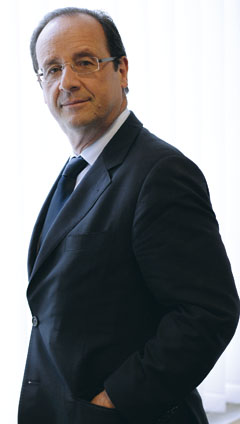
French threat. The new French president Francois Hollande managed to provoke a scandal, promising to “put in place” of the Chancellor of Germany Angela Merkel and revise the pan -European budget pact, which Berlin so intensively promoted. The Socialist President will present to Europe many more unpleasant surprises, some observers say, while others say: Olland is actually a pragmatist, it is not for nothing that he goes with the first foreign visit to Berlin. What to expect from the new owner of the Champs Elysee - found out The New Times
On May 6, Facebook tape clearly answered the question "What is democracy?" Surzi's supporters mocked with might and main over the new president, calling his flanbee, in honor of the jelly -like dessert of Nestle, a hint of the supposedly lethargy and spareness of Francois Hollande. Supporters of the latter posted on the tape photographs of a thousands of crowds on the Bastille Square, where the candidate from the socialists celebrated the victory. Yes, Nicolas Sarkozy failed to win the elections. But he managed to lose them with dignity. He not only honestly admitted his defeat, lagging behind Olland by 3%, but also invited his main opponent, whose inauguration will be held on May 15, to take the parade on the 8th, on the day of the liberation of Europe from Nazism. Sarkozy was not afraid of resignation. The presidency comes and leaves, the elections are won and played, and the profession of a lawyer remains: Sarkozy will return to the bar ...
On May 8, the streets of Paris were crowded with a jubilant people. The same picture will be the 15th. Inauguration and police violence in the capital cleared from citizens are incompatible things. But even in civilized and democratic France, the most impregnable fortress is the minds of citizens. Let's try to explain.
"Now Europe is the end"
Both Sarkozy and Hollande were the main emphasis during the election campaign on the economy, the rest of the world did not seem to exist, not considering the promise of a socialist candidate to withdraw French troops from Afghanistan. Hollande held a line traditional for socialists: the fight against unemployment should be waged by increasing the number of state employees (primarily officials and teachers), increase the minimum wages, increase government spending, and in a word - revitalizing the economy through active state intervention. Sarkozy proved the opposite: France should adhere to the pan -European course of rigid economy, otherwise the public debt cannot be reduced. Sarkozy lost, although sometimes it seemed that the rhetoric of Hollande from some other time, when people were conceptually beaten on the planet with a sickle and hammer. But the new generations of French citizens liked it. But I did not like it at all in Berlin, where they refused to believe in the defeat of Sarkozy, and in Brussels. They say that Uwe Corzepius, one of the closest advisers, Angels Merkel, having listened to Hollande, said doomedly: “That's it, now Europe is definitely the end.” 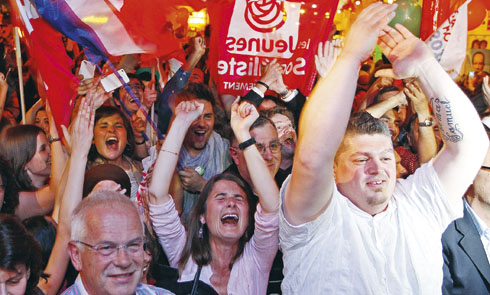
Classics of the genre
A graduate of the elite Parisian ENA (School of Administrative Management), Hollande loves to talk about the economy, which is believed to be strong. He proposes to implement his program of economic recovery with the help of the European Central Bank, from which France and other countries could take money to finance state projects. And he was not afraid to register the French with a classic socialist recipe: the redistribution of wealth. The income tax of citizens who earn more than € 1 million per year per person, he offers to increase from 41% to 75% (!). Despite the fact that this measure would affect only 0.5% of taxpayers and would bring only € 200-250 million to the budget, the French liked it much more than an increase in VAT from 19.6% to 21.2%, declared sarcose four months before the elections. “Hollande successfully traded in illusions,” says Ivan Lubier, the chief economic adviser of the Naconal PR company. - He became the president of a fabulous dream of a happy country where everyone will work and everyone will have a lot of money. Now it’s interesting to see how he will keep his promises to life. ” After all, the budget pact tightly regulates government departments: the annual budget deficit should not exceed half a percent from GDP. A hard rule, the same for all EU members. Otherwise, one European currency cannot be saved. 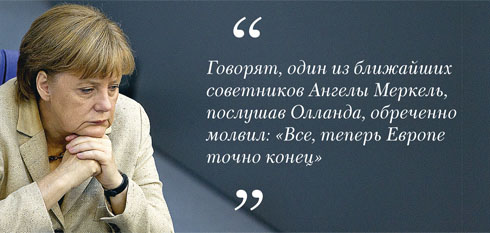
The funeral of Merkosi
However, many French people do not like that France is not free to make strategic decisions on economic policy on their own. “Often behind our back, 26 other countries of the European Union, headed by Germany, will whisper about something,” the French economist, director of the Center for Research for the Research of Industrialization of the French Higher School of Social Sciences (Ehess) Jacques Sapir, remarked displeasedly. But if earlier the duet of Germany and France seemed to the world as a lifebuoy for Europe, now, after Francois Hollande stated that he would “put this Merkel in place” on the other side of the Rhine.
According to the sources of The New Times in Berlin, the mood in the team of the German chancellor in recent months, when sociological surveys in France predicted the victory of a socialist candidate, was close to panic. Angel Merkel did everything so that her partner in Merkosi won the elections (as the political duet Merkel - Sarkoles - Sarcosi is called in Europe. - The New Times), including a joint with Nicolas Sarkozy, before he officially became a candidate. Almost simultaneously with this, she refused to accept Francois Hollande during his February trip to Berlin, and the chairman of the HDS group in the Bundestag Peter Almeyer, a close associate of Merkel, called to Twitter to vote for Sarczy. However, Merkel’s single -party people were heshed: the economic advisers of the French socialists held consultations at the Konrad Adenauer Foundation, the CDU brain center, and a number of secret meetings were attended in the German Embassy in Paris, in which prominent socialists Manuel Valls, Michel Sapan himself and Francois Olland himself took part. "
The only question now is whether Paris and Berlin will decide on a public clash of positions
”Immediately after the victory, Hollande Chancellor Merkel harshly stated: the budget pact is not subject to discussion.“ For Merkel, the issue of preserving not only balance in Europe, but also his own place in German politics, ”says Ivan Lubier.“ Despite the fact that the next elections in Bundestag will be held only in September 2013, the CDS position is not the most enviable: it is not the most enviable: it is not the most enviable: it has been over the past year. I lost eight regional elections of nine. ”
He will not yield?
Berlin connects the last hopes for consensus on the visit of Hollande to Berlin on May 16. The main stumbling block is a budget pact signed by all EU countries except England and Ireland, to which, judging by the statements of Hollande, France is also ready to join. “On May 16, in Berlin, we will most likely see a rather strict confrontation: Hollande will not yield,” the French political scientist Arno Dubieen comments for The New Times, the upcoming first foreign visit of the new president. - Hollande knows that it is not alone: many European countries, including those where conservatives are in power, are not ready to agree with German leadership in the EU. The question is now only whether Paris and Berlin will be resolved to a public clash of positions. ” 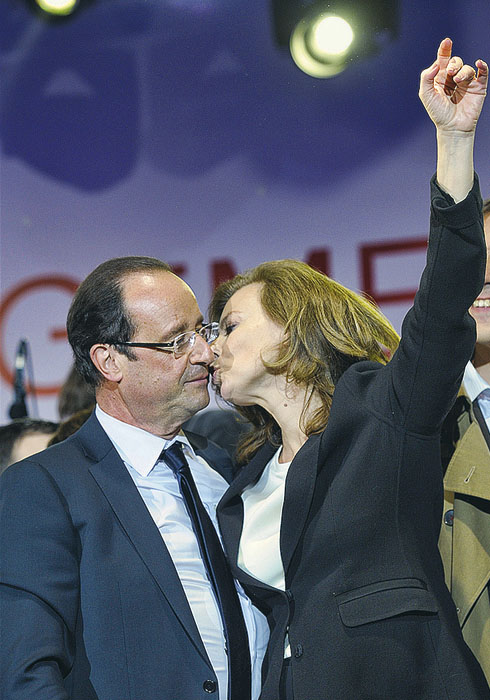
In any case, a difficult dilemma will face the new president of France. On the one hand, he can be bogged down in barren negotiations, and in this case, Europe will again be in a situation of political crisis, when the main entities of the European Union cannot agree among themselves. “We have already seen what this leads to: markets instantly fall, and investors try to withdraw their money as soon as possible,” said Jacques Sapir. Another option: Hollande is backward and begins to pursue a policy of budget discipline. But in this case, his voters will be dissatisfied, the expert does not doubt.
But is the third scenario possible: Merkel unexpectedly agrees with the arguments of the French colleague, and the budget pact is returned to revision? “The only factor that could make Merkel bend before Hollande is an election,” says Ivan Lubier. “But they will take place in Germany only a year and a half, so there is nowhere to rush to the chancellor.”
Francois Hollande, at the very start of his presidency, fell into a trap. He made the French believe that saving is not the only way out of the debt pit. But now he has nowhere to go. “Olland will have to forget the pre -election promises and play according to pan -European rules,” says Ansgar Belke, director of the macroeconomic research of the German Institute for Economic Research (DIW). “Otherwise, he will have to deal not with an angry Merkel, but with offended investors.”
In the meantime, the French newspapers are losing a caricature: Hollande stands at the schoolboard opposite the harsh teacher-Angels Merkel, and sarcosy winks sarcastically from his corner.
Presidential people
The name of the new French Prime Minister Francois Hollande promised to name at the end of May. It depends not only on his choice how the French will vote in the June elections to the parliament, but also the very meaning of the premiere chair: Francois Fillon, being the prime minister under Nicolas Sarkozy, did not play a big role in decision -making. However, the Hollande team, according to many analysts, consists of more ambitious personalities, with rich biographies that will not agree to be ordinary performers. Who are these people?
| | | | --- | --- | | 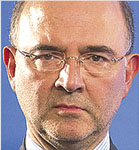 | Pierre Muscovable (Mosko, as the associates call it) , the head of the Olland’s campaign headquarters, a brilliant intellectual, who served the minister in European affairs in Lionel Zhospen's left office. Twice was a deputy of the European Parliament. For a long time it was considered as a candidate for the post of prime minister or head of the Ministry of Foreign Affairs, but recently it has recently moved away from Hollande. | | | | |
 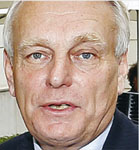 | Jean-Mark Ero, the mayor of Nantes and the head of the socialist faction in parliament. Germanophile. It is considered as the most likely candidate for the premier post. True, spots in biography may interfere with this: in 1997, he was sentenced to six months of prison and a fine of 30 thousand francs for chosen a printing house for printing a municipal newspaper without conducting the necessary tender. | | | | |
 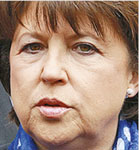 | Martin Obri rival Francois Hollande in the primaries of the social party. It is called "Madame 35 hours": it was when the Minister of Labor was adopted that the law was adopted that restricts working hours 35 hours a week. Now - mayor of Lill. It is considered as a candidate for the post of Minister of Economics. | | | | |
 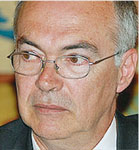 | Paul-Jean Ortis is likely to take a position of the chief diplomatic adviser to Olland, including relations with Russia. Holland himself already made it clear that he would not revise the most important economic transactions with Moscow, including the Mistral helicopter -bearing contract. | | | | |
 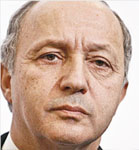 | Laurent Fabius is one of the most authoritative French politicians. He occupied the premier post in the office of Francois Mitteran. It is considered as a candidate for the post of head of the Foreign Ministry. | | | | |
 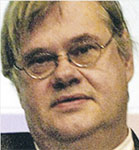 | Christian Leshervi ex-Posol France in Turkmenistan. It is considered as a candidate for an important administrative post. |
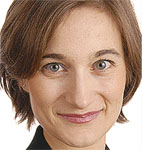
Director of the Economic Institute Molinari
“To be honest, I don’t see much difference in the politics of Nicolas Sarkozy and what Francois Olland is going to go to Berlin. At the polemic level, everything is different, in fact, the same thing. It’s just that Sarkozy was silent, and the socialists stick out every step to show that they are independent and do not depend on any Germany.
Francois Hollande proposes to revise the budget pact so that France can increase the level of government spending? But after all, Nicolas Sarkozy has already agreed that state budgets will not be controlled by Brussels. Is Hollande for a more active role of the EU Central Bank? But Sarkozy also tried to achieve the same, however, not very successfully. - Hollande against the policy of tough saving measures? Sarkozy also tried to take measures so as not to go too far - he understood that it was impossible to live without state expenses: this would lead to a recession.
It's different. You can belong to any party and give any promises, but being the president of the country, you belong to the system that develops regardless of your beliefs. There are laws of economics that cannot be changed by either Holland, sarcose, nor Merkel. There are rating agencies who follow your every step, and finally, there are investors who follow these agencies. Financial markets are non -partisan and cruel. ”