
Translated material
Experts: Hollande will annoy Putin and Russia. Sarkozy was more convenient
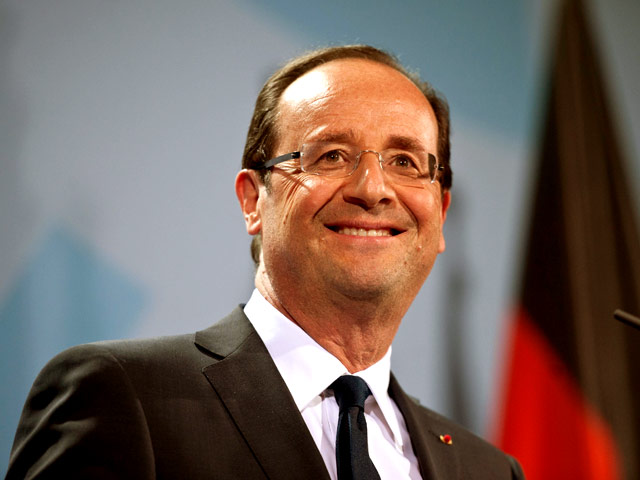
Russia's relations with France after the election of the new President Francois Hollande, the second in the history of modern France, the socialist president, will be polemic in nature, experts, whose opinion cites RBC .
“It was more convenient for us to deal with the pragmatic Nicolas Sarkozy than with such an ideologized ruler as Hollande. He will be very annoyed,” said Peter Cherkasov, head of the Center for French Historical Studies, Peter Cherkasov.
He reminded of Holland's unambiguous criticism during the Sarkozy during the election campaign: then the presidential candidate from the Socialist Party said that Sarkozy was “grazing to Vladimir Putin,” and also reproached the former president in the following line of Washington. “At least Francois Olland must somehow justify his own words,” Cherkasov said.
Meanwhile, the head of the Center for French Studies of the Institute of Europe of the Russian Academy of Sciences, Yuri Rubinsky, believes that in general, the partnerships of Russia and France are hardly affected by those who are in power. Thus, the expert gave an example of the interaction of countries during the presidency of Francois Mitteran, the first president -socialist in France, whom Hollande calls his political "godmother."
"The first two years of the relations of the USSR and France were very frozen, but it was in the midst of the Cold War. However, literally after 2-3 years they improved significantly, Francois Mitteran was a very positive and friendly partner for Mikhail Gorbachev," says Rubinsky. In his opinion, the interest of both parties in cooperation determines objective factors. "I am sure that the economic part of our relations is key today. In addition, we have a general approach to nuclear energy," he notes.
And although, for example, with Germany, Russia has more closer and wider, but with France there is more interaction in the field of industry, the expert is convinced. “In France, the share of manufacturing in GDP has doubled over the past 30 years. 12% of total, and in Germany - 28%. Therefore, it is very important for France to save its industry, to raise it to a new level. Russia, of course, is a very important partner for it,” he concludes.
Stargling stone - Relations with Merkel
Meanwhile, what will be the political climate and the scale of changes in France itself will depend not on Hollande, but on the economic situation in Europe and the world, Rubinsky is sure. "В Европе после начала кризиса сменились восемь глав государств и правительств. Тому, кто был у власти, приходилось платить за кризис. Проблема госдолга, которая стала в южных странах просто катастрофической, потребовала очень жестких мер. Это и предопределило смену власти в Греции, Италии, Испании, Португалии, Ирландии, Великобритании. Только в этих странах к власти пришли правые, а во Франции и еще, For example, Denmark is Social Democrats, ”says the expert.
He also believes that the new president will have to “reconcile two opposite courses”: “The task of stimulating economic growth, on the one hand, and the task of saving budget funds and freezing, and then reducing the debt of the Eurozone countries on the other.” “With his reformation priority, Francois Hollande announced his education. This is perhaps true, but he will go to this point in the second turn,” Rubinsky emphasizes.
At the same time, the main stumbling block in this process for Francois Hollande will be relations with the German Chancellor Angela Merkel, Cherkasov says. “He demands to reconsider many agreements. She says that the budget pact, which is concluded with Nicolas Sarkozy, is not subject to revision, otherwise everything will collapse. It is difficult to say what they will agree on, but we will definitely see the two concepts,” he believes.
However, with the coming to the power of Olland, one can expect a new model for overcoming the crisis. “Until now, the problem has been solved within the framework of one model, so conservative, and it offers a new one. And what is behind it until no one can say. Perhaps he himself really did not understand,” Cherkasov summarizes.