
Translated material
Museum evolution
At the end of April, the German Cultural Center named after Goethe in Moscow and the Polytechnic Museum held a forum under the name "Funds and museums as popularizers of scientific knowledge." This is the next event of the Popular Science/Wissenschaft FQR Alle project (see, for example, [1]), which takes place as part of the Russian-Germanic year of education, science and innovation. This time, as follows from the name of the forum, it was about what the place of scientific museums in the system of popularization of science and scientific knowledge.
Representatives of various museums of Germany and Russia shared their experience and observations of trends in this area. The merits of the organizers should be attributed, in particular, the fact that the speakers (the forum took place in the “Report-question” mode, to which a small general discussion was added before closing the session) represented different types of museums-from the classic “collectible” museum, such as the German museum in Munich or Polytechnic in Moscow, to museums-exhibitions working in format. "Eudutainment", a mixture of training with entertainment, and specialized services of the Company named after Max Planck, responsible for exhibition and popularizer activities.
Such a diverse composition of the participants was extremely useful. Firstly, those present (and the small hall of the Polytechnic Museum, where the forum was held, was filled) had the opportunity to discuss similar problems. It turned out that they are almost the same in Germany and Russia: attracting visitors, finding new ideas, financing. Secondly, thanks to different approaches to the organization, the very problem of scientific museums or institutions close to them was submitted from different points of view.
What is the main thing for the scientific museum? The choice of the audience and the location of the collections? Search for financing? In particular, can the scientific museum be self -sufficient? What is the role of scientific organizations in museum affairs? The answers to these questions, of course, are not universal, but attempts to find them give an idea of some general trends in scientific and museum development. It is impossible to retell all the thoughts and problems that were talked about that day, so we limit ourselves to a brief retelling of what is most remembered.
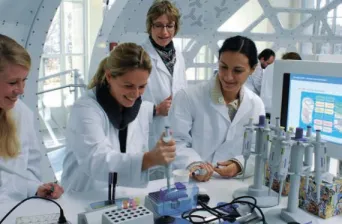
“Classic” museums, such as the German Museum in Munich (Deutsches Museum) or the Polytechnic Museum in Moscow, facing the need to constantly look for new ways of interacting with visitors. Both museums are united by the fact that they go through the renewal stage (something like this can be translated by the word Renovation). In the case of the German museum (founded in 1903, it also includes a branch in Bonn) this process affects both the building itself and the exposition. Bernhard Weideman, head of the press and public relations department, spoke about the orientation of this update and gave examples of what new forms of interactions with visitors will be used in the updated museum. Some of them are already working, for example, special “glass laboratories”, whose visitors will be able to take part in any experiment, thus “trying” the science of the touch.
If the concept of updating the German museum in Munich is already formed as a whole, then the leaders of the Polytechnic Museum, which should be closed for reconstruction in early 2013 (see interviews with the director of the museum Boris Saltykov in the Triv-hunger No. 101 [2]), remains to answer many questions regarding his future appearance. This was briefly told by Natalya Sergievskaya, Deputy Director of the Development Fund of the Polytechnic Museum, and Boris Saltykov himself. During the reconstruction on the basis of the Polytechnic Museum, the Museum of Science should arise. It is planned to abandon the traditional separation of expositions in science or industries, which will be replaced by a division on three main topics: “energy”, “information” and “matter”, within which the achievements of various sciences will be presented together. Unfortunately, a more detailed project, according to which it would be possible to understand how the museum halls would look like it is impossible to see. This caused a concerned question from the hall - what will become with the exhibits and collections of the museum, which, as you know, is an extremely important scientific institution. Natalya Sergievskaya replied that the museum does not plan to turn into an entertaining museum of science; Moreover, the Polytechnician will remain more oriented to adults more than on children. As for the area, these plans include, rather, its increase due to the overlap of the courtyard. In addition, the emergence of a new platform of the museum on the Sparrow Mountains, oriented to a greater extent on a specialized audience is provided. It is planned to hold conferences, exhibitions, as well as try a new museum work scheme - “open laboratories”, similar to those spoke about Bernhard Vaidemenn as applied to the German museum.
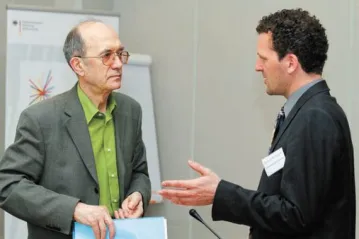
Natalya Sergievskaya also touched on a very interesting topic, saying that one of the goals of the update is to make sure that in the new museum it was interesting not only to ordinary people, but also by scientists who, ideally, should be interesting to conduct joint experiments or experiments with visitors. The idea that the Museum of Science without actual science is non -viable (or, softly, not very viable) sounded, directly or indirectly, in other performances. However, museum or even educational work itself is hard work, almost inaniming a scientific search for a scientific search. Therefore, the ways of "inclusion" of scientists in the Enlightenment case -for -fornocation is separate, almost more complicated than the reconstruction of the expositions. Natalya Sergievskaya noted, for example, that the development of the museum is the development of the lecture hall, including the conduct of lectures “on the anger of the day” - as a response to the most “fresh events”, for example, natural disasters or scientific discoveries. How much it will turn out, time will tell.
A similar problem, but already in another aspect is facing planetariums. From the very beginning, they were not museums of science in the strict sense - they did not collect “subjects of science”, but were aimed at forming the visitors of the universe, which was quite “tied” with the current state of astronomy and astrophysics. Today, this connection has become more interesting in a sense. Firstly, a huge amount of information from space telescopes (Thomas Kraul, the director of the Hamburg planetarium, figuratively said: “Tekbaytes are falling from heaven today)) requires understanding and use. Secondly, a certain competitor of the planetarium is a modern cinema that actively uses the theme of space travel and numerous special effects. What in this case the planetarium for visitors becomes is an ambiguous question. Thomas Krale formulated the three goals of the modern planetarium: to change the prospect (in other words, to give visitors the opportunity to look at their place in the universe on the other hand), to form imaginative thinking; become a place of aesthetic education. The last task is quite non -trivial for the “classic” version of the planetarium; Moreover, it can also cause a protest of those who believe the planetarium, first of all, a place for people who are enthusiastic about astronomy, who are not so important, the external “wrapper” of the knowledge presented.
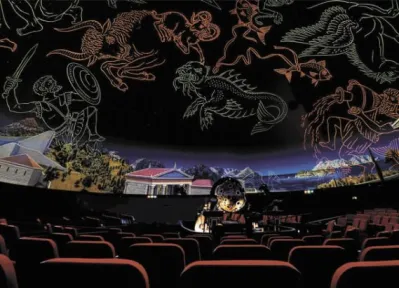
If the story of Thomas Kraul concerned primarily a general vision of what the planetarium should be, then Faina Rubleva, the scientific director of the Moscow Planetarium, focused on the description of expositions and programs. According to her, the main goal of the Moscow Planetarium, relatively recently opened after a long reconstruction (see, for example, [3]), was and remains a story about the starry sky.
From the planetarians, the conversation smoothly turned to the popularization of science by means of science itself. It is very significant that only representatives of the German side acted here: Ahim Englert, Executive Director of the Phanomenta Scientific Center (Flensburg, Germany), and Andrea Vegers, head of the press and public relations department named after Max Planck. Unfortunately, purposeful work with the public, especially through museums and exhibitions, is still sluggish enough in Russian scientific institutions; The exception is, perhaps, work with schoolchildren and students of specialized universities, in which institutes are interested in "blood". It was all the more interesting to find out what the scientific institution could give to the general public.
The above Phanomenta is called the Scientific Center Schleswig-Holstein at the University of Flensburg. It was founded in 1984 and is not the scientific museum itself, but a certain scientific exhibition with specially prepared exhibits. It is interesting to note that the exhibits, according to Ahim Englert, do not accompany the tablets with a description of the effect shown: the visitor must understand what is happening in front of him. The organizers of Phanomenta several times “went out” with exhibits and to the general public, namely in shopping centers. Although before the first such experience (in 1999) there were quite skeptics, who believed that science should not be demonstrated in the Consumption Society, the results of such exhibitions were quite successful.
Phanomenta is one of several scientific centers in Germany, which differ quite much in throughput (from ten to hundreds of thousands of visitors per year) and in legal form. As Ahim Englert noted, the self -sufficiency of such centers as a whole is better than that of museums, but everyone received support from public funds, since it is impossible to constantly work in a plus for such institutions.
Unfortunately, the practice of scientific centers in Russian science has not yet taken root. This requires ideas and people, but also requires a clearly set goal. The goals of scientific museums and centers that sounded in the discussion lay more likely in the Enlightenment plane: “Give the opportunity to be surprised”, “Show how science functions” (according to Andrea Vegener, for example, it becomes quite often for people the exhibition itself as communication with scientists) and even “help people as consumers make a conscious choice.” In addition to these common goals, it was heard several times - “to motivate young people to classes of science,” but in general there was no impression that this goal today is the main one. Perhaps this is also a tendency of modernity - science turns into a certain element of the cultural horizons, which, however, is included in the “set” of a person as a subject of consumption. This was evidenced by the interesting story by Irina Kuznetsova, the program director of the private museum of science “Experimentaum” (Moscow), which literally described “the struggle for the consumer” of scientific entertainment. But whether the future of all scientific museums lies on this path or not - time will tell.
Olga is a snack
1. S. Popov. Popular and practical. TRV-hobby, No. 99, 03/13/2012 http://trv-science.ru/2012/03/13/poplyarno-i-praktichno
2. There is such a word - a challenge. TRV-hobby, No. 101, 04/10/2012 http: // trv-science.ru/2012/04/10/est-takoe-slovo-vyzov
3. The planetarium should look at everyone. And not once. TRV-hunger, No. 70, 01/18/2011 http://trv-science.ru/2011/01/18/planetarij-dolzhen-kazhdyj-posmotret-i-ne-odnazhdy