
Translated material
Reincarnation of the Central Committee
The White House will lead from the Kremlin
"We recreate the Central Committee of the CPSU." So one of The New Times described the results of the week of a large personnel Czech. Dmitry Medvedev, as promised, formed an updated government, and Vladimir Putin took former ministers with him to the Kremlin. How the Kremlin’s working relationship with the White House will be built further - The New Times sorted out
“I’m trying to imagine the third day how the 55-year-old General of the FSB comes to this guy, and Kolya is trying to send him to X ...”,-with a laugh commented on The New Times, Colonel of the FSB, the appointment of 29-year-old Nikolai Nikiforov. The appointment of the Deputy Prime Minister of Tatarstan to the federal government was one of the sensations of the new cabinet. “He automated the State Services of Tatarstan to a level that in Moscow they will not be able to dream for a long time,” Anton Nosik commented on this event. But the fact that the youngest member of the government will cope with the responsibility that has fallen on him and the security forces, for whom control over the connection remains the most important direction in work, many experts doubt. His more experienced predecessor Igor Schegolev did not succeed. “And with the implementation of presidential and premiere orders, the Ministry of Communications had a complete failure with him,” the interlocutors in the government apparatus explain his resignation.
A prefabricated office
The average age of the new government is 44 years (under Vladimir Putin it was 53 years old). And therefore, many began to compare it with the offices of Yegor Gaidar and Sergey Kiriyenko, hinting at the short life of the previous “young” calls. The fundamental difference, however, is that both in 1991 and in 1998, the government was really radically updated, and now the personnel gathered with the world along the thread, often faced with the reluctance of potential ministers to go to work in an office, in which few believe in the prospects of which. 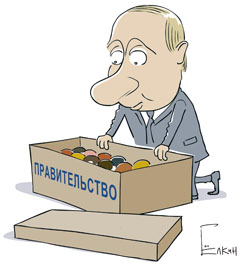
The second source of personnel is “United Russia”, which Dmitry Medvedev headed at the congress on May 27 (he was awarded the party card the day after the formation of the government). The bite will still have to supervise the deputy prime minister and the head of the White House apparatus Vladislav Surkov. Not the last people and new heads of the Ministry of Regional Development and the Ministry of Culture for the party are Oleg Govorun and Vladimir Medinsky. One of the ideologists of the All -Russian Popular Front is adjacent to this group - Nikolai Fedorov, who headed the Ministry of Justice as early as 1990-1993 and returned to the White House to the post of Minister of Agriculture after 16 years of presidency in Chuvashia.
Another personnel source was the Moscow government of Sergei Sobyanin: from there, the Deputy Prime Minister Olga Golodets and the new head of the Ministry of Internal Affairs Vladimir Kolokoltsev were delegated to the office. Golodets, who, from 1999 to 2008, with a short break was the head of the Social Policy Department and the Deputy General of the Norilsk Nickel HR, is called the main conductor of the interests of the billionaire Mikhail Prokhorov, who previously lubricated the appointment of the Governor of the Irkutsk Region of the businessman and the leader of the local “Right Business” Sergei Eroshchenko. It turns out that the businessman successfully capitalizes his participation in the presidential campaign and 8% of the vote received by its results. As for Kolokoltsev, who replaced the most unpopular, probably a member of the previous cabinet Rashid Nurgaliev, then Medvedev personally insisted on his candidacy, although the director of the FSKN Viktor Ivanov and the deputy Nurgaliev Alexander Sensitnaya were initially listed in the favorites. That's exactly why, according to the interlocutors of The New Times in the Moscow Central Internal Affairs Directorate, in early May, Kolokoltsev was urgently sent on a business trip to Europe so that before the new appointment he did not have to glow on the acceleration of the opposition.
From the Medvedev team itself in the new government, only Arkady Dvorkovich found themselves, who, however, received colossal powers: as a deputy prime minister, he will have to oversee agriculture and communications, and, most importantly, energy with industry. And Mikhail Abyzov, who, however, received little on the Minister of Relations with an open government.
Old frames
It is curious that with the advent of the many new ministers, the Deputy Prime Corps was renewed minimally: the posts retained five of the seven deputy prime ministers: Igor Shuvalov (first vice-), Dmitry Rogozin, Vladislav Surkov, Dmitry Kozak and Alexander Khloponin. The latter at the same time has lost the uniqueness of its part-time status: Deputy Prime Minister and Embassy in the North Caucasus Federal District at the same time. Now the company was composed by Viktor Ishaev, who will combine the leadership of the Ministry of Development of this region with the envoy in the Far East. The 64-year-old Ishaev fits into the young and inexperienced Medvedev team with difficulty: 18-year governorship in the Khabarovsk Territory behind his shoulders. On the one hand, his appointment shows that the Kremlin has decided on the two main directions in regional politics - the Caucasus and the Far East. On the other hand, he demonstrates how helplessly without government support the envoy themselves and how, in principle, this institution was degraded. A strong blow to his reputation was inflicted by Vladimir Putin. The appointment of the head of the Uralvagonzavod workshop Igor Kholmansky in the Ural Federal District Kremlin insiders explain only one thing: the president wanted to show that he was thinking about the public from Bolotnaya Square. “He will not have any authority, but he can still break firewood, informal power and influence among the envoy are preserved,” the interlocutor of The New Times fears for the prospects of the Urals.
Another deputy prime minister could become Elvira Nabiullina, who was offered the post of vice, in a socialist, but she refused. Firstly, as the interlocutors of The New Times, the deputy prime ministry, de facto, would be a decrease in comparison with its previous work-the leadership of the giant Ministry of Economic Development, and secondly, Nabiullina categorically refused to work with Arkady Dvorkovichi.
Together with Dmitry Rogozin, the Minister of Defense Anatoly Serdyukov retained his post. “They decided not to touch the defense unit in principle, especially the army reform has not yet been completed,” says Serdyukov, the aware interlocutor of The New Times, about the resignation of which rumors went back in March, on the eve of the expanded college of the ministry. The fellow student of Medvedev, Minister of Justice, Alexander Konovalov, less expected renovation - Minister of Foreign Minister Sergei Lavrov and Minister of Sports Vitaly Mutko, was expected to resist the post. The latter, however, took away all the previous functions except for sports: “Rosmolodezh”, freed from Vasily Yakemenko, went under the wing of the minobra, and the Minister of Culture of Medinsky will now be responsible for tourism. “No one began to change Mutko at the crossing, since his task is to ensure preparations for the 2018 football championship.”
What's next
It is completely unclear what, in fact, the government gathered the task, notes the assistant professor of the Higher School of Economics Pavel Kudyukin, a specialist in the field of government, unless, of course, to consider the current leadership by departments and industries. Because if the government of Dmitry Medvedev plans a certain modernization jerk, this requires one people and one government structure. If the main task is to reflect a very probable new wave of the global crisis, these are other people and the other structure of the office. In any case, so far there is no in the nature of some senior document (such as “Strategy-2020”), which would be officially taken into service with the government and the fulfillment of which would have become a goal for these ministers, Kudyukin points out.
Another “pain point” of the government is the distribution of power functions between the president and the prime minister. The most significant loss for Vladimir Putin is the “real Igor Ivanovich” Sechin, who headed the state “Rosneft”. They say that a number of people who entered the first persons did everything so that Sechin in the power structures would not be. “They are really tired of him,” says a very informed interlocutor. - What did he do? Using his influence on the security forces, he “threw grenades” of those who interfered with him or who found himself across the road. With difficulty, but Putin was convinced. But I'm afraid, ”the interlocutor adds,“ Sechin will come up somewhere again. ” In addition to the traditional presidential ministries (Foreign Ministry, security forces), Putin decided to put control of Rosfinmonitoring, which used to be in the competence of the prime minister: this federal service is closely monitors the movement of cash flows across the country's border.
So that no one has any illusions about where the real center of government is located, Putin has employed as many as nine members of his former office (including the previously departed by the administration of Sergei Ivanov) to “bread positions” to the Kremlin - assistants, advisers, members of the Council of People's Commissars. In previous years, ministers sometimes also went to work in the administration (Mikhail Lesin, Sergey Frank, Leonid Reiman), Evgeny Gontmamer recalls, but this process has never been so massive and demonstrative. “Putin clearly makes it clear to Medvedev and the new ministers that the Kremlin has created a parallel government from Aksakalov,” says Gontmamer. The expert recalls that the positions of assistants to the head of government are not Sinecure: it is precisely these people that the first person’s information and the preparation of “correct” decisions depend. Another important Kremlin purpose: the place of the dismissed head of the domestic policy department Konstantin Kostin was taken by the Vice Speaker of the State Duma Oleg Morozov.
It is the “Kremlin” government that will be the main out of two, Pavel Kudyukin does not doubt: all the “heavyweights” are transferred to work in the Kremlin, where, obviously, all key decisions will be made. “We will recreate the Central Committee of the CPSU,” said the interlocutor, reminding that it was in the Central Committee of the ruling party, all the most important decisions were made in its industry departments, as well as budgets were distributed. “They wanted to draw a defense bar in the AP, but so far they decided, thank God, this would not be done,” says an informed source. Thus, the government of Medvedev, no matter how ambitious the prime minister was ambitious, is assigned the role of operational management - the role that the Council of Ministers of the USSR played under the Central Committee of the CPSU in the Soviet years.
However, political scientists do not agree with this conclusion. “Then (in the USSR) there was a real structure of management. There is nothing like this in the Russian Federation at any level. Just the problem of our system is that it cannot create a competent management system, ”said Gleb Pavlovsky, president of the effective policy of the effective policy. - Many times it was said that the administration will control the government. Of course, she will control, but a full -fledged structure has not been created in it that could do it. Now there are many assistants in the administration, but there is no one who could unite them to control the government. ” “The bureaucratic system acts according to bureaucratic laws,” says political scientist Alexander Kynev. - Former ministers can be as influential as they like, but the decisions will be made by those people who really hold ministerial post. “The subject of power in modern Russia, unlike the Soviet Union, is large financial industrial groups that have their representatives in the presidential administration and the government,” said Stanislav Belkovsky, director of the Institute of National Strategy. - Therefore, the decision centers will not be two, but a dozen. “The functionality of the Presidential Administration does not allow the ministry or the department to lead,” says Prochrevsky political scientist Pavel Danilin. -It allows you to criticize the actions of someone, indicate his mistakes, but it is impossible to manage from the AP ministries. Therefore, all these speculations that people from the presidential administration will lead nothing to the meaningful performers, do not have a real basis. The strategy will be worked out in the AP, it has always been so, but the main work takes place in ministerial offices. ”
At the same time, all the New Times surveyed by Political scientists believe that the life of the Medvedev government is unlikely to exceed two to three years. Only the head of the St. Petersburg Politics Foundation Mikhail Vinogradov is sure that the six -year period of the former president will work out well.
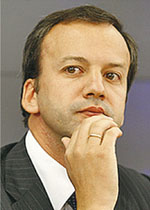
The appointment of a 40-year-old former assistant to the President of the Russian Federation did not become a sensation for the post of deputy prime minister: he appeared in all the cupa lists of candidates for the new government in all of the cupa lists. The sensation was the broad powers that Dvorkovich endowed with: curators over all industries, including industry, agriculture and fuel and energy complex, plus a number of macroeconomic and financial functions. In fact, one Dvorkovich will have to replace as many as three deputy prime ministers from the Putin government: Zubkov, Kudrin and Sechin. “This, of course, can be evaluated as an increase in the positions of the new prime minister,” says Evgeny Gontmamer from Incor. “But more like an elementary setup: it is impossible to pull such a volume of work purely physically.” Especially difficult, experts predict, Dvorkovich will have to be with the omnipotent generals of TEK, many of whom are chosen by Igor Sechin and have a direct exit to the head of state. The fact that in this field Dvorkovich, who advocates mass privatization of energy assets, will not allow to turn around, it is already clear, Pavel Kudyukin from the Higher School of Sciences notes: Rosneft, which was headed by Sichin, “foreign companies” and the power companies are urgently transferred to the category of strategic enterprises, that is, actually taken from the control of the government.
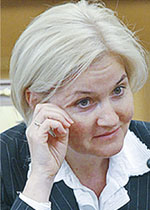
Prior to work in the metropolitan city hall, Golodets held posts of the chairman of the board of directors of the Consent Insurance Company and the President of the All -Russian Intersectoral Association of Employers - Nickel manufacturers and precious metals. It is believed that she showed herself well during the leadership of the Moscow Socialist. She is merit a sharp decrease in queues in kindergarten, ensuring electronic entry to first grade and a transfer to the principles of financial independence of hospitals. However, Evgeny Gontmamer believes that the social results in the capital are by no means unambiguous, and the reformal potential of the Golodets is not known to anyone. “Golodets never dealt with a pension system, and she does not have a clear idea of pension reform,” says Tatyana Maleva from the NISS. “She will need time to figure it out.” The decision -making mechanism is unlikely to change, but the effectiveness of their conduct through coordinating authorities will decrease. ”

The 53-year-old economist served as director of the Government Department of Economics and Finance. He returns to the ministry: during the time of Herman Gref - from 2006 to 2008 - he worked in the mayor as deputy minister. In those years, he was engaged in the preparation of long -term programs and strategic forecasts, which is considered a recognized specialist. “Waiting for new reformal impulses from him, for example, acceleration of privatization, most likely, is not worth it. It is more likely that the Ministry of Economic Development will advocate for the extension of state investment, ”the source said. Tatyana Maleva, director of an independent institution of social policy, who considers Belousov, also agrees with such an assessment, “a very competent macro economist and at the same time statesman.” It is significant that, according to leaks from the government, President Putin personally sold the candidacy of Belousov.

The appointment by the Minister of Culture of the ex-deputy of the State Duma of United Russia Vladimir Medinsky caused a noisy reaction. The point is not so much in the position itself - the Minister of Culture is the least influential figure in the government as in the personality of the appointment. Medinsky is known as the author of several pseudo -historical books exposing “myths about Russia”, a person is ideologically extremely engaged. О том, какие надежды возлагаются на нового министра частью общества, красноречиво говорит первая же акция: обращение к нему по поводу «безнравственности» постановки оперы Бенджамина Бриттена в Музыкальном театре им. Stanislavsky and Nemirovich-Danchenko. От министра-идеолога, очевидно, будут ждать решительных запретительных мер. «Мы не знаем, каким Мединский будет министром, потому что мы не знаем его в качестве чиновника, — сказал The New Times галерист Марат Гельман. — Люди очень часто меняют свою риторику, как только приходят на государственную службу. Но я боюсь, что люди, которые принимали решение (о назначении Мединского), хотят, чтобы Министерство культуры играло роль министерства пропаганды, потому что последнее занятие Мединского — это идеология, он был говорящей головой «Единой России». Он может стать более осторожным, может, не будет таким ура-патриотическим, каким был: одно дело, когда позволяет себе похвалить Сталина писатель, другое дело — министр культуры. Но то, что он мыслится как пропагандист, это очевидно».
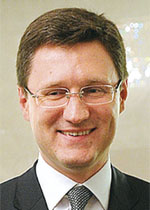
Назначение бывшего замминистра финансов 40-летнего Александра Новака на энергетику стало неожиданностью. До прихода на госслужбу (в июне 2008 года, в 36 лет, стал председателем правительства Красноярского края, а уже в сентябре получил портфель замминистра финансов в российском правительстве) трудился на различных постах заполярного филиала «Норникеля». «Выбрали нейтральную, равноудаленную фигуру: в Минэнерго надо традиционно согласовывать зачастую противоположные интересы нефтяников, газовиков и электроэнергетиков», — сообщили The New Times в одной энергокомпании. Топ-менеджер энергокомпании, работавший в правительственной комиссии по вопросам развития электроэнергетики, в которую с конца 2008 года Новак входил в качестве представителя Минфина, называет Новака «вежливым, спокойным и разумным». Бывшие коллеги по Минфину характеризуют Новака как жесткого охранителя бюджета и человека, успешно противостоявшего региональным и отраслевым лоббистам. Его назначение на новую должность в Минфине трактуют таким образом, что правительство теперь намерено жестко контролировать нефтегазовую ренту. С другой стороны, говорят, что у Новака на прежнем месте работы сложились неплохие отношения с Игорем Сечиным, который, возможно, и пролоббировал эту кандидатуру.
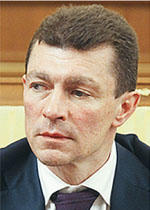
До разделения Минздравсоцразвития 45-летний Топилин выступал куратором трудовых отношений. Теперь перед ним, никогда ранее не занимавшимся пенсионной реформой, стоит задача подготовить ее к 1 октября сего года, о чем заявил уже сам Топилин. В министерстве о новом главе отзываются хорошо, отмечая, что он один из немногих замов Голиковой, кто не замешан ни в одном из громких скандалов (с томографами, деньгами страховых фондов, назначениями и снятиями главврачей). «Он хороший парень, я когда-то с ним работал, — рассказывает Евгений Гонтмахер. — Но он не специалист в пенсионной тематике. А значит, скорее всего, продолжит линию Голиковой, направленную фактически на восстановление пенсионной системы советского образца — без накопительной составляющей». «Минтруд унаследует точку зрения Минздравсоцразвития, — согласен руководитель Экономической экспертной группы Евсей Гурвич. — Но решение будут принимать президент и премьер».
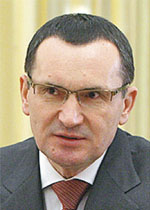
«Очень вдумчивый и разносторонний», — говорит о нем председатель общественного совета Минсельхоза и председатель правления «СоюзМолоко» Андрей Даниленко: «Ему знакомы проблемы аграрной отрасли, и он знает все экономические сложности в этой сфере». А вот для гендиректора Национального союза производителей ячменя и солода Алексея Рубцова назначение стало неожиданным, он считает Федорова в большей степени политическим назначенцем, нежели отраслевым профессионалом. Федоров — креатура Путина, уверен источник The New Times: он впечатлил президента своей работой на Народный фронт. У них даже увлечения одинаковые, шутит собеседник: немецкий язык, восточные единоборства и горные лыжи.