
Translated material
The strength of the third sector
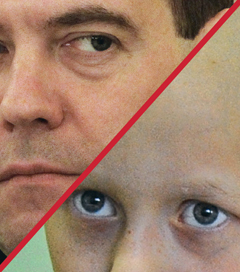
The strength of the third sector. The attitude to charity in society is changing. And not to notice it is impossible
There are almost no sectors left in the state where you can feel free, where you can, without looking back at anyone, demonstrate your preferences. Charity today provides an opportunity to show a civil position to the fullest. Want to help Pussy Riot - help the fund that supports prisoners. If you want to demonstrate your attitude to a not very qualitative healthcare system - help the fund that saves sick children or supports disabled people. You are concerned about the decline of science and culture - support poor young musicians and beginner scientists. There are still no stereotypes here, that it is good to help one, and the other is bad. But a stereotype has already appeared that you can’t help anyone.
Fashion or norm?
Ten years ago, when, in fact, Russian charity began and funds were created, we lived in a completely different way. We were poorer. Now many have free money and you can share it. But not only this is why people donate to charity. We began to ride abroad, where charity is natural, like daily brushing of teeth. We realized that charity is a niche that can be creatively and beautifully filled: from the point of view of show business, and from the point of view of commerce, and from the point of view of PR. Under this sauce, you can do a lot of interesting things: to release charitable books, to arrange handmade products. There is no better place to buy New Year's gifts than a charity bazaar.
Charity has become fashionable, and there is nothing wrong with that. We created this fashion ourselves, it helps to create a press, the Internet. And the fact that yesterday was fashion today is becoming the norm. Not everyone understands that when they clean their closet and carry things to church, even hesitation sometimes go, just leave bags at the door - they participate in charity. And when they buy a “give life” card in Sberbank and pay this card. Or throw a coin from the wallet into a box at the cash desk of a grocery store. When in the stores "Your House" we put boxes for collecting donations, in the first month the fees were small. But for the second month it brought more than 100 thousand rubles.
How it all began
When my mother Vera Millionshchikova, the chief physician of the first Moscow hospice, fell ill with her, we got sick, we created the Vera Hospice Fund with her. At that time, charity in Russia just began. There were no people with experience in this area. We all invented a bicycle. Then the funds “Give Life”, “Children's Hearts”, “Life Line” appeared. Soon, the charity collection “All Together” was organized, where at the first stage there were not seven or nine members. And we all, reading Western books, understood that the Western Fandraizing would definitely not work with us.
Then I understood that I had to ask the Western companies money, because they at least do not need to explain what the hospice is. They knew the word itself and they had no questions why help those who would die anyway.
Now, as the head of the Vera Hospice Charitable Fund for Help, I can come to any company. And in order to meet me, I do not need to look for intercession and patronage. Although today it is almost impossible to find a company that will want to say loudly and publicly say that it supports the institution where people die. It is believed that this can scare customers. Nevertheless, a fracture occurred. Two years ago, we had practically no donors among legal entities, only by great acquaintance. Today they are.
What am I saying when I go to potential philanthropists? Now, before saying what the money is needed for, I say that members of the Vera Board of Trustees play this game - Tatyana Dribich, Ingeborg Dapkunaite, Lyudmila Ulitskaya, Grigory Chartishvili helps. When you call names, the question disappears - who are you and why should we believe you? Well, in the last year, we had a partner - the Moscow advertising company that placed our billboards: “If a person cannot be cured, this does not mean that he cannot be helped.”
Speaking of the effectiveness of advertising. There is a well -known place on Rublevskoye Shosse, about which they say: but Medvedev lives there, here is the traffic police station. To the right is Medvedev, and a huge poster of our Hospice help fund hangs to the left. And when, a couple of days before the end of his stay at the presidential post, Medvedev established a special reward for good deeds and they gave me this award, I thought: the poor was to look at this poster and decided: take a reward, just take off the poster ... 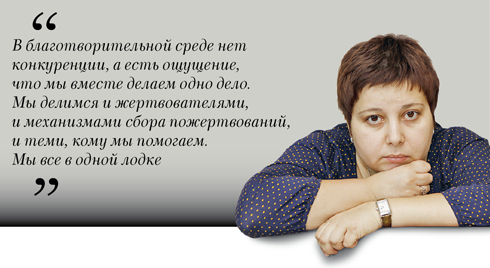
Conventionally, we can be divided into two categories. The first, as in developed countries, is the wives of wealthy husbands. I say without any skepticism, because these are women who can do a lot. Anyone who has money or power will not deny his wife like that. And there are a lot of work for women who are engaged in such funds. The fund is not a toy, this structure requires serious constant work.
The second type is enthusiasts. They can also be divided into two categories. The first is people who themselves suffered from something. Parents who have lost their child create a fund in the memory of this child to help other children with this disease. A person who is so experiencing his grief will be infinitely devoted to this work, and success awaits him absolutely. And the other type is idealists: well, what, what, do not understand that the homeless dogs also need the roof over their heads and food, that the old women are lonely, unfortunate, poor need care. And such freaks are probably the majority.
A very important thing: there is no competition in the charity environment, but there is a feeling that we are doing one thing together. Why, for example, the story with the Federation Foundation stirred all of us like that? If the activities of a new player with a resource such as GDP were transparent and it would be clear where they get the money and what they spend on, the charity community would adopt this fund with open arms. If we are addressed by a person whom we cannot help, we rejoice that there is another fund that will definitely help him. But I do not know who will help in the federation fund. Therefore, the emergence of this fund was alarmed by the charity community. Once again we discussed with each other that we have common interests, so we share the sacrifice and mechanisms of collecting donations, and those to whom we help. We are all in the same boat.
By joining efforts, we can fight for specific changes that are important for the case. For example, for amendments to the 83rd Federal Law * * according to the 83rd federal law, hospices received state-owned institutions that are completely on state financing. They do not have the right to directly receive charitable assistance. Bladers must direct this assistance through the city budget. . To ensure that state -owned institutions have the right to direct and unhindered receipt of charitable assistance (at the same time, with enhanced control by the state, how these charity funds are spent), I think we are able to. There are other specific things that you need to argue with the state and achieve the right decisions.
After all, something has already managed to achieve. Construction of the children's oncgetological center. Rogachev; the import of orphan drugs necessary for the treatment of rare diseases, which used to be difficult; Changes to the Tax Code for individual individuals. This is done by endless work, whining, squeaks, hysteria - who can - precisely charitable foundations. This is the third sector, we are strength, we have money and will still ...