
Translated material
Novocherkasskoye massacre
50 years to shoot the demonstration of workers
Novocherkasskoye massacre. 50 years ago in Novocherkassk they shot a demonstration of workers outraged by raising food prices and a decrease in salaries. Dozens of killed and wounded, seven executed, more than a hundred convicts for a long time and almost 30 years of silence of the tragedy - the result of dragon measures against any civil protest in the USSR. It is symbolic that exactly five decades later, already in the post -Soviet country, strict prohibition measures were taken against street protest. Does the authorities think about the consequences?
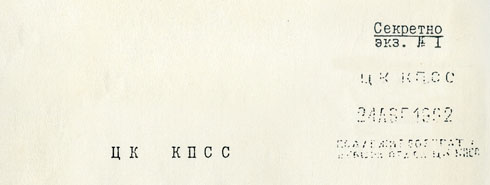
We report*that August 20 S.G. In the mountains. The Novocherkassk of the Rostov Region ended the open trial in the case of the organizers and the most active participants in the riots that took place on June 1-3, 1962.
At the trials of the process there were about 5,000 public representatives, mainly workers in industrial enterprises in Novocherkassk. The process was organized in an organized manner, aroused great interest both from the courtroom, and among the city’s population.
All the defendants, with the exception of one, found themselves guilty and repented of committed crimes.
In court, about 70 witnesses were interrogated, who fully confirmed the testimony they given at the preliminary investigation and exposed the criminal activity of the defendants.
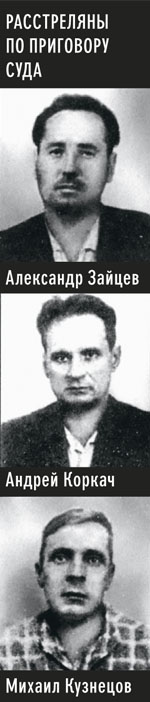
Seven criminals: hares, moprouses, Kuznetsov, Cherepanov, Korkach, Sotnikov and Shuvaev - were sentenced to execution, the rest - to the long period of imprisonment, from 10 to 15 years.
The court verdict was met by the prolonged applause of the crowded hall and found a wide response and approval of the working people of the city.
So, the melting of the cast -iron workshop of the electric locomotive plant Kashin, after the announcement of the sentence of the execution of the seven defendants, said: “Dogs Dog Death!” The spill of the steel workshop of Kopylov, approving the verdict, said: “It is not comprehensible to the mind what they wanted and what they did. They all got what they got. " The working factory of the permanent magnets of Kochetov, discussing the results of the trial with his comrades, said: “The court went correctly, figured out objectively, the verdict justified and fair.” The worker of construction department No. 6 Knyazev, regarding the sentence, said: "They gave bastards well so that it would be disgraced to others." Personnel worker - the Kazyukalo railwayman, after listening to the verdict, said: “Vile criminals! They went against their brothers and fathers. It is right that they will be shot. ” The workers of the Nikolsky Vagan, Butsev, Lapko and Andreev plant, having learned about the verdict, approved him, while Andreev said: “The verdict was pronounced the correct one, there are such and need to be shot.”
The verdict is also approved by employees of the city institutions, researchers and teachers of educational institutions. So, for example, a researcher at the Polytechnic Institute Zaudin spoke in relation to the convicts: “This is the scum of society, they committed serious crimes, and they must be shot.”
The open trial had a great educational influence on the population of the city.
At the request of the workers at the assembly shop of the electric locomotive plant, the process of the process was discussed. At the same time, the painter Vilyaeva said: “They did the right thing that they had arranged a demonstration process, let people know who was singing in the riots. Such people do not cause sympathy at all. These are the deviations of the human race. ”
If previously some people did not understand the events, now the inhabitants of the mountains. Novocherkassk figured out their essence, realized that the riots were provoked by criminal-hooligan elements, and indignantly condemned the criminal actions of bandits and hooligans. 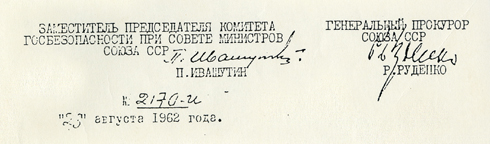
*The style of the document is completely preserved. - The New Times.
On June 1, 1962, “in order to overcome temporary lack of food in the USSR”, the prices of milk and meat were raised by a third. But it so happened that just on the same day, June 1, the director of the Novocherkassk electric locomotive factory Kurochkin, by a third, reduced the prices for workers. This coincidence had far -reaching consequences. The workers refused to go to the workshops. The director came to the striking. To the question: "What should we live on?" - He answered: "There is not enough money for meat - eat pies with Liver." 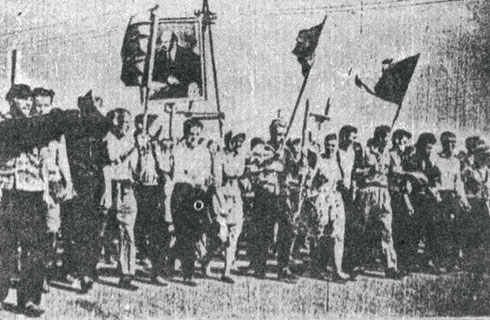
Riot
This phrase quickly dispersed throughout the city. The unrest began. Khrushchev’s portraits * * Khrushchev Nikita Sergeyevich began to be thrown into the fire, at that time the first secretary of the CPSU Central Committee, the chairman of the Council of Ministers of the USSR .. There was a railway line next to the plant, stopped the Rostov-Saratov train, someone wrote: “Khrushchev for meat”. The next day, on June 2, the thousands of workers of several plants with a portrait of Lenin moved to the city center to the building of the city party committee. People demanded that the authorities come to them for conversation. Instead, through megaphones, the manifestants began to be called to order. It lifted them even more. The crowd burst into the building, began to break furniture, beat the glass, tear off the portraits of party leaders from the walls.
The soldiers gave the first salvo into the air. People recoiled, but someone shouted: “They shoot idle. They don’t dare to shoot at us, ”and the crowd closed again.
Remmed.
24 people were killed (among them one schoolboy), 58 - injured.
Anyone who specifically gave an order to shoot at unarmed people is still not officially named. However, much is already known. The commander of the North Caucasus District was then General Issa Pliev * * Army General, twice Hero of the Soviet Union (1944, 1945) .. He was the deputy Hero of the Soviet Union, Major General of the armored troops Matvey Shaposhnikov. Here is his story.
“About eleven hours, the factory gate swung open, and a crowd of seven to eight thousand people headed towards Novocherkassk. I went to the workers and asked: "Where are you going?" One of them replied: "Comrade General, if the mountain does not go to Mohammed, then Mohammed goes to grief." By the radio, I reported to General Pliev that the workers are going to the city center. "To detain, prevent!" - I heard Pliev's voice. “I don’t have enough strength to detain seven to eight thousand people,” I replied. “I am sending tanks at your disposal. Attack! " - Pliev’s team followed. I replied: "The commander is a TOOVAR, I do not see in front of myself such an enemy who should attack with our tanks." Pliev abandoned the microphone irritably. "
General Shaposhnikov wrote: “The party was turned into a car that is controlled by a bad driver, often driving a street traffic. It is high time from this driver to take away the rights and thus prevent a catastrophe "
“Bringing the unkind, I tried to overtake the column on my gazik. I came across General Parovatkin, whom I sent before Pliev’s oral instructions.“ The commander ordered the use of weapons, ”he told me.“ It cannot be! ” - I exclaimed, Parrovatkin handed it to me, and I saw: “Use the weapon”. Judging by the stories, there were more than 40 people. The flower vase hit the head, his brains instantly scattered a vase in the store. They say to him: "Look, a bastard where you are standing!"
  |
Sanction for execution
When unrest began in Novocherkassk, Anastas Mikoyan and Frol Kozlov * * Anastas Mikoyan, a member of the Presidium of the CPSU Central Committee, arrived there, subsequently chairman of the Presidium of the Supreme Soviet of the USSR, flew there by order of Khrushchev. Frol Kozlov is a member of the Presidium of the CPSU Central Committee, secretary of the CPSU Central Committee .. Mikoyan spoke on the radio, but the excitement continued. On the same day, negotiations between the authorities with a delegation of the rebels were held. The fact that the rebels dared to enter into negotiations with the authorities was later regarded as a serious, aggravating crime. The head of this negotiation group Boris Mokrousov tried to explain the hopeless position of the workers and the fact that no one encroached on Soviet power, and the shooting was inadequate. But the indictment said that, "acting as a representative from bandits and hooligans, Mokrousov in conversations with the leaders of the CPSU and the Soviet government who arrived in the city of Novocherkassk boldly and defiantly, in an impudent form."
Much later, after the death of Kozlov, trying to wash himself from spilled blood, shove the blame for himself, Mikoyan will say: “Arriving in Novocherkassk and finding out the situation, I realized that the workers' claims were quite fair and discontented ... While I went to speak with strikers and performed on the radio, he, Kozlov, called the panic and sowed a resolution on permission. The use of weapons, and through Khrushchev received a sanction for this "in case of emergency." The "extreme" determined, of course, Kozlov ... "
After the Novocherkassk events, Pliev was sent to command to Cuba, Shaposhnikov became the acting commander of the district. But the recent tragedy did not give him rest, and he sent several letters to different addresses, signing them with the pseudonym “New Vissarion”. He wrote: “... the party was turned into a car that is controlled by a bad driver, often drunk violating the rules of street movement. It is high time from this driver to take away the rights and thus prevent a catastrophe. ” "
Mikoyan will say later: “Why did Khrushchev allowed the use of weapons? He was extremely scared by the fact that, as the KGB said, the strikers sent their people to neighboring industrial centers ... "
“The author was found, accused of anti-Soviet propaganda, but they decided not to lift the noise, and four years later, in 1966, already under Brezhnev, Matvey Kuzmich Shaposhnikov was resigned and excluded from the CPSU. Later in his diary he wrote:“ Personally, I am far from melting the grievances or anger at the bearers of unlimited arbitrariness. I only cure it about what I do not cure I knew how to really fight this evil with arbitrariness and tyranny, I did not have the ability to conduct a mortal battle.
Dancing on the blood
There is several evidence that one of the officers, having received an order to shoot at the crowd, refused and shot himself right in front of the system. Legend? Myth? Who knows. Only people really wanted to believe that there were military people who did not lose shame and conscience.
After the execution, trucks with leaning sides were adjusted to the square and hurriedly threw corpses there. They relied them on five abandoned cemeteries of the Rostov region and secretly buried. In a hurry, they often buried people into other people's graves. 76 police officers and three employees of the Novocherkassk registry office gave a subscription to non -disclosure of the burial places. Not a single deceased was given to relatives for burial. In the evening, fire trucks drove off to the square, blood with the pavement was washed off with the Brandspoits, but brown spots remained on the asphalt for a long time. So, on these spots, by order of the city party committee, they arranged the evening of dancing for young people on another day - "to reassure the inhabitants of the city." The pop masters were hastily called from Moscow, they explained to them: it is necessary to immediately hold a “concert of friendship of the working people and the military”. One of the participants in the concert later recalled: "There were only frozen faces around, some from grief, others from guilt."
The letters leaving from Novocherkassk were specially visible: they should not have a word about the execution of a peaceful demonstration. From the people who left Novocherkassk they took a subscription that they would be silent. Local newspapers did not give a line more so much. On June 2, the regional newspaper Hammer reported: “N.S. Khrushchev was present at the grand opening of the Palace of Pioneers and Schoolchildren in Moscow, made a trip on a roadway along the territory of the park ... ”The city newspaper“ The Banner of the Commune ”exclaimed on June 5:“ The working people of Novocherkassk approve of measures taken by the party and the government for the rapid growth of the production of livestock products ... ”
Repression
Fear and lies permeated the entire leadership of the country from top to bottom. Later, Mikoyan will say: “Why did Khrushchev allowed the use of weapons? He was extremely scared by the fact that, as the KGB said, the strikers sent their people to neighboring industrial centers ... "
But the whole top of the country was mortally frightened. All all the time. This fear could not but give rise to the most cruel repression. The trials began. More than a hundred people received from 10 to 15 years of camps. On August 20, 1962, the Supreme Court of the RSFSR, chaired by L.N. Smirnova with the participation of the prosecutor A.A. Kruglova sentenced seven "participants in the riots" to execution. This new blood was also added to the blood, spilled on June 2 on the city committee of the party.
As usual with us, none of the country's leadership could remain clean, unsuccessful. It was necessary to tie everyone with circular guarantee. On the sidelines, certificates of measures taken in connection with the Novocherkassky events are approved by the members of the members of the Presidium of the Central Committee of the CPSU Voronov, Brezhnev, Kosygin, Shelepin, Kuusinen, Ilyichev, Suslov, Mikoyan, Polyansky, Grishin. There is only a signature of Khrushchev himself. However, there is a postscript by his assistant: “Comrade. Khrushchev N.S. read. 08/26/62 V. Lebedev. " That is, he read six days after the execution of the sentence, but did not sign. Why? I didn't want to leave extra written traces? But by the way, what's the difference: without his go -ahead, there could be neither the execution of the demonstration, nor a judicial sentence.
The last general prosecutor of the Soviet Union was Nikolai Trubin. When he only started his duties in 1990, the author interviewed him. The prosecutor’s office, Trubin said, should not succumb to any political influence, her case to protect the law and nothing more. The interview was called "I am a lawyer, not a politician." Perhaps we have never heard such bold words from the Prosecutor General of the country. However, at the same time, in 1990, 28 years after the Novocherkassky events, a document appeared in the press, justifying the execution of the participants in that demonstration, and this document was signed by Nikolai Semenovich Trubin. 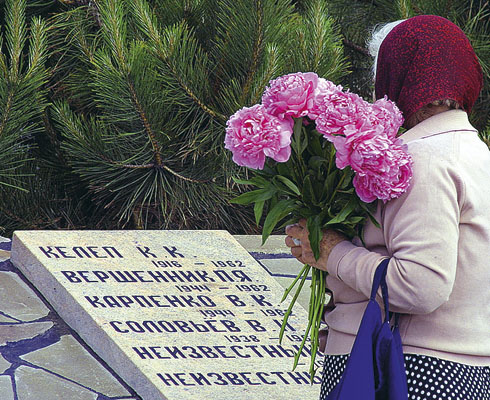
When a year later the USSR ceased to exist, and the post of allied general prosecutor also disappeared with him, the author called Truubin and asked if he was now ready to tell what made him sign this document after so many years. “Early,” answered Nikolai Semenovich, “the deadline has not yet come.” - "Why? It seems that you are no longer risking. ” - "Do you not understand?" He asked.