
Translated material
Leaders "blue"
Officials on the way of Russians to Europe
The leaders of the "blue." At the Russia-EU summit in Strelna near St. Petersburg, Vladimir Putin warned the Europeans: there will be no visas for Russians-there will be no partnership of Russia with the European Union. The stiffness of the statement of the old-New president struck many: his predecessor tried to be more delicate. The New Times tried to understand who is actually guilty of the visa problems of Russians and what Putin blames for Europeans 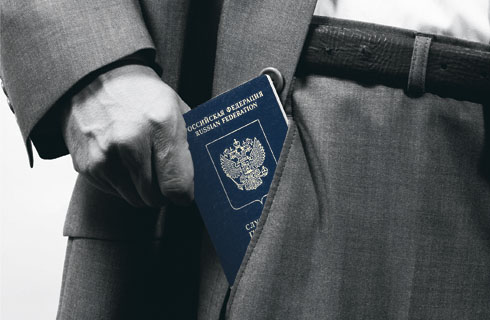
In Strelna, Putin reported the Europeans for bureaucracy: it turns out that the journalists of the Kremlin pool received only one -day visas to cover his recent trip to Germany and France. “We (with France President Francois Hollande.-The New Times) came to the press conference quite late, they had a threat that the visa would end. Did they need to get up and leave? " - said Putin. The reproach, in fact, was addressed not only by the Jose House Manuel Barroza, Herman Van Rompey and other EU leaders, but also to those citizens of Russia who still have not realized the truth known to the Kremlin: these are European officials, the West, against the visa-free trips of Russians and do not get tired of repairing our obstacles, but we are always “at least tomorrow” ... “We were unpleasantly surprised by it ... Demarch, ”a high -ranking European official admitted in a conversation with The New Times. “The fact that your journalists received only one -day visas also seems to us an incredible fact, although this is the competence of the embassies of France and Germany, and not the European Commission.” According to the interlocutor of the magazine, there was still only one case when, in response to a request from the Kremlin press service, a multiple Schengen visa was issued: “But neither Putin nor his assistant Peskov in Strelna said this. But getting a multivisa to Russia is much more difficult. In the year before last, a senior official of the European Commission, who often makes trips to Russia, applied for a multiple visa and received it only for the period of the first business trip - for three days. ”
Demarche
The fact that Vladimir Putin is ready to become a “heavy artillery”, clearing visa barriers with the West with the help of propaganda volleys, became clear a few days before the summit in Strelna. On May 29, Yuri Ushakov, who replaced Sergei Prikhodko in the role of the presidential foreign policy speaker, announced the readiness of Moscow “generally switch to the completely visa -free regime of mutual trips” with the United States - and “business behind our American partners”. The United States is because Ushakov, the ex-service in Washington, was secretly instructed to oversee the implementation of the agreement on the simplification of visa formalities with America, concluded in November last year and to which Moscow is now “satisfied”. But for some reason Ushakov did not say anything about the state of the negotiations in the simplification of the visa regime with the European Union, which is conducted by the Ambassador for special instructions of the Russian Foreign Ministry Anvar Azimov. But on the eve of the Russia summit, the EU himself ordered at least something to say about it. "
In the year before last, a senior official of the European Commission applied for a multiple visa to Russia and received it only for three days
““ After a meeting in Warsaw in October, we congratulated each other. We took an important step towards visa -free trips - we agreed to expand the simplified visa regime (previously used officials, businessmen and journalists. - The New Times) due to new categories of citizens, graduate students, young specialists, etc., who could now get a multiple visa in the EU in the EU in the EU in the EU in the EU in the EU in the EU in the EU in the EU Notifying order, ”says The New Times, on anonymity, a high -ranking European diplomat close to negotiations. 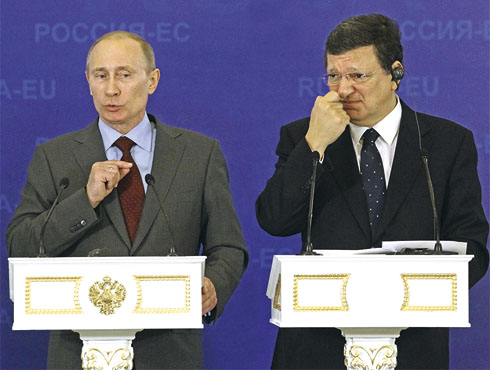
The surprises began when our Midovites raised the question of a visa-free entry into the EU for owners of service blue passports, and this is the vast majority-middle-level officials, managers, security officials, and the administrative and technical personnel of the special services, to whom the blue-legged Passportin is still due to the decree of the CEC and the Council of People's Commissars of 1925! “The persistence of the Russian side in this matter found us by surprise, we clearly made it clear to the Russians that this is slowing down the whole process,” said the European interlocutor of The New Times. - But in December 2011, before the very Brussels summit of Russia - the EU, Moscow postponed the final meeting on negotiations on the simplification of the visa regime. And then she transferred her in January. ”
In other words, the Russian Foreign Ministry decided to firmly insist on visa preferences for officials to the detriment of ordinary Russians, who now, apparently, will not soon wait for a facilitated entrance to the Schengen countries.
Bargain
Despite the designated dead end in negotiations, in February 2012, Ambassador Azimov announced the intention of Russia to “sign an agreement on the cancellation of visas with the European Union in 2013” so that the “visa-free regime entered into force since 2014”. “It was a very strange manifestation of optimism,” notes the interlocutor of the magazine in the European Commission. “Given the slipping of negotiations on simplifying the visa regime, we should now concentrate our efforts on the implementation of the“ Road Map ” * * agreed at the Russia -Enter in December 2011, a document called“ Joint Steps to the Blessed Regime ”. And do not establish artificial terms. ”
It seems that Moscow not only costs its own, but also enhances pressure. In the spring of 2012, another one unexpectedly added another to the back of the blue passports: Moscow warned Brussels about the intention to introduce a visa regime for air vessels * * * according to the Chicago Convention of 1944. Civil aviation crews are exempted from visa formalities, but for Russia the possibility of visa control was stipulated in the document, arriving from the Sungen space: the first Visa sanctions will feel the Czech and Portuguese airlines.
“Moscow seems to have decided to bargain. Well, we will be forced to introduce symmetrical measures. Until July 1 or later - it is not so important, the climate in negotiations has changed for the worse, ”the European official notes.
Arguments
The Midovites with whom the New Times managed to talk: the proposal to establish a visa -free entry by the owners of the blue passports does not infringe on anyone's interests: “They themselves all the time say: let's move to the cancellation of visas gradually, we will start with the“ verified contingent ”, so where they are“ checked ” - we have mainly sent from the blue ones. state details, reliable disciplined people. "
Another argument of our diplomats: already now owners of blue passports can go without visas to three EU countries: Bulgaria, Hungary and Cyprus, and Hungary in the Schengen zone. And what? Nothing terrible happened? And finally, the European officials themselves, who have a special Laisser-Passer, would receive the right to free entry into Russia in return.
However, Europeans are parrying: the Russian approach is “imbalanced” and is fraught with serious risks. What do they mean? According to unofficial data, in Russia - 50 thousand owners of blue passports, of which 10 thousand are the latest, with biometric data. European officials, who may need frequent entry into Russia, will barely get more than a hundred. In most European countries, the account of the owners of blue passports also goes to hundreds. “In my native country, these are parliamentary deputies, officials in the rank of deputy minister plus a very small number of civilian and military employees who do not have green diplomatic dispenses,” the Danish Representative Office of the European Commission in Moscow, the Danish Sören orrius, tells The New Times. - About the same picture in other countries. Moreover, our officials use it with blue passports only for official trips, for all others they take ordinary passports with them. ” In any case, the parity does not work. "
In negotiations with the EU, the Russian Foreign Ministry decided to firmly insist on visa preferences for officials to the detriment of ordinary Russians, who now, apparently, will not soon wait for a facilitated entry into the countries of the Schengen space
“But Europeans see the main problem in another.“ If there is a certain amount of money, to any foreigner in Russia, including illegal immigrants who arrived, for example, from Central Asia, to receive a Russian passport, including a general citizenship, is not a problem, the Russian press itself writes about this, ”Cornelius Okhman, chief expert on the Burteli Foundation, shares his fears of the New Times. (Germany), if tomorrow in the world there will be blue passports, then the question will only be taken to the volume of this amount of money. ” thousand rubles.
Versions
The NEW Times failed to get through to the Azimov ambassador. However, his colleagues lower than negotiations with the EU on visas made an interesting recognition: “The question with blue passports was not initially considered by the MID as a fundamental: we always had the opportunity to agree with the EU countries on a bilateral basis.” At least this means that the installation of “standing to the last” finally took shape already during the presidential campaign in the Russian Federation and was launched by diplomats from above. An interesting coincidence: just at that time, the parliament of a number of Western countries began to discuss the issue of imposing visa sanctions against Russian officials from the Magnitsky List, and the Kremlin, on the contrary, defiantly took the defendants in this list for dense custody. The irony is that, judging by the official status, many of them should have just a blue passport. Moscow could well intentionally go to the “passport clinch” with Europe, using it as an element of the campaign “with the policy of sanctions, restrictions and interference in internal affairs”, which the West supposedly leads. And the beginning of this campaign is directly said in a joint statement by Russia and Belarus, adopted during the recent visit of Vladimir Putin to Minsk. Do not want to let our officials without visas? Get visas for pilots of your liners. Introduce response measures-get something else. Bash on the bash. Eye for the eye. Another diplomacy of Putin's Russia is uninteresting and incomprehensible.
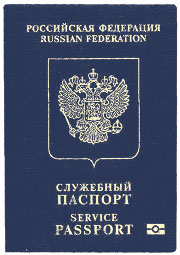
They were introduced in the USSR by a resolution of the CEC and the Council of People's Commissars of June 5, 1925 for issuing “the following to the official positions of the drug addicts, as well as to commemorated employees of drug addicts and other persons on a special decree of the Board of the People’s Commissariat for Foreign Affairs”. Today, the service passport is issued: Mid-level civil servants (official categories B and C), accompanying them on business trips outside the territory of the Russian Federation to employees of administrative and technical services and special services of the Presidential Administration, apparatuses of the Federation Council and the State Duma, the Government of the Russian Federation, the constitutional, supreme and arbitration courts; employees of the Central Bank, military personnel serving outside the territory of the Russian Federation, full-time employees of administrative and technical services of diplomatic departments and consular institutions of the Russian Federation, as well as representative offices of the Russian Federation under international organizations. Sempenser members of a business person of the Russian Federation can be issued a service passport if the business trip exceeds one year.
Visa -free countries for Russians
Abkhazia, Azerbaijan, Albania, Antigua and Barbuda, Argentina, Armenia, Bahami Islands, Barbados, Belarusia, Bosnia and Herzegovina, Botswan, Brazil, Venezuela, Vanuat, Vietnam, Gayan, Guatemala, Honduras, Gong Kong, Georgia, Georgia, Gauam, GUAM, GUAM. Dominican, Dominican Republic, Israel, Kazakhstan, Kyrgyzstan, Colombia, Cuba, Laos, Macedonia, Malaysia, Maldivsky Islands, Morocco, Micronesia, Moldova, Namibia, Nicaragua, Niue, Norway, Cook Islands, Peru, Samoa West, Salvador, Swaziland, Northern Mariana Islands, Northern Mariana Islands Saint-Lusia, Seychelles, Serbia, Tajikistan, Thailand, Tunisia, Turkey, Uzbekistan, Ukraine, Uruguay, Fiji, Philippines, Croatia, Montenegro, Chile, Ecuador, South Korea
Countries where the visa is placed on the border
Bangladesh, Bahrain, Bolivia, Burkina-Faso, Burundi, Haiti, Gambia, Gan, Djibuti, Egypt, Zambia, Zimbabwe, Indonesia, Jordan, Iran, Cabo-Verde, Cambodia, Kenya, Cyprus, PRC, Komorsky Islands, Kuwait, Livan, Mavriky, Madagascar, Madagascar, Madagascar, Madagascar. Macao, Mali, Mozambique, Myanmar, Nepal, Palau, Pitcarn, San Tome and Principia, St. Vinadines and Grenadines, Syria, Surinam, Tanzania, East Tom, Togo, Tuvalu, Turkmenistan, Uganda, Central African Republic, Sri Lanka, Ethiopia, Yamaic
Countries with special or lightweight entry conditions
Albania, Bahrain, Qatar, China, Liberia, Mexico, Rwanda, Cent-Chits and Nevis, Trinidad and Tobago
Countries with a minimum visa execution and a minimum set of documents for a visa
Guinea-Bisau, Gayana, Cyprus, Kuwait, Mongolia, Myanmar, Niger, the UAE, Oman, Singapore, Finland, Sri Lanka
Countries with which agreements have been reached and intergovernmental agreements have been concluded on the cancellation of visas
Poland (an agreement on the abolition of visas for residents of border territories: the Kaliningrad region of the Russian Federation and the north of the Pomeranian and Varminsky-Mazur Voivodes of the RP)
“Russia is flooded with hundreds of thousands of illegal migrants. So far, double control exists for trips to the EU (receiving a foreign passport and receiving a visa, and this, as you know, depends entirely on the purpose of the trip and the personality of the citizen), the number of migrants who seek to take control of a Russian passport in one way or another is under certain control. If the visas is canceled, the Russian passport will become an end in itself for a huge contingent who illegally entering Russia. In the presence of such motivation, tens of thousands of illegal immigrants with huge money (in particular, drug trafficks or their couriers) will pour in the country, which will turn Russia into the main transit drug -crown from Afghanistan to the EU, which is partially observed now. It is very difficult to interfere with such a development of events. Moreover, given the fact that the country's leadership recognizes a very high level of corruption.
The fact that Russian leaders are so strongly concerned about the abolition of visas is more likely status than purely practical. Those who are associated with Europe and often happen there for professional necessity do not have problems with obtaining long -term visas. I think time will put everything in its place. ”