
Translated material
The role of intellectuals in protest movement
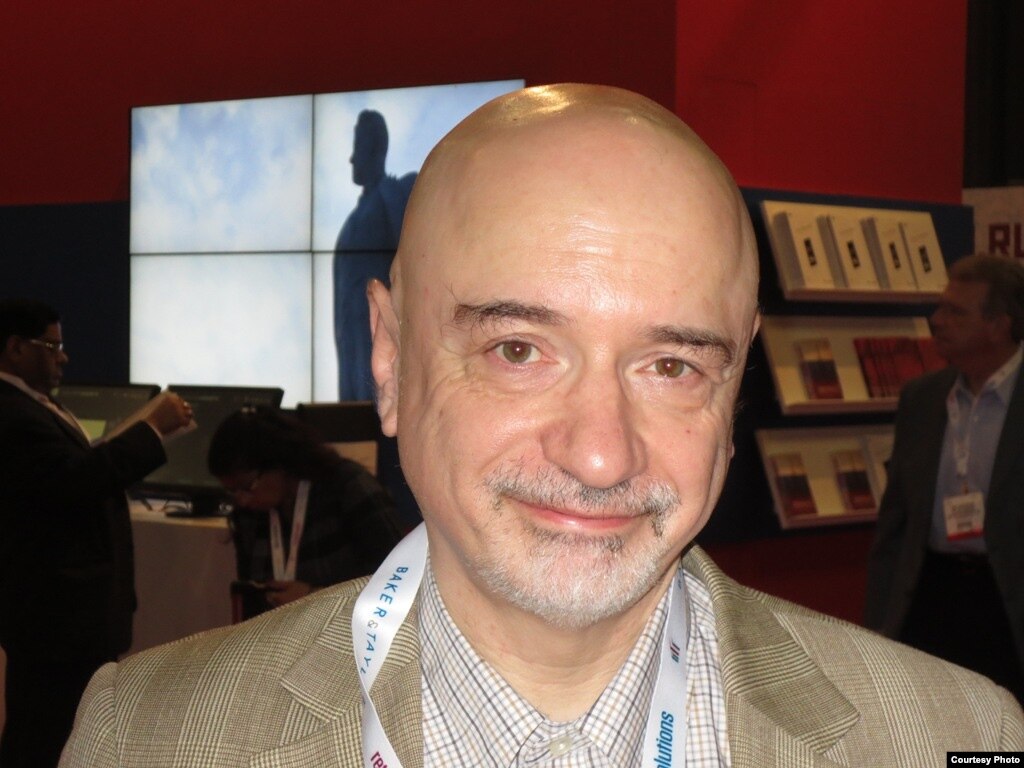
Alexander Genis: After a long break, our New York edition was visited by an old friend of the American hour, a participant in many programs, our frequent interlocutor on the air-professor of emergency university Mikhail Epstein. Many years ago, I found a definition for his multifaceted activity: “Master of poetic thought”. (So called Walter Benjamin). In this capacity, I want to present to our listeners Mikhail Naumovich, with whom we will discuss a burningly relevant topic: the role of an intellectual in political protests.
Michael, we have been talking with you on the radio for many years, and we usually talk about quite abstract things or quite abstractly about non -abstract things. But today I suggest you talk about what is specifically and relevant. We live in a turbulent time, and Russia is experiencing the next stage of protests. Everyone is talking about this, and we cannot be silent. Although every time this happens, I think with some shame, and sometimes in horror about how it is all strange. How strange it is to admire the painting or aesthetic cinema, when somewhere demonstrations, stormy protests. How is it all away! I remember that in 91, during the coup, I just did not know what to say in the microphone, because it seemed to me that everything was useless, everything was pointless. And then I read that Tsvetaeva wrote a play about Casanov in 1918. I thought that there was some right position in this too ...
But this is the lyrical preamble. I want to discuss this question with you: that humanitarian thought can add how it can be used, how it can help what is happening in Russia, in its political life.
Mikhail Epstein: When I speak to the American or English academic audience and I explain to some humanitarian topics, say, linguistics, philosophy, that they should have some kind of practical measurement in their technology, as a rule, they ask me questions: how does this relate to politics, but how does it correlate with the issue of power? This is what the American academic intelligentsia is most interested in, having read Foucault and Derrida.
Alexander Genis: Still. The word “power” is the key word of postmodernism.
Mikhail Epstein: Yes. And here you have to either twist the soul, which I do not want, saying that it contributes to something politically progressive, or drop myself in the eyes of colleagues, saying that this has nothing to do with the question of power and politics. But recently I found another move, and it is that the question of power cannot be reduced only to political power, that there are many authorities in this world. There is the power of music, there is a power of words, colossal power that is characteristic of poetry (Orpheus with music and word fascinated its listeners), there is the power of ideas and concepts that grow the power of science in our society, is the power of religion, and so on. And politics is only one small sector in this circle of authorities.
Alexander Genis: Doesn't politics unite these authorities? What is a policy? This is from the word “policy”. The policy is always a kind of unification, and politics is that they will unite people, allows them to live together. But are all these authorities that you described, I will say as a devil’s lawyer, are not included in the concept of politics? Are poems or music, like Plato, aren't they included in this state, into this idea?
Mikhail Epstein: This is really a devilish, so to speak, question. The bottom line is that there is a concept of culture or civilization (but I like culture more). What is a policy? This is one of the manifestations or units of culture, along with religion, morality, science, literature, language. And when politics claims to usurpation of all other branches of culture, this is called totalitarianism. Totalitarianism can be dominant, as in the Soviet Union, a totalitarian system of power, and maybe such a revolutionary radicalist one. Everything that is outside the policy should be marked. Tell me with whom you are, “with whom are you, masters of culture”, go to the barricades, and the like. This is also totalitarianism.
Alexander Genis: Actually, the Russian avant-garde was prone to such positions, I mean the Russian art avant-garde.
Mikhail Epstein: You know, it is not known what prevailed there, either the desire to politicize art, or aesthetizing policy.
Alexander Genis: And this is one and the same, these are interpenetrating processes. I often thought that if Malevich was given power, it would be even worse.
Mikhail Epstein: Wagner is considered the founder of this idea, in general - the state as a work of art.
Alexander Genis: He had in mind not only the state, but perceived all his life as a work of art -Gesamtkunstwerk, a total work of art - but this is precisely the thought that seduced Hitler from Mussolini.
Mikhail Epstein: Still, between Wagner and Hitler or Wagner and Stalin there is a significant difference. In the case of Wagner, it was an opera, it was aesthetizing politics.
Alexander Genis: ... Opera, not operas.
Mikhail Epstein: And in the time of Stalin it was a politicization of everything, including literature. Any of these Culture's Calist is fraught with the danger of totalitarianism. If a religion, which is trying to subjugate everything, including politics and art, then this is called fundamentalism or clericalism, if art is trying to fix it, then this is aesthetics. Aesthetics are attractive in the sphere of aesthetics, but when morality and everything else obey the laws of aesthetics, this is a vile distortion of human nature. Or - Scientism. Science is a wonderful thing, but when science claims to explain everything, it degenerates into scentism. The same with moralism. A person cannot without morality, but when everything comes down to moral issues and the artist orders to do this or that in the name ....
Alexander Genis: Protect good at all costs.
Mikhail Epstein: Yes, if at any cost, then this is called moralism.
Alexander Genis: As Bakhchanyan said, "by hook or by crook, living is not a lie." Michael, what does this have to do with what is happening in Russia today?
Mikhail Epstein: There are people called to this, there are professionals in this area, and I believe that the task of the intellectual ... How do I define the task of the intellectual? The opposite is how Foucault did it. Foucault has such an idea in one interview. The task of the intellectual is determined firstly, his attitude to the dominant political forces, whether he is an intellectual in the service of the bourgeoisie or the proletariat, secondly, his attitude to the means of production and to production relations and, thirdly, the same. That is, both in the first and secondly and thirdly, the intellectual will determine their political and social identification.
Alexander Genis: In principle, this is Marxism.
Mikhail Epstein: This is Marxism, which is common, as is characteristic of the Western academic community, in breadth - from class identification to other identification: sexual, gender, sexual, racial.
Alexander Genis: One way or another, determinism is present.
Mikhail Epstein: I believe that the task of the intellectual is the exact opposite. This is a representative of the universal, and in this sense critical of any particularity, to any race, to any party, to any class. I call it critical versatility. The fact is that universality, as such, was subjected to strong criticism from the point of view of Foucault, from the point of view of Marxism. Say, there is no abstract humanism, there is only a class approach.
And to some extent, the versatility of such a positive type, which says that this is universal, these values are absolutely universal, it deserves such criticism.
She deserved criticism from the point of view of specific suffering, in need.
Alexander Genis: This is what postmodernism did with the ideas of education, saying that they led to fascism. But without the ideas of education it would be, perhaps, even worse
Mikhail Epstein: I believe that this is a lot of stupidity to believe that the enlightenment is to blame for Auschwitz.
Alexander Genis: I also think that this is a fair amount of stupidity. Although we have once published in America the book “Russian Postmodernism”, but since then I have much doubted all these ideological constructions.
Mikhail Epstein: I do not think that this is the main idea in postmodernism, this is such a peripheral thought, but many Western intellectuals, writers in the 30s believed that Stalin is an enlightenment, this is the embodiment of a universal mind.
Alexander Genis: Of course! Bernard Show died, looking at the portrait of Stalin, and Sartre believed that the embodiment of reason was Mao Zedong.
Mikhail Epstein: And now the postmodern generation has already begun to identify fascism or communism with universality already under a negative sign, under the sign minus. But this is the same heritage of blind Western intellectuals, which for some reason equalized universality with Stalinism. What is universality there, when it comes to the victory of one class, one race or one nation, if we talk about fascism and Nazism.
Alexander Genis: So what should the intellectual do in your opinion?
Mikhail Epstein: I believe that the task of the intellectual is to affirm the versatility of not a canonical type, but a critical type. There is no such positive versatility, but there is a versatility that is manifested in our feeling and our awareness of the failure of any culture, any identification. It is like catapathic theology and apophatic theology. That is, one ideology says that God is this and that, and the other speaks than God is not. The universality is critical of what is not universality, it criticizes any partiality.
Alexander Genis: Do you know such an intellectual?
Mikhail Epstein: It seems to me that any intellectual strives for such critical universality if he realizes his role as an intellectual.
Alexander Genis: I'm talking about surnames. For me, an example of an intellectual in political life, especially in such stormy eras as ours, is Vaclav Havel. It seems to me that this is the same person who was supposed to govern the state - and controlled it. I remember Tatyana Tolstoy and I decided how to make Russia happy. They decided that for this Sakharov was supposed to be president, and Gaidar - Prime Minister. It remains only to revive them and persuade ...
Please tell me, how do you feel about the role that intellectuals in modern Russia play in a political struggle? We see that the main characters unexpectedly again were writers, television presenters, like Partenov, or musicians, like Shevchuk. These are the most authoritative people - Akunin, Dmitry Bykov. It does not remind you of this 60s, and then the 90s, when the poet in Russia was more than the poet? Each time the same story is resumed.
Mikhail Epstein: This is just Gavelovskoye, and it is extremely pretty to me.
Alexander Genis: But I am not very, because Gavel came to politics, but here, in my opinion, politics comes to poetry. And I remember with horror that in 91, when the power was in the hands of liberal forces, and these were poets - Yevtushenko, all these deputies, they were all our friends, these are people of literature, culture.
Mikhail Epstein: It was under Gorbachev, but no longer under Yeltsin.
Alexander Genis: Good, but it was with them that perestroika began. And what did they do? They gave power to those to whom she belongs today. So, they could not implement it in politics, convert it to politics.
Mikhail Epstein: So it was with the Bolsheviks.
Alexander Genis: Whether this situation is not repeated, does this mean that the process of transition from the poet to presents, from the playwright, as it was with the Gale, to the president, he did not occur. And this, in my opinion, is the most important-there are no political forces that could turn the energy of protest into something specific and old-fashioned as a political party, as is happening in Eastern Europe, but not in Russia.
Mikhail Epstein: This is the tragedy of the intelligentsia: it acts, ultimately, as a servant of far from intelligent leaders who subsequently seize power and declare the intelligentsia of the “shit of the nation”. The intelligentsia also took a huge part in the communist revolution. But at this stage, at the very beginning of the new protest movement, it seems to me that the role of people as acuin, Parthenov or bulls are extremely attractive. And maybe this will remain the most attractive in the history of the new revolutionary round that Russia is now entering. Then we will nostalgically remember this time.
Alexander Genis: It reminds me of conversations in the era of perestroika.
- And what will we do when the restructuring ends?
- How what? Re -read magazines of perestroika.
Mikhail Epstein: Maybe the accumulation of this experience ... Still, this is for the third time. At first there was a revolution of the 17th year, the Bolshevik, then a new revolution, perestroika, and each time it began as an intellectual movement, intellectual Marxism or intellectual liberalism, and then they intercepted this initiative for much more professional narrow -minded figures. Maybe the quality will go into the quantity, and we will be matured to understand that Gavel should become the president, and not just be an adviser to the president.