
Translated material
"I was not a student of Kolmogorov"
Alexander Khanievich Shen is a candidate of physical and mathematical sciences, a researcher at the Institute of Problems of Information Transfer of the Russian Academy of Sciences (Moscow) and Lirmm CNRS-laboratories of the National Center for Scientific Research of France (Montpellier). He taught at an independent Moscow University and the 57th Moscow School, the author of popular books on mathematics and programming (see ftp://ftp.mccme.ru/users/shen/progbook , ftp://ftp.mcme.ru/users/shen/logic ). For several years he led the section of mathematical entertainment in the magazine Mathematical Intelligencer. Talked by Natalia Demina .
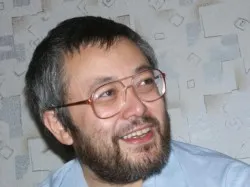
They say that you were a child prodigy in childhood, jumped from class to class - is it so?
No, I was not a child prodigy. When I went to a music school, where they gave me away, I was accepted without waiting for 7 years. I played the piano. And then I also jumped over the 4th grade of a music school. The school was good, the CMS at the conservatory. In the same class, Rostropovich’s daughter studied with me ...
Parents wanted you to become a musician?
Mostly my grandmother wanted this. We had a piano at our place, and she herself played the violin. Well, they taught me how everyone was taught in childhood.
How did your interest in mathematics manifest?
We can say that from enhanced music classes - I am tired of it. In addition, I went to the mathematical circle in the Palace of Pioneers. At first I went to a circle of technology-there you could saw it, do something with my own hands, and then a mathematical circle formed there. Viktor Nikolaevich Trosnikov appeared in the Palace of Pioneers and began to conduct classes in mathematics, now he is the famous Orthodox philosopher. Then they decided in the family, seeing that somehow everything was bad with music, that I would go to a mathematical school. I went for an interview to the second school, and I was accepted there.
What class was it in?
In the second school, I studied 4 years: 7, 8, 9 and 10 classes.
At what age did you start to regularly engage in mathematics?
I went to the circle in the 5th grade, but more systematically it was already at school ...
Did you jump from class to class in the second school?
No. I just did not study in the 4th grade of the music school, this is all my child prodigy.
But as a result, I entered the Moscow State University when I was not 16 years old.
It turns out that immediately after the CMS you began to study in the second school?
Yes.
Great! Unusual. And then you entered the Moscow State University?
Yes, then he entered the Mehmat at Moscow State University. I still went to different physics Olympiads, unlike mathematics, it was easier. But then it became clear that I would probably not have accepted me to the Physics of the Faculty of Physics ... My father was a citizen of China, and at that time he was in China and there was no connection with him ... In general, it was clear that for admission to the physical faculty it was “not good” ... In fact, for mathematics it was not very good, but for some reason they accepted me.
Do you know Chinese?
No, in childhood I was taken to China once, when I was only 4 years old - for a month.
And never were they again?
Then it was, when it all ended there - and the cultural revolution, and ... I was there in 1995, when the connections were restored, and I could go ... But my father was already very sick. Then he died a few years later, but I still saw him.
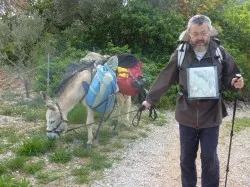
Do you feel a little Chinese?
I do not know what is happening there. I don’t know the language, and no Chinese culture ... Even in translations, I am absolutely not familiar with it.
For some reason, I decided that you were a Korean.
No, no, Korea is completely different.
And the truth is they say that you were one of the last students of Kolmogorov?
No, I was not a student of Kolmogorov, but when I was a graduate student, he became the head of the Department of Logic at the MHMAT of Moscow State University. And he had such an idea - to arrange a seminar in Kolmogorovo complexity, this is his last scientific topic, and he proposed organizing such a seminar. Since I also did this a little, I was his assistant. Well, then it was already hard for him, he was seriously ill, almost did not see anything, he came with difficulty, but, nevertheless, this lasted two years while he was able to come. Then the seminar was already without it (and is still preserved).
Whose student do you consider yourself?
Vladimir Andreevich Uspensky, who was a student of Kolmogorov. Uspensky was my leader both as a student and in graduate school.
When Kolmogorov was sick, there was some duty with him all the time-employees, students and so on, all the time someone was with him. Accordingly, I also had the opportunity to talk a little as a duty officer ...
That is, you did not have such a close cooperation with him?
Except as during the seminar ... Kolmogorov at this seminar formulated some questions that I tried to answer ... In general, I do not dare to consider myself a student of Kolmogorov. It's too honorable ...
And what can you say about Vladimir Andreevich Uspensky as a scientific leader? What type is he a leader - authoritarian, democratic? Unless, of course, you want to talk about it.
I'm not at all sure that such a classification is correct.
What is the right one?
I would say that the Assumption offered some topics for classes, but never objected that a person is doing what he wants. Ideas that it is necessary to do only what he suggested was never.
At this time, you already went to seminars to I.M. Gelfand?
No, I later went to the seminars to Gelfand, in the late 80s, when the introduction of school computer science began. In connection with this implementation, I helped Kushnirenko, and when Gelfand arranged a seminar in computer science, he attracted Kushnirenko, who called me. Then I also visited the mathematical seminar I.M.
In what years did you study at Moscow State University?
From 1974 to 1979, and in graduate school from the 79th to the 82nd.
Have you once touched on the "shameful 20th anniversary" on the MHMAT MSU?
Since my father was a Chinese, it was not so clear that I was a Jew (although it was written in my mother’s passport - her mother, her mother). There was no special policy about China, so it was believed, well, the Chinese and the Chinese ... I seemed to be accepted without much difficulty, and somehow there was no difficulties, I was not injured in any way.
Have you easily entered graduate school?
There was a problem there: when I entered, I wrote that my mother is a Jewish. This turned out to be wrong, and even specially needed to pick up this piece of paper and replace with another, where it was argued that she was a German (and really her father, my grandfather, was from Germany) - there was such a story. There were really no obstacles.
What was your candidate dissertation dedicated to?
Kolmogor complexity, according to which there was a seminar and which I have since been mostly engaged.
What is this area of mathematics?
Algorithmic theory of probabilities, the algorithmic theory of information. This last topic, which Kolmogorov was engaged in the 80s. On these topics, he had different students. Lenya Levin, at that time it was his topic. Zvonkin also started with her. The first article by Zvonkin and Levin - it was a very interesting review on Kolmogorovo complexity.
Where did you work after graduate school?
After graduate school, Assumption agreed that I would be accepted to the Institute of Information Problems. I am still considered on vacation there.
I read on your personal website an appeal to colleagues about the election of the new IPPI director.
Yes, yes! It was recently, but earlier I worked there for a long time in the laboratory of Modest Nikolayevich Vyintsvaiga, a very sweet person who wanted to invent artificial intelligence. He firmly believed that he was on the way to the intended goal, but ... none of this came out. Then it seemed to me that nothing would come of it.
Did he have the wrong approach?
Well, yes. I would say that there was no idea with which one could start.
How do you feel about the idea of artificial intelligence? How achievable is it? When will the creation of artificial intelligence be achievable?
So far, there are no big advancements, but it is impossible to guarantee that nothing will never will be. Turing believed that by 2000 it would be all. Now we ourselves can make sure whether he was right or not.
How did it happen that you began to work in France?
It so happened that in the 90s V.A. Uspensky traveled to France. He was an opponent to defend the dissertation of the French mathematician, Bruno Duran-who then invited him to some longer period. Uspensky said that he has students who are also engaged in this topic and can also be called. Vereshchagin and I went there for a while, and then from time to time came there. And at some point, our French co-authors said that a competition in CRNS is now announced-the French Academy of Sciences, that the documents should be submitted. It seems it was clear that none of this would come out, but on the other hand, if people offer, it was impolite to ignore. It was necessary to fill in the pieces of paper, but completely simple. And so Andrei Romashchenko and I submitted documents. That year there was some special situation, apparently, either they had many places, or the places were some kind, but the competition was minimal that year. Andrei was accepted - and to my great surprise, me too.
What position do you occupy there?
I am a researcher. There they are the first “variety” and the second. Here I am - the second.
Is it higher or lower than the first?
It is like tea, there is the first grade, the second, but there is still an “extra”. Here I am - the second grade.
Do you get there a permanent salary?
Yes.
Looks like a Russian system?
CNRS has a very complicated system. Firstly, there are “varieties”. Inside each “variety” they are divided into “echelons” and somehow from the length of service the “echelon” is changing ... But at the same time they very kindly counted my Russian experience and appropriated me a higher “echelon” than it could be if I started working there from scratch.
How long have you been living there and work there?
The agreement is such that I should spend half of the time there. And this is happening since September 2005.
How many months in the year do you live there?
This is how it will turn out. Now I was given a card of a residence permit for 10 years. But before, it was necessary to renew the visa, and then it was impossible to leave, because of this there were difficulties. But I already try to spend a noticeable part of time in France. Since they really do not need anything from me there and you can work calmly ...
That is, you are not teaching?
No, I don't teach. Firstly, it is not supposed. And secondly, to my shame, I don’t understand anything in French. To teach in French is above my strength ... But this is not required.
In Russia, you were a teacher at the 57th school?
I have never been a real teacher. I participated in teaching in separate classes. He came, as the assistants of Seryozha Dorichenko now come to help him in the 179th school. It was several classes-at first there was a class in the 91st school, then in the 57th grade of the 86th year of release, then the 89th, 90th, 94th, 2000, 2004 and 2008. Then, when it became clear that I needed to go to France and there is no opportunity to teach here, I stopped doing it ...
Can you name several names of young mathematicians you taught? Psitselsky?
There are two Brothers of the Positselsky. I would say that I never had the honor to teach Leny Psitselsky. He studied at the 57th school, came and helped in the classroom, where I participated in the teaching, but I did not teach him ... Yes, there was nothing much to teach me.
Which of your students is most famous?
In the 91st school in the classroom, where I taught for the first time, Maxim Kontsevich, who is now Field Laureate and in general, a famous person, studied from now famous people. Misha Verbitsky studied in the class of 86, who teaches at the Higher School of Economics, whom the “cats” were injured at first, and now the “beards”. By the way, if there are specialists who can read and comment on this story with a “beard”, it would be curious because I saw these documents. They make a completely enchanting impression ... For example, one of the documents in the set of this claim is a certificate that “in the name of Pugach I.V. The Adolfgitler.ru website is registered ”or something like that. I am amazed at the idea that in order to achieve any goals it may turn out to be appropriate to sue such paper ...
Did you immediately understand that Kontsevich and Verbitsky - talented guys?
When Kontsevich entered the 91st school, it was clear that he was an exceptionally strong and competent person. Not that he acted, he was trained - and he became good. He was from the very beginning a talented mathematician. But it happens differently. It happens that a person is very strong in mathematics, but then he begins to be interested in something else ... also about famous people who studied in the classroom where I worked-Malhukavnikov, now a professor of mathematics in MIT. There was also Osia Polterovich, who works in Canada, and others. In the class 86 there was a young man, one of the strongest schoolchildren whom I saw - Anton Lunin. Then he (after the university) fell ill with multiple sclerosis and died ...
Are you not very different from your students by age? How old were you-20-30?
No, well, when I started teaching in the class of Klekvich, I was in my third year. I was four years older.
And Niknik Konstantinov somehow influenced your formation as a mathematics?
He put me into this idea of teaching.
Why do you like to teach? This is very costly energetic ...
Firstly, this is some entertainment. Secondly, I would like to hope that for schoolchildren there is more benefit than harm.
What is it what is a modern mathematical school in your opinion? What do you think of the exam?
Nothing good. Because what everyone was afraid with the advent of the exam is now more or less. Now the USE has tasks A1, A2, A3, B2, with something. And now there are books like “How to solve the A2 problem” or C4. And before, most of the students are not skillfully skillfully, but at least some students and some teachers were engaged in something interesting. In principle, this is now possible ... It is clear that there are some pressure-there are tests, you need to increase interest ...
And the fact that Kima on the exam began to prepare mathematicians themselves - did this not help?
How to say ... We can say that they used to be even more absurd, but it seems to me that the overall effect of the exam is not what tasks are in it, but that the school course turns into preparation for the exam ... If we assume that everyone knows how to add up, then there is a positive side in this. Previously, some people did not know anything at all and did not pay attention to it. And now there is such a requirement for everyone, and there is an understanding that you must either try to evade this, or take something.
Did you create more difficulties for special schools in the exam?
The exam did not appear on them. Now, in general, there are few people who want to enter universities in the physical education specialties, so there is almost no problem with admission.
I know from the students of the tower that the competition for the Faculty of Economics is much higher than at the faculty of mathematics, and those who did not get to the economic, go to the Faculty of Mathematics.
I don't know that. Maybe ... Yes, and the Faculty of Mathematics of the Higher School of Enterprise recently, who want to go there, and, accordingly, strong schoolchildren enters there too little. They have a problem rather a shortage ...
You are still engaged in social activities. In particular, you are interested in electoral statistics. Why did you take up this topic?
Ivan Yashchenko at one time did such a harmful thing: he achieved to ensure that the program “The theory of probabilities” is included in the program and wrote such an absurd book with other comrades. I was so dissatisfied with it that I wrote an offensive review of it and decided that I should try to write something more reasonable myself. And he wrote a small brochure for schoolchildren on probability theory (I don’t know if it turned out well). And partly in this regard, when these electoral schedules, pictures and so on appeared, I also became interested in what really happens there, began to collect all these links ... But I really did not try to conduct any research, I simply collected existing facts and hypotheses about elections in Russia.
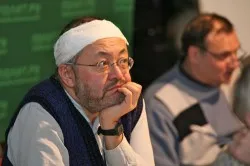
When did your interest in selective statistics woke up?
I read articles about the 2009 elections. I don’t remember what I read first, but it was connected with the 2009 elections, when this picture with peaks and all that was.
What are you doing in mathematics now, what is now in the sphere of current interests?
Not to say that it went very successfully, but I am engaged in Kolmogorov’s complexity.
Do you continue to deal with it since the student years?
Yes, yes. There are different topics, there was another topic related to what is called “cell automatic machines and self -like”, but ... but I did not do anything particularly outstanding ...
Is this applied mathematics?
No, there is nothing applied in this, this is the so -called Computer Science - part of mathematics associated with algorithms, calculations.
That is, you are not programming in the programming language?
No.
Do you know programming languages? Can you program?
I can write some short program ... I even taught computer science at school and wrote a task for mathematical programming classes. By the way, in contrast to teaching mathematics, which is difficult to call successful, this taskbook had an unexpected effect [1]. Then some participants in the programming Olympics quite unexpectedly said to me that when they were at school, they came across this book, they read it, and there was some benefit from it.
When did you write it, in what year?
The first option for schoolchildren was written in 1990, but the first edition was in 1995-96. The same Ivan Yashchenko published him ...
Сейчас этим задачником еще можно пользоваться, он актуален?
С тех пор появилось много новых книг. В смысле тем особо ничего не изменилось с тех пор, но… Вторая вещь, с которой, я считаю, мы удачно «попали в струю» — в какой-то момент перевели книжку Кормена [2]. Есть такой учебник по алгоритмам. Я как-то был в MIT (США) и видел, как там преподают курс алгоритмов, видел тамошний учебник и понял, что было бы хорошо, если бы он был издан на русском. И я уговорил Ященко это перевести и издать, большая группа людей это переводила. Там даже есть раздел, который переводил Костя Сонин, который тогда был студентом или аспирантом. И тоже участники олимпиад говорили, что это пособие, по которому они готовились. Если иметь в виду что-то такое общественно-полезное, то перевод Кормена был наиболее полезным…
Готовите ли Вы сейчас какие-то учебники, учебные пособия. Пишите книжки? Выступаете с лекциями?
Бывает, рассказываю школьникам на «малом Мехмате» по просьбе Спивака… Знаете, кто такой Спивак?
No.
Это Саша Сп и вак, ученик В.И. Арнольда, который стал очень известным преподавателем математики. Он много лет ведет кружки, причем довольно большие кружки – был такой кружок в 1408 – это такая большая аудитория в МГУ, в которой может собраться много школьников. Это очень сильные кружки. Спивак много лет работает в разных школах и вообще очень образованный человек.
Он – популяризатор? Читает лекции?
Yes. Он издал, например, очень хорошую «Энциклопедию элементарной математики». Я думаю, написал там большую часть текста. Не знаю, какое издательство ее издало, но это огромный труд. Не знаю, что сейчас происходит. Он жалуется, что его кружки не поддерживаются… Но человек он чрезвычайно заслуженный!
Вы преподаете?
Сейчас редко бываю в Москве. Но есть мехматовские студенты, которыми я стараюсь руководить, по большей части неофициально. Иногда выясняется, что должен быть официальный руководитель с мехмата, и кто-то подписывает эти бумаги вместе со мной… Из людей, которых я обучал, были такие братья-близнецы Костя и Юра Макарычевы. Они учились в 57-ой школе, кстати, в классе Ивана Ященко, потом они поступили на мехмат, потом решили, что хотят заниматься computer science, и в течение 2 лет мы с Верещагиным пытались им как-то в этом содействовать. Потом они уехали в Принстонский университет в аспирантуру и теперь они знаменитые товарищи. Есть такие очень престижные конференции, дважды в год, STOC и FOCS — куда люди счастливы попасть докладчиками раз в жизни, так Костя с Юрой там чуть ли не ежегодно бывают авторами, и не в одной статье.
См. также комментарий В.А. Успенского об А.Х. Шене .
Notes:
1. А. Шень «Программирование: теоремы и задачи» МЦHМО, 1995 г. Свободно-распространяемый текст книги (ASCII, TeX, PostScript) находится по адресу ftp://ftp.mccme.ru/pub/users/shen/progbook
2. Т. Кормен, Ч. Лейзерсон, Р. Ривест «Алгоритмы: построение и анализ»