
Translated material
Where and why is the labor migrant going
From tightening the country to a limited number of growth poles, it's time to move on to a reasonable strategy of its territorial development
Everything is clear with the Olympics: the steam locomotive has already drove off, and you won’t spend the Olympics, say, in the Kirov region, but is it not too late to slow down the new Moscow? And is it not to start anything in the degrading territories-some world championship in the Omsk Region or Formula 1 in the Republic of Bashkortostan?
Bard of the lines, separated by almost half a century ... from the recently departed Yuri Kukin: "And I am going, and I am going after the fog // For dreams and the smell of taiga." And from Galich of our days - Timur Shaova: "Az is a multi -sinful cultural figure // I get into money, like all weak natures." Different economies are different motivation for labor activity, especially in cases where, in search of a new workplace, people move around the country.
In the “vegetarian” period of Soviet history, everything was simple: mass labor migrations on the periphery for the construction of large facilities or to provide employees of Moscow enterprises, as a rule, in the order of the office. Which was generously diluted with a romantic component, for example, in the case of "B" baikal-Amur highway, "Baikal-Amur, which began and demanded a lot of men and money. At the same time, the labor migration of a specific personality was not forbidden, but not stimulated. A well -known pension allowance for continuous work experience at the same enterprise for many meant eternal binding to the same workplace. It is understandable: unlike the masses, it is impossible to manage a person, and its ideas about life can differ significantly from the postulated by the state.
Romance ended with the liberalization of prices. It became clear that in the new conditions, employees who do not hold on to the only employer are of the most efficient workplace, but look for a more effective workplace both in the region of their residence and in other territories.
The scale of inter -regional labor migration is evaluated by Rosstat during monthly conducted surveys of the population on employment problems (ONPZ). The respondent, along with others, answers the question of whether his main work was in the territory of the same region of Russia where he constantly lives, either in another region, or in another state. So, in 2010, those who worked in other regions turned out to be more than 1.7 million people. Is it a lot or little? If you compare these data with the background indicator - the total number of employees in the economy is almost 70 million people, it turns out that this is only less than 2.5 percent.
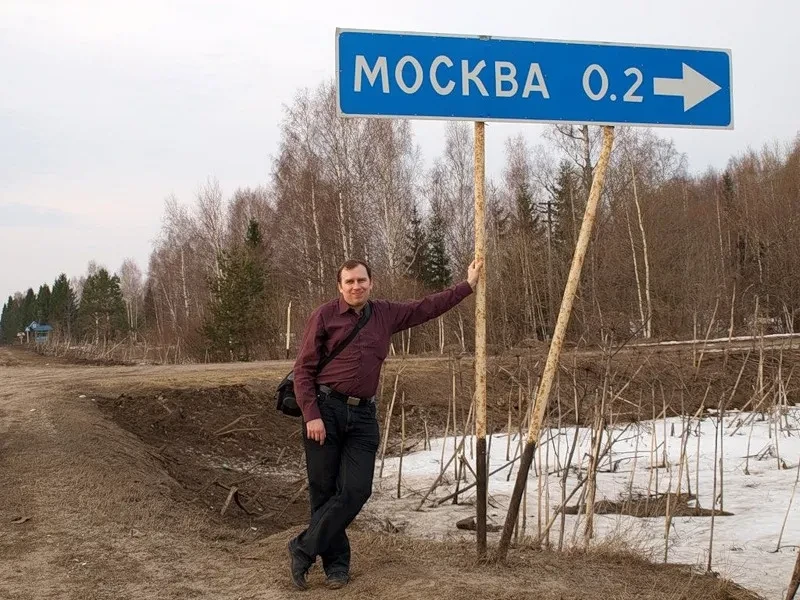
But why do citizens go to work in other regions? You say: for a salary - and only a little mistaken. Not much - because the course of thoughts is correct. And you will be mistaken - because the employee receives part of this salary in the form of undetected income. The statistical dependence between the number of internal labor migrants and average wages in the region turned out to be less than between the number of such migrants and the volume of investments in fixed assets. It is no accident that on the territory of the above regions, immigrants from dozens of constituent entities of the Russian Federation worked (for example, in Moscow-from 56, the Moscow region-from 50, the Tyumen region-from 37, St. Petersburg-from 36, etc.). It is symptomatic that the Olympic investments attracted labor migrants from 33 regions to the Krasnodar Territory, and the restoration of the economy of the Chechen Republic made it possible to find jobs for migrants from 17 regions.
Well, if investments create jobs - with white or gray payment (it is important that not with black), then a logical conclusion is followed about the erroneity of the regional policy of the Russian government, which completely does not take into account the geopolitical interests of the country. Everything is clear with the Olympics: the steam locomotive has already drove off, and you won’t spend the Olympics, say, in the Kirov region, but is it not too late to slow down the new Moscow? And is it not to start anything in the degrading territories-some world championship in the Omsk Region or Formula 1 in the Republic of Bashkortostan? You look, and old Moscow will attract less labor migrants. From tightening the country to a limited number of growth poles, it's time to move on to the reasonable strategy of its territorial development.