
Translated material
The knight of geometry
In 1952, a forty-year-old geometer, corresponding member of the USSR Academy of Sciences Alexander Danilovich Alexandrov (1912-1999) became the rector of the University of Leningrad (1912-1999). In 1964, he left the rector’s post, was elected an academician for a vacancy for the Siberian branch and moved to the Novosibirsk Academgorodok. The Patriarch of Leningrad Mathematics Academician Vladimir Ivanovich Smirnov wrote a special address in connection with the departure of Alexandrov, in which he noted: "He led the university not by the power of the order, but by moral authority." It is unlikely that in history there are many leaders about whom employees would write or think something similar. The last graduate student of Alexandrov - Grisha Perelman - a man who amazed the mathematical world with his geometric vision and surprised humanity with moral purity and selflessness.
August 4, a centenary of the birth of Alexandrov, is an extreme phenomenon in science and education of Russia. Aleksandrova was idolized by students, respected colleagues, hated epigones from state ideology and were afraid of party bonzes.
The contribution of Alexandrov is unique. In 1958, the outstanding American geometer Herbert Buzemann wrote in the book “convex surfaces”: “The purpose of this book is to familiarize the wide range of mathematicians with the theory of convex surfaces, which over the past 25 years has been very deep in the USSR, but has remained almost unknown in other countries, in any case in the USA.” Emphasizing the fundamental role of Alexandrov’s works, Buzemann noted that "there are no disputes about priority in the geometry of convex surfaces." In the classifier of mathematical sciences, compiled in 2010, jointly by editors of Mathematical Reviews and Zentralblattfur Mathematik, there is a section of 53C45 Global Surface Theory (Convex Surfaces a La Ad aleksandrov). Even Lobachevsky was not awarded such an honor among Russian geometers.
Alexandrov remained in the memory of scientists of Russia not only as a brilliant geometer and an exemplary rector. He suffered a perfect system of views, which allowed him to deeply analyze general philosophical problems and respond to the challenges of modernity. Geometry arose as a result of human practical activity, it was created by a person in order to organize his own life and change it for the better. Man is a surveying point, the Creator and the purpose of life. The general views of Aleksandrov were determined by his natural science views, formed in the study of geometry. Aleksandrov was impressed by the ideas of Karl Marx, expressed in theses about Feuerbach.
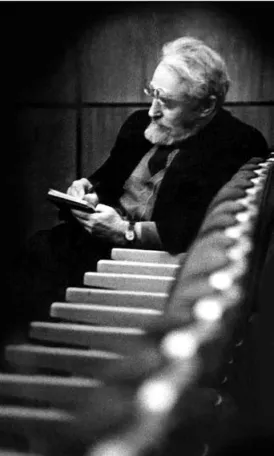
Aleksandrov was not a man of the past, but the past was not shy. He knew how to see his own misconceptions and abandon them. He did not hide his own mistakes and tried to straighten them as far as possible. Interested in not those who are doing what, but who did what. He did not boast of anything and hated meritocracy. Was dynamic and fundamental in relation to the truth. Everyone trusts himself, regardless of crafty reservations. Aleksandrov was able to extend the practice of trust in others, based on the presumption of decency, which acts before the first failure. Alexandrov himself was a man of honor, whose evidence can be taken as his own - without evidence. Alexandrov set confidence above the evidence.
Aleksandrov emphasized the criticality of science and its boundless devotion to truth. Aleksandrov’s hatred was caused by any crooks, priests and inquisitors from “Marxism” using science for low selfish purposes. Between science and power lies the abyss of alienation. Power is opposed by the freedom that constitutes the essence of mathematics. In science, Alexandrov saw a tool that frees a person financially and liberates him intellectually. Geometry taught Alexandrov universal humanism. He loved the words of the Apostle Paul and repeated that in the geometry "there is neither Elina nor Judea." Humanity, responsibility and scientific - these are the components of the fullness of morality in Aleksandrov. Man is a source and the goal of everything. This is the content of universal humanism. Man is in response to everything. This is the meaning of responsibility. Scientificity as a human judgment abstract from subjectivity lies at the basis of morality. The firm principles of Alexandrov made his fate predictable and tragic. Protection of truth is a heavy cross, lonely ministry. Alexandrov often felt “red at the carpet”. Misunderstanding and mockery - the destiny of the hero during life. Time puts everything in its place - Alexandrov remained in history a faithful knight of science.
The future of Russia is growing with a memory of people like Alexandrov.
Semyon Kutateladze