
Translated material
Curators in their own juice
If you want to know what the young art will be, the main project of the 3rd youth Biennale, the exhibition "Under the Sun from Mishura" (until August 10) can be safely ignored. The trend is where it was not expected - in special projects of Biennale. In these exhibitions, artists speak from the first person. They themselves become curators of exhibitions, refusing to be considered necessary - to give weight to the event, inviting a famous art critic as a curator and hiding behind its text. Such autonomy has happened in recent years, and on this Biennale it has become obvious.
The growth of public activity since December 2011, the reluctance to choose a leader, the experience of direct contact with each other and self -organization, was probably played here, this is a wide context. The closer is changes in the art world. It was publicly announced that the art market did not work out, but before that many were still noticed. In the first half of the 2000s, there were hopes for its appearance, and in market conditions it is better to break up. When it became clear that it did not develop, artists began to unite in groups, the presence of which is a necessary condition for the appearance of such exhibitions in which artists can choose from their environment of the curator.
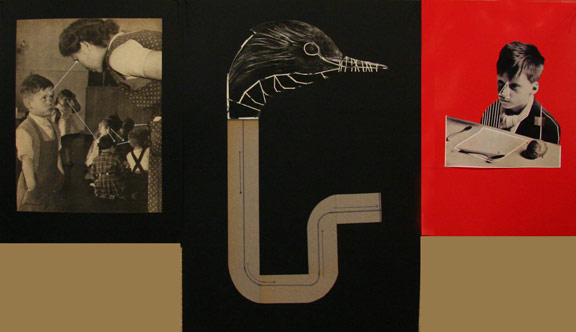 Fragment of the installation of Eva Kotatkova "Educational Model"
And of course, there is a long -standing struggle of the artist with a curator, who, of his own will, changes the meaning of the work, entering him into an alien context and subordinating him to his idea. Sometimes it is more profitable for the artist to obey, and now, probably, it is better to take curatorial work on himself, not allowing himself to be manipulated. At the opening of the main project, Vladimir Medinsky appeared - and you will not recall that such an honor to be provided before such events. Why would it be - most likely, contemporary art will be built into the general system of state youth policy, and is presented as entertainment for more advanced and creative. And it must be assumed that many young artists simply do not like funny and entertaining - and you will have to act for themselves, without a system.
The curator of the main project was invited by the German Catherine Becker, the director of the video forum at Neuer Berliner Kunstveerein. The exhibition has a lot of European formalism and an abundance of video works, this is its taste and background. If you try to honestly view all the videos, then you will have to spend about 4 hours on the exhibition. At the same time, only one video is worth seeing it from beginning to end-the “ghost of the Dracula” by Katrin Zontag, the study of how the literary and kinematographic myth of Dracula influenced the development of tourism of Romania, with the conclusions of the connection of trade and imagination. Behind the frame is the direct speech of an employee of the tourism industry telling about experiments on tourists. With a ratio of 20% fiction in the tour and 80% of the truth, tourists suspect that not everyone was shown, with a reverse ratio, they are completely satisfied. At the same time, it is impossible to scare them constantly - in the tour, the tourists rejoiced entirely by the first two days, the third stopped, to the fourth refused to leave the room with the occurrence of darkness, to the fifth - they asked to urgently send them home. Many information are accompanied by famously mounted fragments from “vampire” films, their own shootings, and under the curtain-a rarity, an advertising video of the 70s of the Vampire vacuum cleaner.
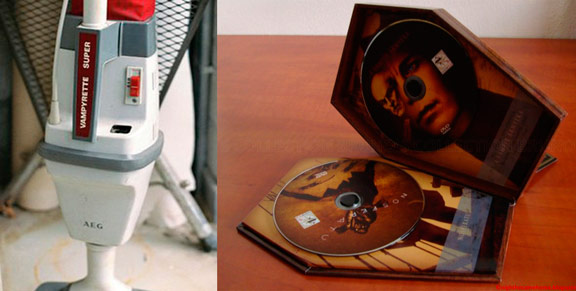 Vapire vacuum cleaner. Photo: Katrin Zontag. The collection publication of the films of Murnau "Nosfrata" directed by Murnau and the "shadow of the vampire" directed by Murnau, whose fragments used in her video. Photo: http://nighthecamehome.blogspot.com/2011/08/nosferatu-shdow-of-vampire.html
It is clear why Becker chose this film: he is in the German tradition, inherits what the famous contemporary artist and theorist of the movie Harun Faroki does. In his films, he often, using the collections of scenes from world cinema, examines this or that social problem, and in one of the films wittyly shows the internal state of the participants in business re-artists, mounting it with a commercial, which describes the principle of operation of a new machine, the investment in the production of which businessmen discuss.
The video installation “crowd”, in which the German author Francis Hugger addresses the work of Dzigi Vertov, also claims to belong to this tradition. But do not hope to see on the screens what is promised on the label: discussing the play about Vertov, thoughts on “how mass scenes can be transferred and transformed in the theater”, or the struggle “between the director’s own communist enthusiasm and pressure on his work by the totalitarian regime”. This work depicts research, but they are not.
In most cases, reading labels and a cursory view of video work will make a more favorable impression than an attempt to view everything. This is true for many objects and installations.
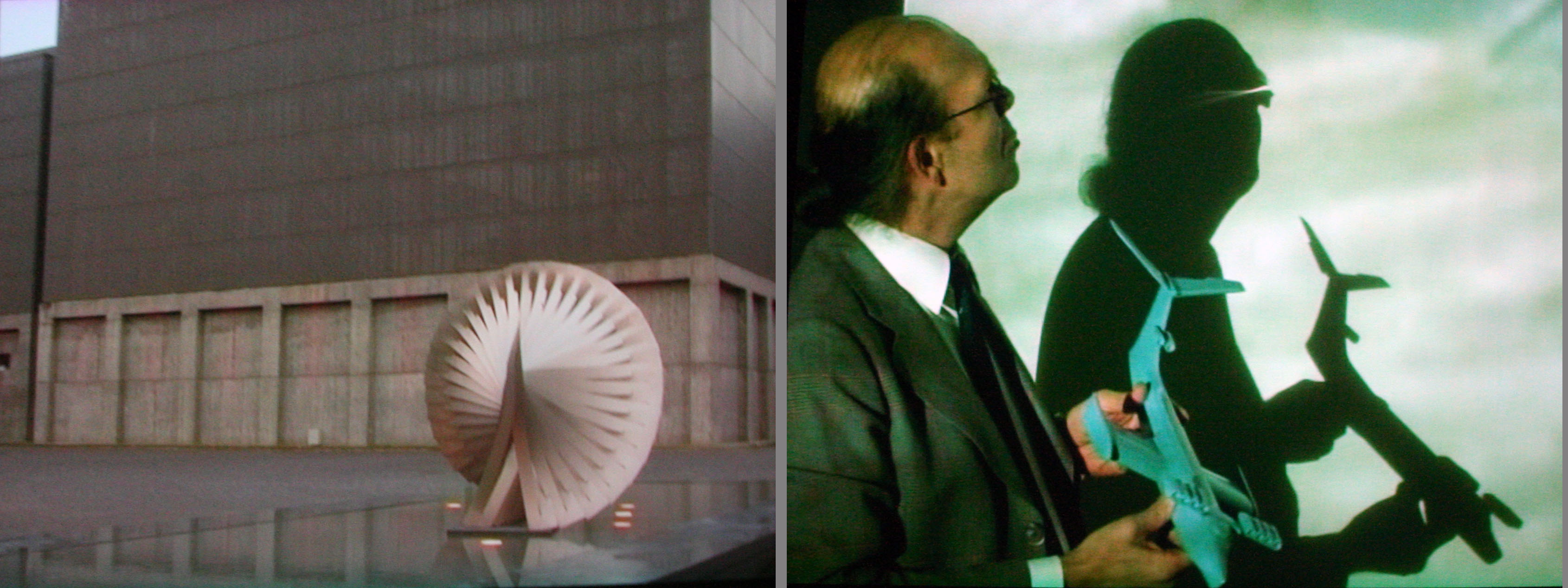 Personnel from the film Emre Guner "Jaggernaut"
As for the abundance of “formalism”, works where the meanings need to be read from proportions, flowers, surfaces - Russian viewers are not used to this, we still need narration. Go guess what colorful shelves of the Georgian Anna K.E. From New York to an attempt to combine design as hope for a happy life with art as evidence of dramas and collapsed utopias. What are the columns of Amir Fattal, tilted beacons-they sat down to not know that German plafones for lamps of the 60-70s shine in them. The “House on Avenue” by Lucas Hofer - the photographs of buildings repeatedly reflected and propagated on light panels turn into streets, the axes of the city, placed vertically, which is why they resemble the spine. The work of Anna Titova, the Moscow artist - “Chulan”, the place in which the artist is interested in the “borderline existence of objects between functionality and non -being”, and the exhibition space appears as an analogue of the closet. These works are clearly selected by Catherine Becker in accordance with her idea of what contemporary art should be. But in order to learn to feel such an art, dialogue with design and architecture, similar to a non -verbal cultural essay, it is advisable to live in Berlin and regularly visit the Flick Collection exhibitions at the Hamburger Banhof Museum.
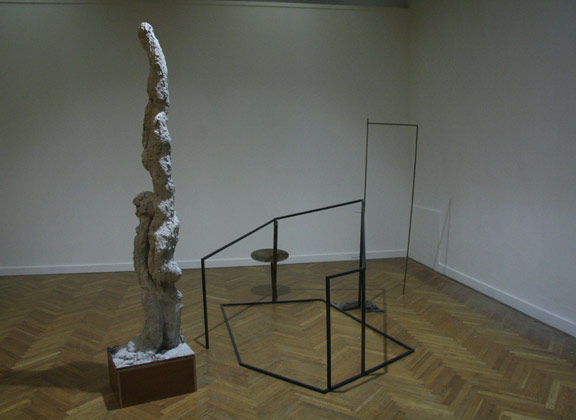 Anna Titova "Chulan"
In general, one cannot fail to note the special nature of “internationality” - many artists, even if they were born in very different countries, live in Berlin. Bekker should not blame too much that she did not go far in her search. Consider 2700 applications and find in them the forecast expected by the audience about what contemporary art will be - the task is unbearable. They invited the German curator, and she presented her point of view. With Open Call, such things are often turned often, formally impeccable-the chosen curator offers their favorite artists to submit applications and then selects them from the number of presented, well, and something from the little things from the rest. Next time there will be a curator from the United States - let's see the young Americans.
And here the second large project is becoming especially interesting, the exhibition "Incorrect analysis" on two venues, in MMSI (until August 19) and GCSI (until August 12) , called "strategic". His curator is Elena Selina, who during her activity in art discovered many new names. The deadline of the reception of applications from artists was December 15, 2011, she was offered to engage in this project after the deadline. So, she did not have the opportunity to advance her pool of the authors, and it was really necessary to deal with the material as it is.
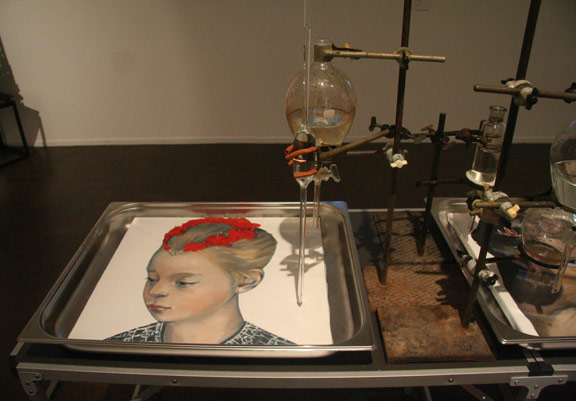 Irina Drozd and Alexander Efemov "Turning"
She had to look at and weed out, as she writes in the catalog “Initerly discussions about the existence of extraterrestrial civilizations, colorful agites about the upcoming global warming, simple -minded still lifes, naked girl's bodies in a sweet,“ salon ”interpretation.” What really was related to modern art, it distributed in five directions - “installation in space” in the HCSI, and on the four floors of the hall on Ermolaevsky Lane - the rest. There is a section “formalists” - they, unlike Becker, reacted to them with humor. Two works, Greek and Dutchman, both of whom work, in their own words, with the principles of architectural design, she placed one above the other, on the wall and on the floor. At first you think that this is one work, then you will find out that two different ones. The meaning of this is neither more nor less, because both are just structures from black sticks with a claim to thoughtfulness.
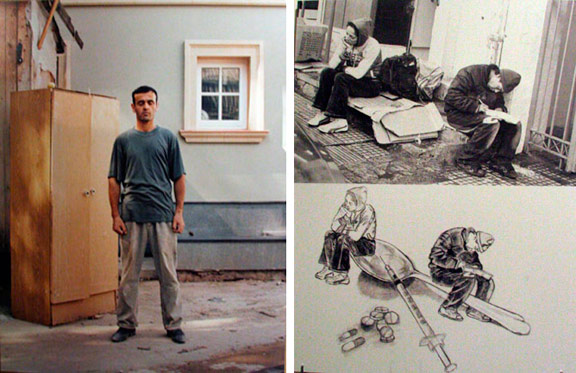 Anastasia Khoroshilova, "Mahmed", from the series "People without Territory", the main project of Biennale; Groupfer Terminal, from the series "Multureality"
In the section "introspection", young authors are looking for their place in culture. That is, they constantly do this, but here this is the topic of their work. The most expressive work is the “interview” by Evgeny Gorlshchikov, a student of the School Rodchenko . In the video in one minute of conversation in the Jean-Jacques cafe, the imposing blond in a white shirt, waving a cigarette, manages to describe his creative credo in this spirit: “There should be a figurative integrity. This is a little not what I wanted - but the position is very important. There were many ideas, and this is allusions on ... no, you need to move on! ” The quintestation of speech techniques constant for creative youth, the result of the author’s observations on discussions performed by the actor. Fans of linguistic subcultures should purchase a Biennale catalog.
In the other two sections of the strategic project, “Game with Cultural Codes”, about texts in art, and “politics” with simple campaigns - there are good works, but their minority. Selina takes the usual established theme, and applies it to select work. And what remains for her if the applications that have sent are talking about what it is customary to talk about in order to get into people. Therefore, there is no need to wait for an answer about the future of art from this large exhibition.
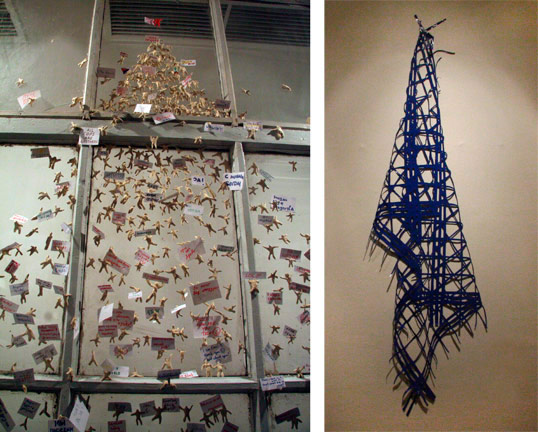 Art group ZIP "Meeting"; Torah Andestad Bjorkheim "Observe the distance"