
Translated material
Distributors
In the study area, we consider not only the pedestrian flow that I wrote about in the past post, but also much more. How many people are waiting for transport, and how many people, how many people eat on the street, how many people sit on fences and other places that are not intended for this, in the end how many people are simply worth and communicate. Of all these data, you can then understand how to improve the studied place - if, for example, of all the transports awaiting people 70% are waiting for standing, it is obvious that you need to add shops to stops. There are more complicated and simpler, but there are completely obvious. Here is an example of quite obvious, Schukinskaya street: 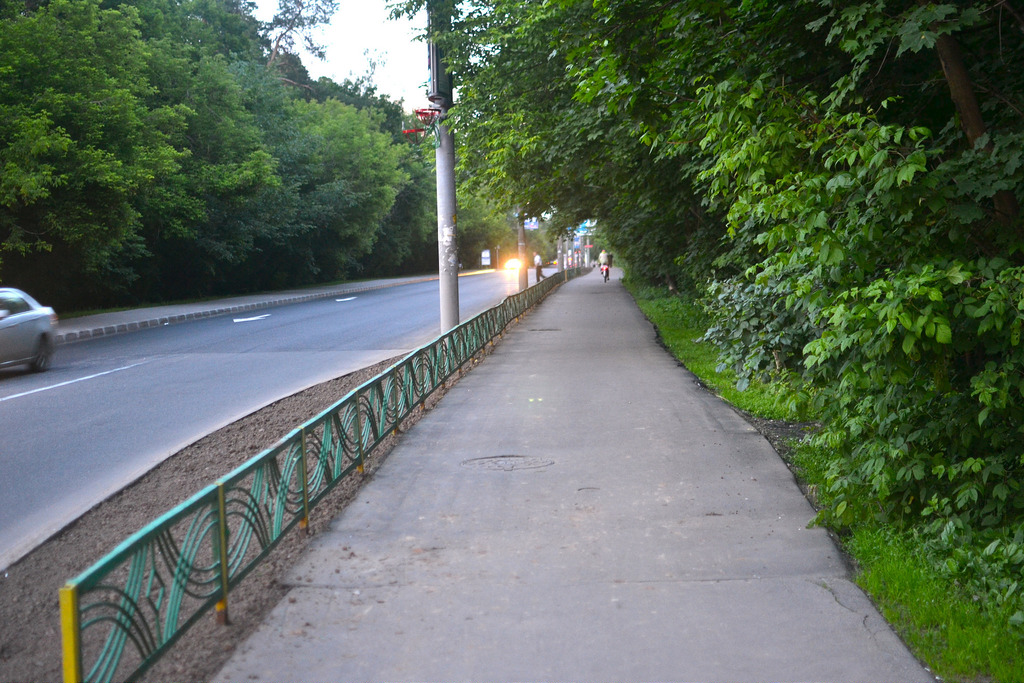
There are many problems with her - she, as you see, is empty, and walking along it is not interesting. Along it there are no trading facilities or residential buildings, there is only an untouched forest - the street is not visible, and when the place is deserted (especially near the forest), then the passers -by have a feeling of danger. This all leads to the fact that many people living at the end of the street (600 meters) do not go to the metro on foot for about 5 minutes, and go on a tram for about 10 minutes.
It is quite difficult to solve this problem, but there is something quite simple: throughout this street there is not a single pedestrian transition. As a result, such designs appear: 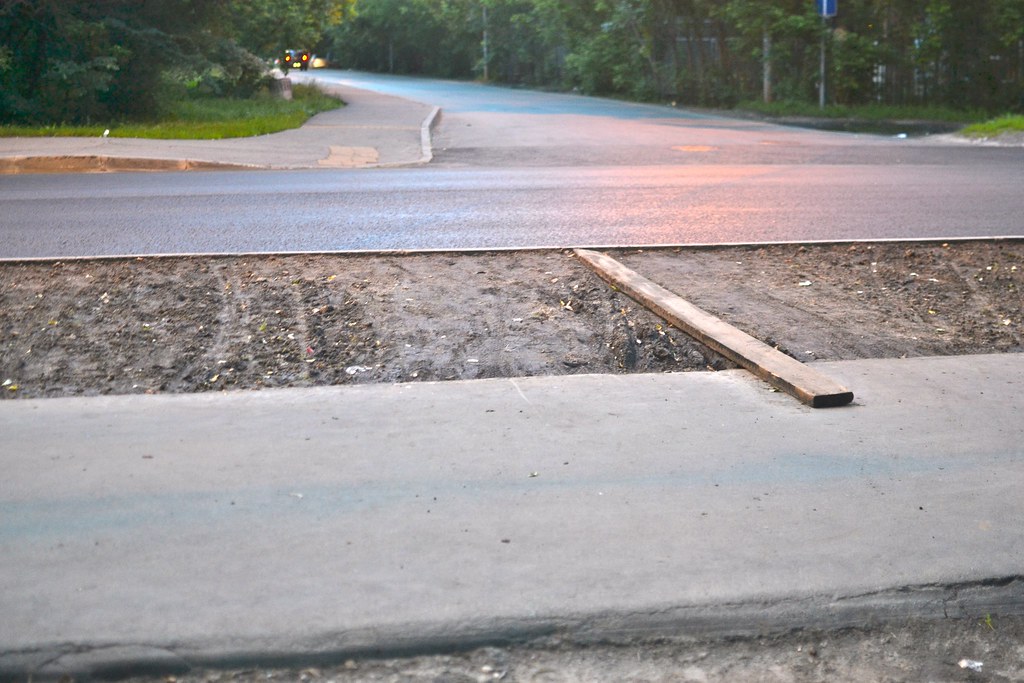
We calculated how many people in one place in Schukinskaya Street crossed the road daily in the wrong place. This is what: 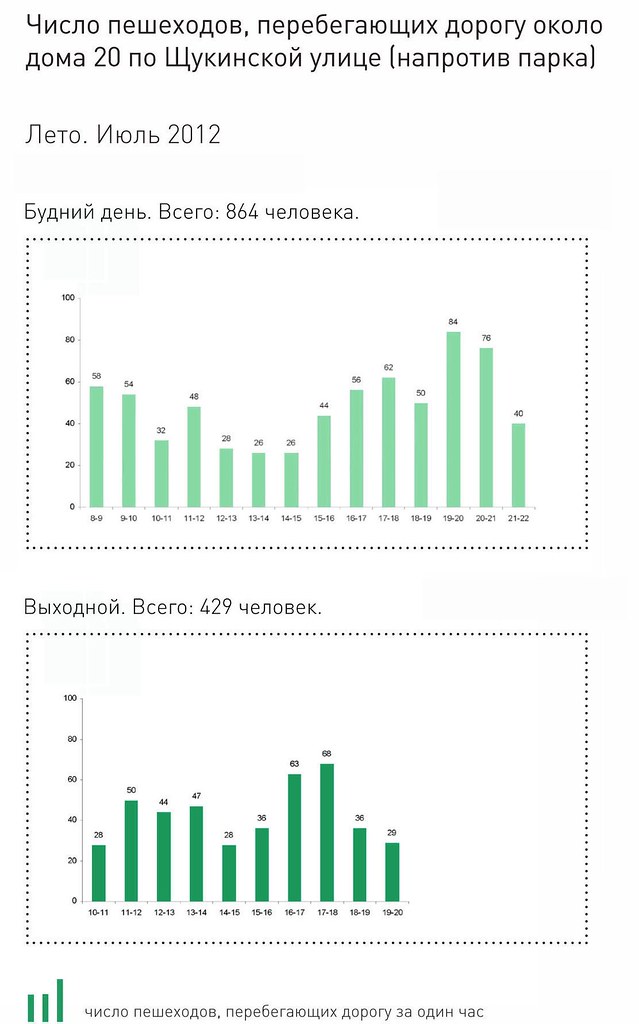
This problem is solved very easily - the pedestrian crossing is simply drawn and that's it. And 800 people live in the city a little better. There are still many such things.
This is just an example, soon there will be many more interesting things :)