
Translated material
In the case of the Ural "militias" accused of anti -state rebellion, Venezuela's Ambassador appeared
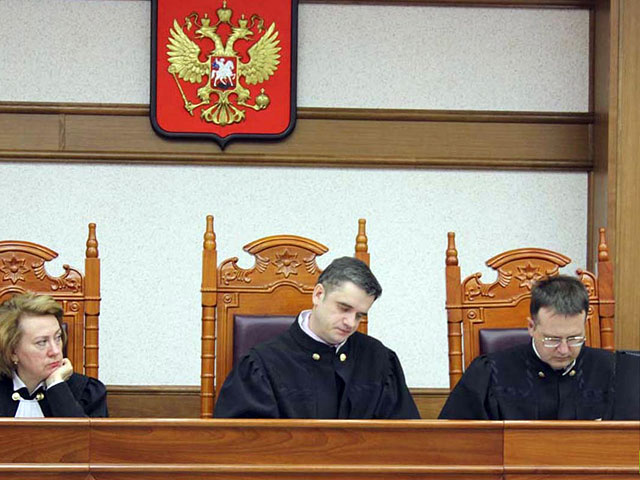
In Yekaterinburg, a trial began on the participants of the so -called movement "The People's Militia named after Minin and Pozharsky", headed by Colonel GRU Vladimir Kvachkov . The failed rebels, according to the prosecution, tried to overthrow the current power in Russia. Moreover, the Ambassador of Venezuela in Belarus was indirectly involved in this matter, the portal "66.ru" writes.
Currently, in the bench of the defendants are the former director of the Institute of Military-Technical Education of UrFU Leonid Khabarov, entrepreneur Viktor Kralin and the father of the already convicted in this case Vladislav Ladeshchikov, Alexander. At the same time, only the latter pleads guilty - however, and he came to court from his house.
From the materials of the case it follows that the organizers of the rebellion assigned the overthrow of the current government in Yekaterinburg on August 2, 2011. This operation bore the code name "Dawn". As planned by the leaders, the seizure of power was to begin with a series of liquidations of the heads of power departments of the Sverdlovsk region - the heads of the regional Main Directorate of the Ministry of Internal Affairs, the FSB and the Ministry of Emergencies.
The rebels were also conceived by the abductions of large businessmen of the region in order to receive basses for the needs of the "militia", as well as the murder of prominent politicians and public figures of the region, including the main rabbi of the Sverdlovsk region Azriel-Zelig Ashkenazi. This operation was supposed to be carried out by militants from another region, who were supposed to arrive in the Urals under the guise of striking.
It was also planned to panic: to blow up power lines and thermal power station in the region that feed Yekaterinburg. After the seizure of power in the Urals, the rebels planned to carry out general mobilization and advance to Moscow in order to seize political power in the country.
According to investigators, the leadership of the group was carried out by Khabarov. In addition to recruitment and involvement in terrorist activities, Khabarov is accused of storing, transporting weapons and explosives, as well as drug storage on an especially large scale. A narcotic agent was found in his house - Pramedola hydrochloride weighing 0.171 grams. According to the prosecution, he was going to use him as an anesthetic if one of his comrades was injured during a special operation.
The Ambassador of Venezuela with money for rebellion suddenly appeared in the case
In turn, Kralin is accused of trying to get money to finance the rebellion of Venezuela's ambassador. “In July 2011, Kralin was sent to Minsk, to the Republic of Belarus. He was in advance that, if necessary, he should visit the Venezuela embassy in order to receive funds from the Venezuela’s ambassador for organizing an armed rebellion formed by Khabarov. Kralin applied to the Ambassador to meet with the ambassador, but received a refusal,” - received a refusal, ” - - he received a refusal." The state prosecutor Maria Schebrik said during the meeting.
During the court hearing, Kralin and Khabarov stated the discharge to the judges and state prosecutors, insisting that the jury should consider the case, but they were refused, the New Region agency reports. At the same time, on Wednesday, the court was supposed to interrogate the witnesses from the prosecutor, but they did not appear at the meeting, so a break was announced until September 24. During this time, it is necessary to interrogate witnesses from the side of protection, explore the case file and interrogate the defendants.
The retired colonel himself Vladimir Kvachkov was arrested at the end of 2010 on charges of terrorist activities and attempted organizing an armed rebellion. Earlier, Kvachkova was suspected of organizing an attempt on the ex-head of the RAO UES Anatoly Chubais on March 17, 2005, but the court acquitted it.